AI Rings Face a Reality Check
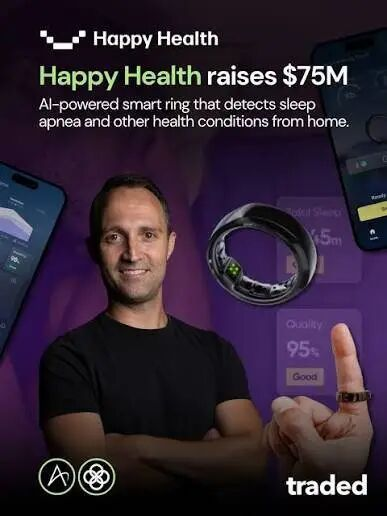
💡AI rings combine wearable sensors, subscriptions, and medical claims—but accuracy and usefulness may not justify the hyp
⚡ 30-Second TL;DR
What Changed
Oura is positioning itself as a data-and-AI company, combining Ring 4 hardware with a recurring health-analysis subscription.
Why It Matters
For AI hardware founders, the category shows that strong fundraising narratives cannot substitute for measurable accuracy, comfort, and differentiated utility. Health-focused AI products will also need clear regulatory positioning and evidence that algorithmic estimates provide value beyond existing wearables.
What To Do Next
Before building a health-monitoring AI feature, benchmark ring-derived sleep estimates against PSG data and report sensitivity, specificity, and confidence intervals.
Key Points
- •Oura is positioning itself as a data-and-AI company, combining Ring 4 hardware with a recurring health-analysis subscription.
- •Happy Ring’s FDA 510(k) clearances support a medical-device narrative, but 510(k) clearance means substantial equivalence rather than independent clinical validation.
- •Smart rings remain limited by small sensors, potentially weaker signal collection, uncomfortable wear, and overlap with existing smartwatches and fitness bands.
- •A proposed class action reportedly challenges Oura’s sleep-stage accuracy, while the company maintains that its products are not medical devices.
- •Apple has patented a smart-ring concept focused on ecosystem control, but has not announced a firm launch schedule.
Weekly AI Recap
Read this week's curated digest of top AI events →
👉Related Updates



AI-curated news aggregator. All content rights belong to original publishers.
Original source: 虎嗅 ↗
This is a summary, not the original. Read the source, or get the weekly briefing.
Weekly AI briefing
One email a week. Unsubscribe anytime.