SourceThe Guardian Technology•Stalecollected in 24h
AI Reveals Boleyn in Holbein Mystery Portrait
AI solves 500-year art riddle – try it on your datasets!
30-Second TL;DR
What Changed
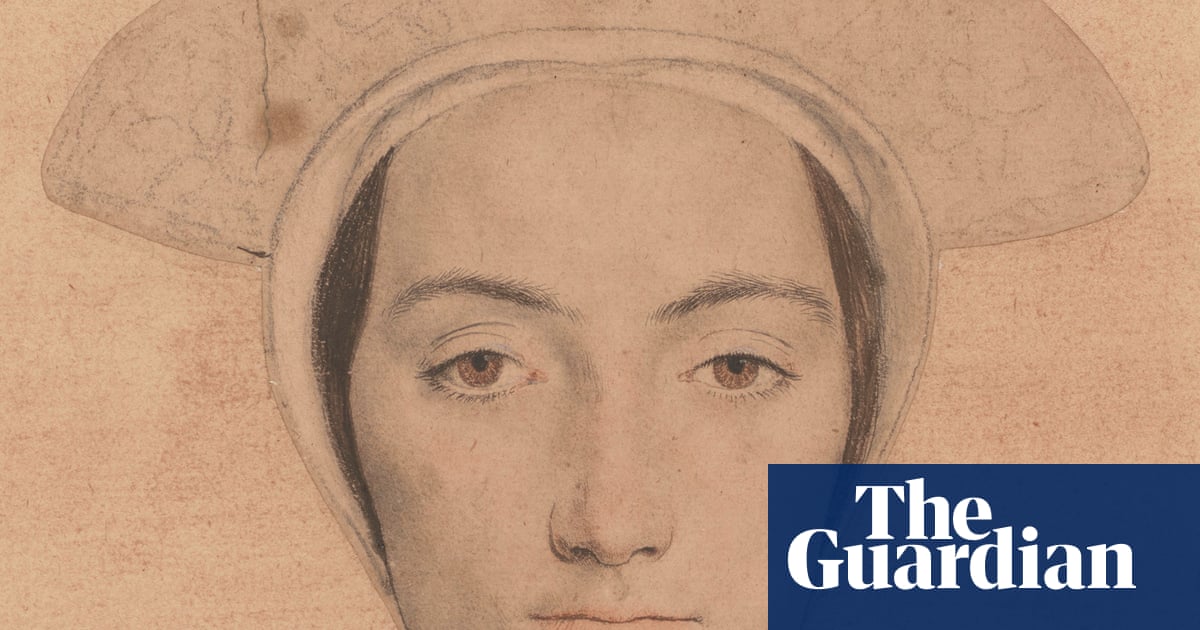
AI re-identifies Holbein’s unknown sitter as Anne Boleyn
Why It Matters
Demonstrates AI’s value in art history authentication, opening doors for similar cultural heritage analyses.
What To Do Next
Test open-source AI vision models like CLIP on historical images.
Who should care:Researchers & Academics
Key Points
- •AI re-identifies Holbein’s unknown sitter as Anne Boleyn
- •Swaps identities with traditionally labeled Boleyn portrait
- •Error traced to 1700s inscription mistakes
- •Two small Renaissance sketches analyzed
Deep Insight
AI-generated analysis for this event — not the original article.
Enhanced Key Takeaways
- •The AI analysis utilized facial recognition algorithms trained on verified portraits of the Tudor dynasty to calculate biometric similarities between the sketches and known depictions of Anne Boleyn.
- •The misidentified portrait, long held in the Royal Collection, was likely mislabeled during the 18th century when the provenance of many Tudor-era works was obscured by inventory gaps and political shifts.
- •Art historians emphasize that while AI provides compelling probabilistic evidence, the findings remain subject to traditional provenance research and physical pigment analysis to confirm the dating of the sketches.
Technical Deep Dive
- •The methodology involved high-resolution digital scanning of the Holbein sketches to extract geometric facial landmarks.
- •The AI model employed a deep learning architecture specifically fine-tuned for historical portraiture, accounting for stylistic variations in Renaissance artistic techniques versus photographic realism.
- •The system performed comparative analysis against a dataset of authenticated Tudor-era iconography to establish a statistical confidence interval for the facial mapping.
Future ImplicationsAI analysis grounded in cited sources
AI-driven provenance verification will become a standard requirement for major auction houses by 2028.
The success of this re-identification demonstrates that AI can resolve long-standing historical debates, incentivizing institutions to adopt these tools to mitigate authentication risks.
Museums will initiate large-scale digital re-cataloging projects for their Renaissance collections.
The discovery of a mislabeled portrait of such historical significance highlights the potential for widespread errors in existing museum archives that require AI-assisted auditing.
Timeline
1530-01
Hans Holbein the Younger completes the initial sketches of the Tudor court.
1750-01
Estimated period of the misinscription that led to the misidentification of the portrait.
2026-04
AI analysis results are finalized, identifying the sitter as Anne Boleyn.
- 1530-01Hans Holbein the Younger completes the initial sketches of the Tudor court.
- 1750-01Estimated period of the misinscription that led to the misidentification of the portrait.
- 2026-04AI analysis results are finalized, identifying the sitter as Anne Boleyn.
Weekly AI Recap
Read this week's curated digest of top AI events →
Related Updates

AI-curated news aggregator. All content rights belong to original publishers.
Original source: The Guardian Technology ↗
This is a summary, not the original. Read the source, or get the weekly briefing.
The weekly digest
One email a week. Unsubscribe anytime.