AI models face reality check in World Cup predictions
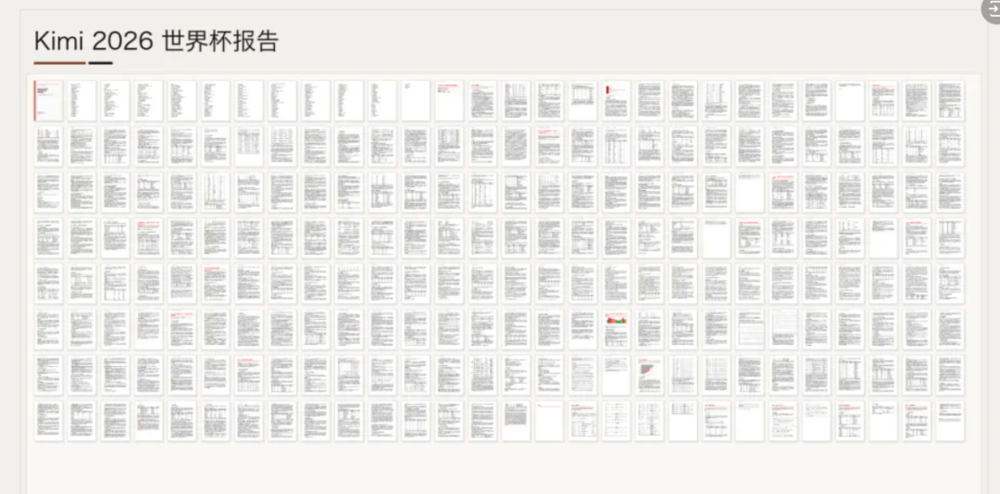
💡See how state-of-the-art LLMs perform in real-world, high-stakes prediction tasks compared to human intuition.
⚡ 30-Second TL;DR
What Changed
AI models like Kimi struggled with accurate predictions, highlighting the 'black swan' nature of sports.
Why It Matters
This highlights that while LLMs excel at pattern recognition, they are not yet reliable for high-stakes decision-making in dynamic, uncertain environments.
What To Do Next
When building predictive AI, incorporate human-in-the-loop mechanisms to handle edge cases that data-driven models miss.
Key Points
- •AI models like Kimi struggled with accurate predictions, highlighting the 'black swan' nature of sports.
- •Models are being used as 'intelligent assistants' for data analysis rather than just outcome predictors.
- •The gap between AI simulation and real-world performance remains a key research benchmark.
🧠 Deep Insight
AI-generated analysis for this event — not the original article.
🔑 Enhanced Key Takeaways
- •The 2026 FIFA World Cup, hosted by North America, introduced new logistical and environmental variables that significantly increased the complexity of predictive modeling compared to previous tournaments.
- •Research indicates that LLMs suffer from 'hallucinated confidence' in sports forecasting, where the models prioritize statistical patterns over the stochastic nature of individual player performance and referee decisions.
- •Kimi (Moonshot AI) and similar models utilize RAG (Retrieval-Augmented Generation) architectures that often struggle to weigh real-time, high-velocity data feeds like live injury reports or sudden tactical shifts during matches.
- •Sports betting markets have begun integrating AI-driven sentiment analysis, yet these models consistently underperform against professional handicappers who incorporate qualitative 'locker room' dynamics that are not present in training datasets.
- •The failure of these models to predict tournament upsets has accelerated the industry shift toward 'Hybrid Intelligence' systems, which combine LLM data synthesis with human-in-the-loop expert validation.
📊 Competitor Analysis▸ Show
| Feature | Kimi (Moonshot AI) | GPT-4o (OpenAI) | Claude 3.5 (Anthropic) |
|---|---|---|---|
| Primary Focus | Long-context retrieval | Multimodal reasoning | Nuanced analysis |
| Sports Prediction Accuracy | Low (High variance) | Low (High variance) | Low (High variance) |
| Data Integration | Real-time web search | Real-time web search | Limited real-time access |
| Pricing | Freemium/Token-based | Subscription/API | Subscription/API |
🛠️ Technical Deep Dive
- Models rely on Transformer-based architectures that process historical match data as sequential tokens, failing to account for non-linear causal relationships in sports.
- The 'black swan' failure is attributed to the lack of physical world grounding; models treat sports as a closed-system logic puzzle rather than a dynamic, chaotic environment.
- Current implementations utilize standard RAG pipelines which suffer from latency issues when processing live match-day updates, leading to stale predictions.
- Lack of specialized 'Sports-Domain' fine-tuning means models default to generic statistical averages rather than accounting for team-specific psychological or tactical nuances.
🔮 Future ImplicationsAI analysis grounded in cited sources
⏳ Timeline
Weekly AI Recap
Read this week's curated digest of top AI events →
👉Related Updates

AI-curated news aggregator. All content rights belong to original publishers.
Original source: 虎嗅 ↗
This is a summary, not the original. Read the source, or get the weekly briefing.
Weekly AI briefing
One email a week. Unsubscribe anytime.