AI Liquid Cooling Moves From Bet to Infrastructure
💡AI racks are outgrowing air cooling; this analysis shows how to separate real thermal capacity from stock-market hype.
⚡ 30-Second TL;DR
What Changed
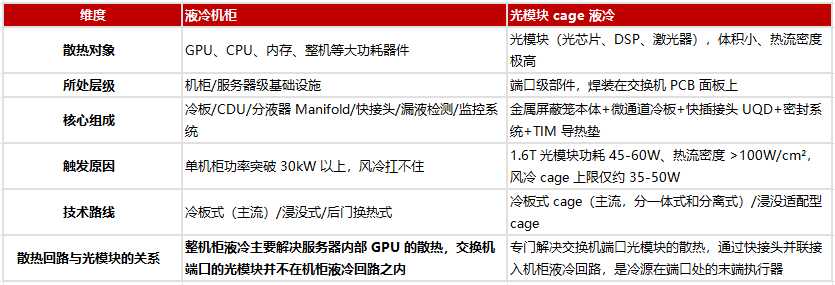
Traditional air cooling is described as limited to roughly 15–20 kW, while mainstream AI racks reach 80–120 kW.
Why It Matters
For AI infrastructure builders, the analysis reinforces that thermal design is becoming a deployment constraint rather than an optional optimization. Liquid cooling availability, supplier qualification, and optical-interconnect thermals should be included in data-center capacity planning.
What To Do Next
Add rack power, PUE, cold-plate/CDU availability, and optical-module thermal limits to your next AI data-center deployment checklist.
Key Points
- •Traditional air cooling is described as limited to roughly 15–20 kW, while mainstream AI racks reach 80–120 kW.
- •Nvidia’s Rubin platform, policy requirements, and rising optical-module power are cited as major liquid-cooling demand drivers.
- •The proposed three-step screen checks for genuine liquid-cooling business, revenue and profit realization, and liquid-cooling revenue concentration.
- •The article identifies 43 core companies, including 14 with both liquid-cooling revenue and profit already realized.
- •Examples such as Gaolan, Jinfु Technology, Feirongda, and DingTong illustrate the difference between delivered earnings and expectation-driven valuations.
Weekly AI Recap
Read this week's curated digest of top AI events →
👉Related Updates



AI-curated news aggregator. All content rights belong to original publishers.
Original source: 虎嗅 ↗
This is a summary, not the original. Read the source, or get the weekly briefing.
Weekly AI briefing
One email a week. Unsubscribe anytime.