AI Lab Runs 30K Experiments, Cuts Bio Costs
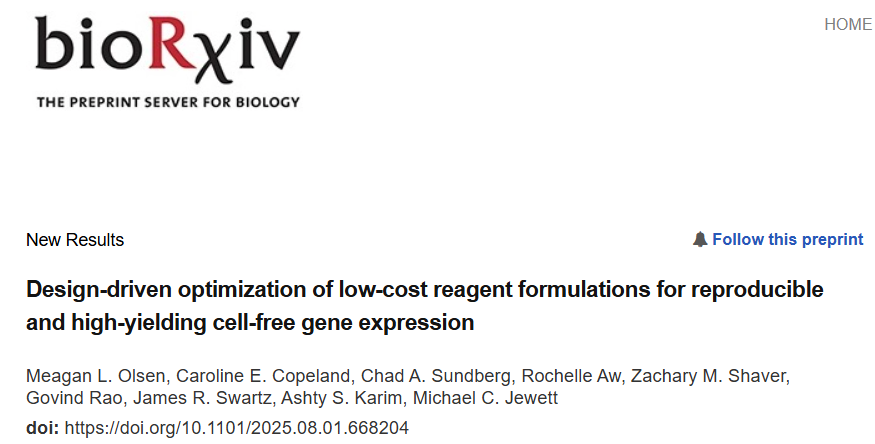
💡AI robot outperforms humans 20x in bio expts—research game-changer
⚡ 30-Second TL;DR
What Changed
Completed 30k experiments vs. human PhD's 1,231 in months—20x scale.
Why It Matters
Transforms bio research by scaling trials, freeing scientists for innovation; future as shared/cloud platforms.
What To Do Next
Prototype your own autonomous lab using open robotics APIs and LLMs like Llama 3.
Key Points
- •Completed 30k experiments vs. human PhD's 1,231 in months—20x scale.
- •GPT-5 core proposes hypotheses, designs, interprets data autonomously.
- •Achieved 40% further cost cut after humans reduced 6x; strong biochemical reasoning.
- •Limits: clumsy robotics, no exploratory research, high setup costs.
🧠 Deep Insight
Background and context from public sources — not the original article. 8 sources cited.
🔑 Enhanced Key Takeaways
- •The system produced superfolder green fluorescent protein (sfGFP) at $422 per gram, achieving a 40% cost reduction from the prior $698 per gram benchmark and a 27% increase in protein production titer.[1][2][3]
- •GPT-5 executed 36,000 unique CFPS reaction compositions across 580 automated plates in six iterative cycles, establishing a new state-of-the-art in three rounds over two months.[1][5][6]
- •Ginkgo released the Pydantic model open source and offers the AI-optimized cell-free reaction mix for commercial purchase via its reagents store.[1][6]
🛠️ Technical Deep Dive
- •GPT-5 accessed internet, data analysis packages, prior experimental metadata, and state-of-the-art preprints to design experiments, analyze results, and refine approaches autonomously.[1][5]
- •Strict programmatic validation using Pydantic enforced physical executability of AI-designed experiments on the robotic platform, preventing implausible 'paper experiments'.[1][5]
- •Optimizations targeted buffering, energy regeneration components, and polyamines, yielding robust compositions suited to low-oxygen, plate-based autonomous lab conditions.[6]
🔮 Future ImplicationsAI analysis grounded in cited sources
⏳ Timeline
📎 Sources (8)
Factual claims are grounded in the sources below. Forward-looking analysis is AI-generated interpretation.
- prnewswire.com — Ginkgo Bioworks Autonomous Laboratory Driven by Openais Gpt 5 Achieves 40 Improvement Over State of the Art Scientific Benchmark 302680619
- synbiobeta.com — Ginkgo Bioworks Autonomous Laboratory Driven by Openai S Gpt 5 Achieves 40 Improvement Over State of the Art Scientific Benchmark
- iom3.org — Testing Testing an Autonomous Lab
- omicsomics.blogspot.com — AI Agent Driven Biochemical Optimization
- OpenAI — Gpt 5 Lowers Protein Synthesis Cost
- rdworldonline.com — Openais Gpt 5 Autonomously Ran 36000 Protein Synthesis Experiments in Ginkgo Bioworks Cloud Lab
- illuminaire.io — AI Steps Into the Laboratory and Begins to Cut the Cost of Biology
- drugdiscoverytrends.com — Slas 2026 Orchestration Patforms API First Instruments and the Rise of Autonomous Labs
Weekly AI Recap
Read this week's curated digest of top AI events →
👉Related Updates

AI-curated news aggregator. All content rights belong to original publishers.
Original source: 虎嗅 ↗
This is a summary, not the original. Read the source, or get the weekly briefing.
Weekly AI briefing
One email a week. Unsubscribe anytime.