AI is hunting down the previous generation of unicorns
💡Understand why 220 unicorns are failing and how to avoid being replaced by AI-native competitors.
⚡ 30-Second TL;DR
What Changed
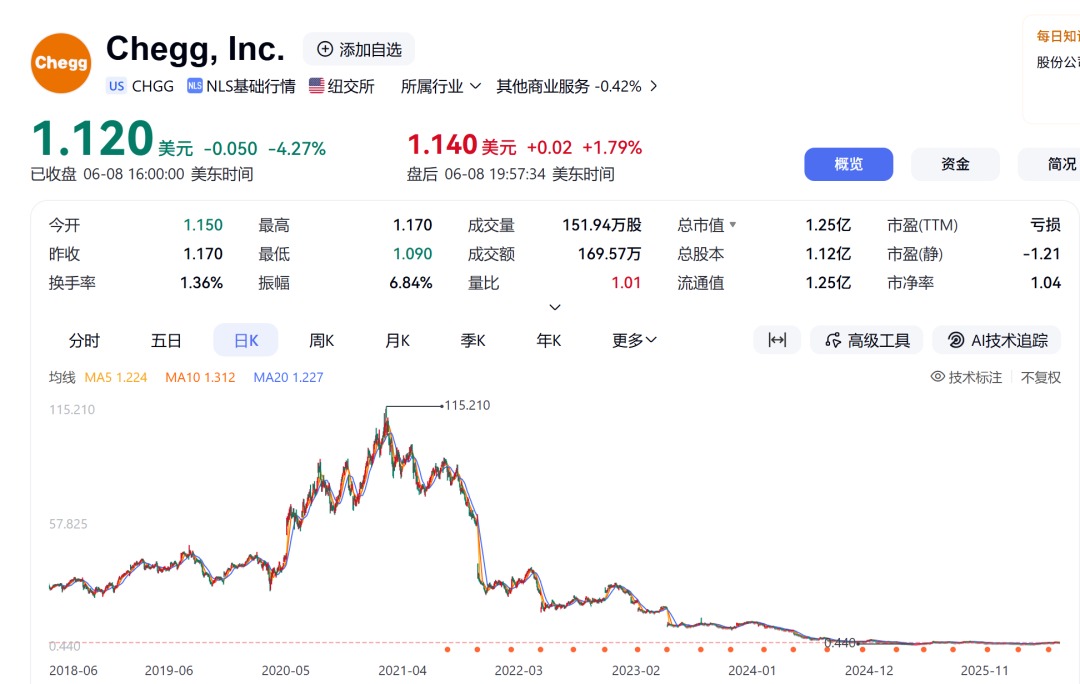
220 unicorn companies are being disrupted by AI
Why It Matters
This signals a massive shift in market valuation, where legacy tech stacks are becoming liabilities. Founders must pivot to AI-first architectures to survive.
What To Do Next
Audit your current product roadmap to identify if your core value proposition can be automated by a simple LLM agent.
Key Points
- •220 unicorn companies are being disrupted by AI
- •Traditional business models are losing their competitive edge
- •AI-native companies are replacing legacy tech giants
🧠 Deep Insight
Background and context from public sources — not the original article. 24 sources cited.
🔑 Enhanced Key Takeaways
- •More than 220 U.S. startups that achieved unicorn status before the generative AI boom have lost their billion-dollar valuations, with those that last raised in 2021 experiencing an average 68% valuation drop and 2022 firms a 52% decline.
- •Global venture capital investment in AI companies surged, exceeding $100 billion in 2024 (an 80% increase from 2023) and reaching $258.7 billion in 2025, accounting for over half of all global VC investment, with a significant portion directed towards foundation models and AI infrastructure.
- •AI-native companies are fundamentally different from 'AI-first' businesses; they are built with AI as their core operating system from day one, enabling structural advantages like smaller teams, automated workflows, and products designed around continuous AI interaction, leading to faster decision-making and exponential growth.
- •The Software-as-a-Service (SaaS) sector is particularly vulnerable, with 75 SaaS companies identified among fallen unicorns, as AI agents challenge traditional per-seat pricing models by enabling businesses to operate with significantly fewer human employees.
- •AI-native capabilities are becoming a powerful competitive moat, allowing these companies to achieve superior agility, efficiency, and innovation velocity, which is driving market share concentration and redefining what venture capital considers scalable and desirable.
🛠️ Technical Deep Dive
- Core Architecture: AI-native systems embed AI functionality directly into their system architecture, treating data as a foundational element in a data-centric approach.
- Operational Principles: These systems are characterized by continuous learning and adaptation through real-time data and user interactions, autonomous decision logic, and integrated AI operations across all layers from interface design to workflow management.
- Scalability and Flexibility: Designed for scalability, AI-native systems can manage growing data volumes and adjust to technological shifts dynamically, expanding functions and capabilities without overhauling existing infrastructure.
- Performance Optimization: They enable predictive performance optimization through deep learning, reduced latency by processing data locally (edge AI), and intelligent automation that minimizes manual intervention.
- AI Factory Concept: AI-driven business models often leverage an 'AI factory,' a systematic framework that continuously processes and refines raw data into valuable insights using interconnected components like data pipelines and machine learning models for automated decision-making.
- AI Operating Layer: Future enterprise value is expected to come from orchestration platforms that unify data, models, and business logic to create a cohesive AI operating layer across the enterprise.
- Application Development: AI-native application development offers advantages such as hyper-personalized user experiences, advanced security through behavioral analysis, seamless cross-platform intelligence with cloud-native architecture, and continuous learning with real-time model updates.
🔮 Future ImplicationsAI analysis grounded in cited sources
⏳ Timeline
📎 Sources (24)
Factual claims are grounded in the sources below. Forward-looking analysis is AI-generated interpretation.
- tradersunion.com
- thenews.com.pk
- mintz.com
- whatjobs.com
- venturecapitaljournal.com
- oecd.org
- medium.com
- innovationsventure.studio
- nstarxinc.com
- businessengineer.ai
- shieldbase.ai
- aiinsightsnews.net
- richardvanhooijdonk.com
- thoughtspot.com
- swimm.io
- internationalbanker.com
- teksystems.com
- bitcot.com
- hbs.edu
- intelcapital.com
- bcg.com
- medium.com
- medium.com
- cryptobriefing.com
Weekly AI Recap
Read this week's curated digest of top AI events →
👉Related Updates



AI-curated news aggregator. All content rights belong to original publishers.
Original source: 钛媒体 ↗
This is a summary, not the original. Read the source, or get the weekly briefing.
The weekly digest
One email a week. Unsubscribe anytime.