來源钛媒体•較早收集於 9m
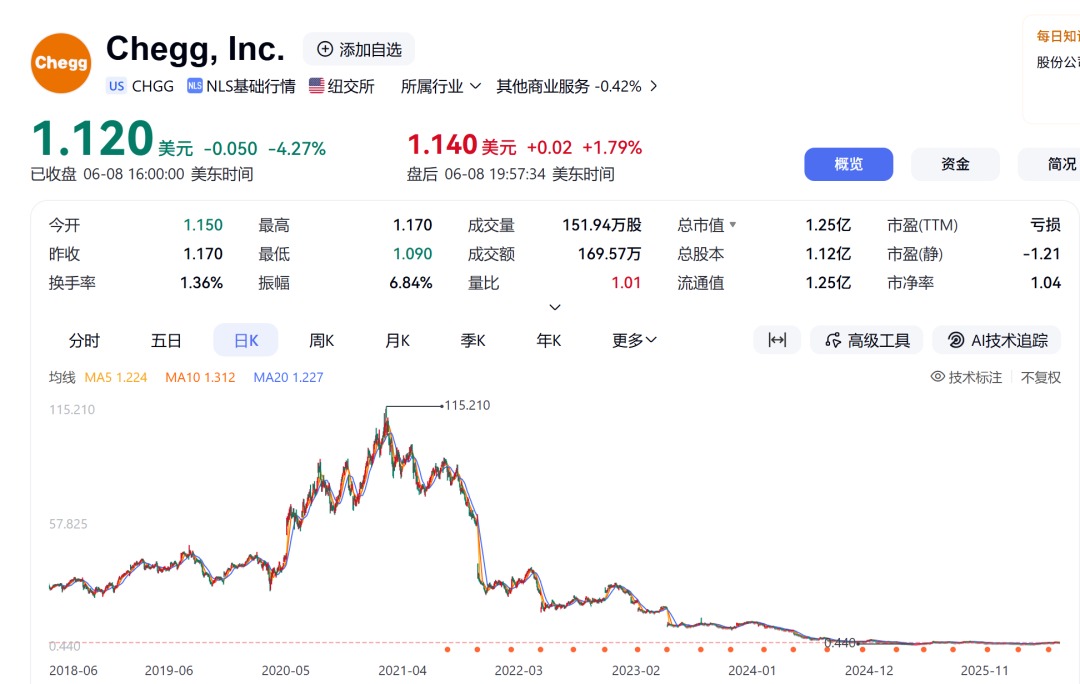
AI 正在獵殺上一代獨角獸
#market-disruption#unicorn#business-strategyai-agentsai
💡了解為何 220 家獨角獸企業正在衰落,以及如何避免被 AI 原生競爭對手取代。
⚡ 30 秒速覽
有什麼變化
220 家獨角獸企業正受到 AI 的衝擊
為什麼重要
這標誌著市場估值的巨大轉變,舊有的技術架構正成為負債。創辦人必須轉向 AI 優先的架構以求生存。
下一步行動
審查您目前的產品路線圖,確認您的核心價值主張是否能被簡單的 LLM Agent 自動化。
誰應關注:Founders & Product Leaders
關鍵要點
- •220 家獨角獸企業正受到 AI 的衝擊
- •傳統商業模式正在失去競爭優勢
- •AI 原生企業正在取代舊有的科技巨頭
🧠 深度解析
背景與延伸:來自公開資料,非原文內容。引用 24 個來源。
🔑 增強重點摘要
- •More than 220 U.S. startups that achieved unicorn status before the generative AI boom have lost their billion-dollar valuations, with those that last raised in 2021 experiencing an average 68% valuation drop and 2022 firms a 52% decline.
- •Global venture capital investment in AI companies surged, exceeding $100 billion in 2024 (an 80% increase from 2023) and reaching $258.7 billion in 2025, accounting for over half of all global VC investment, with a significant portion directed towards foundation models and AI infrastructure.
- •AI-native companies are fundamentally different from 'AI-first' businesses; they are built with AI as their core operating system from day one, enabling structural advantages like smaller teams, automated workflows, and products designed around continuous AI interaction, leading to faster decision-making and exponential growth.
- •The Software-as-a-Service (SaaS) sector is particularly vulnerable, with 75 SaaS companies identified among fallen unicorns, as AI agents challenge traditional per-seat pricing models by enabling businesses to operate with significantly fewer human employees.
- •AI-native capabilities are becoming a powerful competitive moat, allowing these companies to achieve superior agility, efficiency, and innovation velocity, which is driving market share concentration and redefining what venture capital considers scalable and desirable.
🛠️ 技術深入
- Core Architecture: AI-native systems embed AI functionality directly into their system architecture, treating data as a foundational element in a data-centric approach.
- Operational Principles: These systems are characterized by continuous learning and adaptation through real-time data and user interactions, autonomous decision logic, and integrated AI operations across all layers from interface design to workflow management.
- Scalability and Flexibility: Designed for scalability, AI-native systems can manage growing data volumes and adjust to technological shifts dynamically, expanding functions and capabilities without overhauling existing infrastructure.
- Performance Optimization: They enable predictive performance optimization through deep learning, reduced latency by processing data locally (edge AI), and intelligent automation that minimizes manual intervention.
- AI Factory Concept: AI-driven business models often leverage an 'AI factory,' a systematic framework that continuously processes and refines raw data into valuable insights using interconnected components like data pipelines and machine learning models for automated decision-making.
- AI Operating Layer: Future enterprise value is expected to come from orchestration platforms that unify data, models, and business logic to create a cohesive AI operating layer across the enterprise.
- Application Development: AI-native application development offers advantages such as hyper-personalized user experiences, advanced security through behavioral analysis, seamless cross-platform intelligence with cloud-native architecture, and continuous learning with real-time model updates.
🔮 前景展望基於引用來源的 AI 分析
The distinction between AI-native and AI-enabled companies will become a critical determinant of long-term enterprise competitiveness.
AI-native companies, built with AI at their core, demonstrate superior agility, efficiency, and innovation velocity, making it increasingly difficult for traditional firms to catch up.
Autonomous business operations, driven by reasoning-capable AI models, will emerge across multiple sectors between 2025 and 2028.
AI systems are expected to take on increasingly complex decision-making responsibilities, enabling automated operations in areas that previously required human judgment.
Venture capital investment will continue to heavily favor AI infrastructure and foundational model companies, potentially leading to market consolidation around these providers.
Billions of dollars are already flowing into these areas, and the underlying AI infrastructure providers are seen as the ultimate winners if every new unicorn is an AI-driven platform.
⏳ 時間線
2022-11
ChatGPT's public debut marks a turning point, shifting venture capital focus and leading to a broad repricing of pre-AI startups.
2023
Global VC funding for generative AI surges from $2.8 billion to $15.3 billion, significantly increasing its share of total AI VC investments.
2024
Global VC investment in AI companies exceeds $100 billion, an 80% increase from 2023, with generative AI funding reaching approximately $45 billion.
2024-09
Unicorn valuations begin a significant upward trend, increasing by 70% since this period, largely driven by AI investments.
2025
Global VC investments in AI firms reach $258.7 billion, comprising over half (61%) of all VC investment, with foundation model companies raising $80 billion.
2026-01
Over 220 U.S. startups that previously achieved unicorn status are classified as 'fallen unicorns' due to AI disruption and shifting investor priorities.
📎 來源 (24)
Factual claims are grounded in the sources below. Forward-looking analysis is AI-generated interpretation.
- tradersunion.com
- thenews.com.pk
- mintz.com
- whatjobs.com
- venturecapitaljournal.com
- oecd.org
- medium.com
- innovationsventure.studio
- nstarxinc.com
- businessengineer.ai
- shieldbase.ai
- aiinsightsnews.net
- richardvanhooijdonk.com
- thoughtspot.com
- swimm.io
- internationalbanker.com
- teksystems.com
- bitcot.com
- hbs.edu
- intelcapital.com
- bcg.com
- medium.com
- medium.com
- cryptobriefing.com
📰
AI 週報
閱讀本週精選 AI 大事摘要 →
👉相關動態



AI 策展新聞聚合。所有內容版權歸原始發布者所有。
原始來源: 钛媒体 ↗
每週電子報
每週一封,可隨時退訂。