AI Is Rewriting the Tour Guide Business
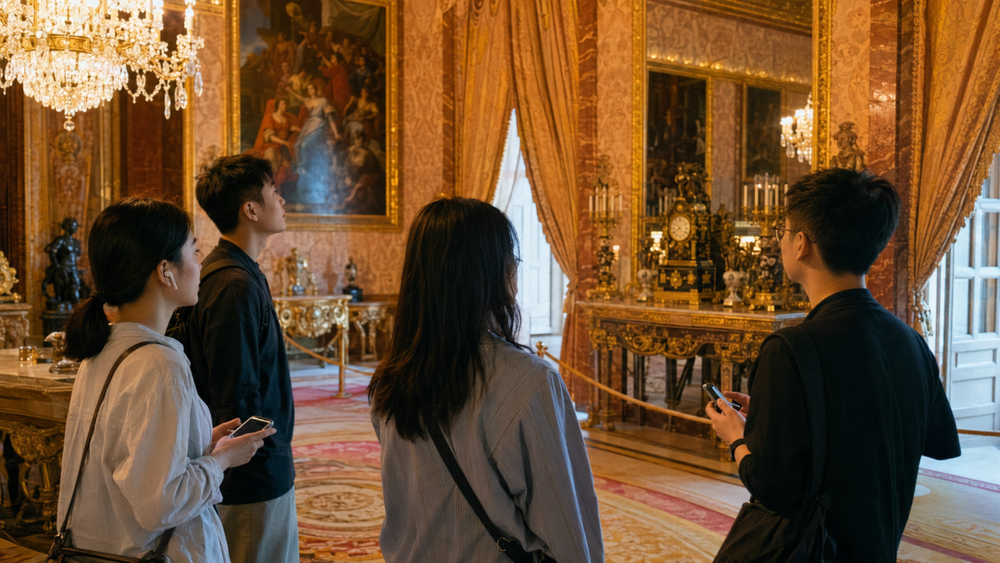
💡See why museum-trained AI guides threaten basic tours—and where human guides still win.
⚡ 30-Second TL;DR
What Changed
Chinese-speaking guides in Madrid, Paris, and Lisbon report fewer independent travelers and small family groups booking tours.
Why It Matters
The article highlights a clear substitution risk for standardized, information-heavy service work, especially where users tolerate occasional factual errors. For AI builders, museums and tourism operators represent a strong vertical-AI opportunity, but trust, provenance, and human escalation remain essential.
What To Do Next
Prototype a museum RAG guide using a curated collection database, source citations, uncertainty labels, and human escalation for disputed historical claims.
Key Points
- •Chinese-speaking guides in Madrid, Paris, and Lisbon report fewer independent travelers and small family groups booking tours.
- •Visitors can photograph exhibits or enter labels into AI apps to receive interactive, low-cost explanations.
- •Shanghai museums and other Chinese cultural venues are deploying AI glasses, Doubao-based guides, digital humans, and smart interpretation systems.
- •Grounded institutional data can reduce hallucinations, but AI still struggles with disputed scholarship and visitor needs that are not explicitly stated.
- •Human guides are likely to shift toward logistics, accessibility, safety, family travel, senior groups, and expert cultural experiences.
🧠 Deep Insight
AI-generated analysis for this event.
🔑 Enhanced Key Takeaways
- •The integration of multimodal AI in tourism has led to the rise of 'AI-augmented tour guiding' as a service category, where human guides now use proprietary AI tools to generate real-time, personalized itineraries for clients on the fly.
- •Major cultural institutions are increasingly adopting RAG (Retrieval-Augmented Generation) architectures to ensure AI guides cite specific, verified museum archives, effectively mitigating the 'hallucination' risks associated with general-purpose LLMs.
- •The shift in the tourism labor market has prompted new vocational training programs in China and Europe that certify 'AI-Literate Guides,' focusing on human-AI collaboration rather than replacement.
- •Data privacy concerns have emerged as a significant barrier, with several European museums restricting the use of third-party AI apps due to the unauthorized scraping of proprietary exhibit descriptions and intellectual property.
- •Smart tourism infrastructure, such as 5G-enabled AR headsets, is being deployed in pilot programs to provide low-latency, high-fidelity visual overlays that synchronize with AI-generated audio commentary.
📊 Competitor Analysis▸ Show
| Feature | General LLMs (ChatGPT/Gemini) | Institutional AI Guides | Human Guides |
|---|---|---|---|
| Accuracy | Moderate (Hallucination risk) | High (Grounded in RAG) | Very High (Expertise) |
| Cost | Free/Low Subscription | Often Free (Museum-provided) | High (Hourly/Daily rate) |
| Context Awareness | Low (General knowledge) | High (Domain-specific) | Superior (Emotional/Social) |
| Logistics/Safety | None | Limited | Full Service |
🛠️ Technical Deep Dive
- Implementation of RAG (Retrieval-Augmented Generation) pipelines to connect LLMs to museum-specific knowledge graphs and curatorial databases.
- Use of multimodal models (e.g., GPT-4o, Gemini 1.5 Pro) capable of processing real-time video feeds from AR glasses to identify objects and trigger context-aware audio.
- Deployment of edge computing to reduce latency in AI interpretation, ensuring that audio commentary aligns precisely with a visitor's physical movement through a gallery.
- Fine-tuning of domain-specific models on archaeological datasets to improve the accuracy of historical terminology and cultural nuance.
🔮 Future ImplicationsAI analysis grounded in cited sources
⏳ Timeline
Weekly AI Recap
Read this week's curated digest of top AI events →
👉Related Updates

AI-curated news aggregator. All content rights belong to original publishers.
Original source: 虎嗅 ↗