AI Invades Long-Form TV Scripting
💡AI as 'cyber boss' in TV scripting—writers' real frustrations & limits exposed.
⚡ 30-Second TL;DR
What Changed
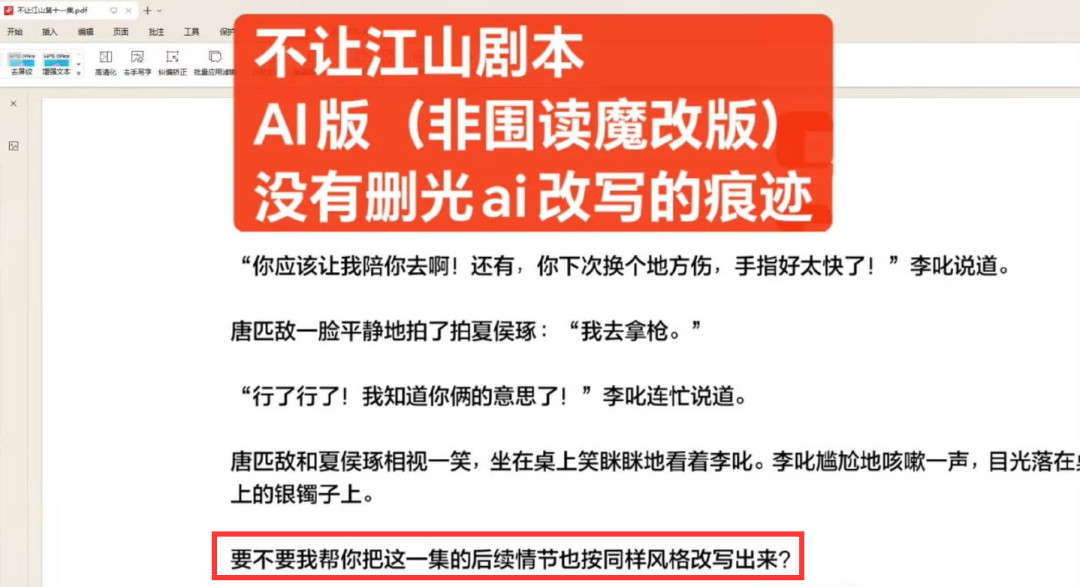
AI prompts spotted in drama scripts like '不让江山'; Deepseek popular for feedback.
Why It Matters
AI boosts feedback volume but burdens writers with low-value input, potentially standardizing creative output. Pros: aids non-experts; cons: erodes nuanced human insights in long-form TV.
What To Do Next
Experiment with Deepseek for script grammar checks but override generic plot feedback with human review.
Key Points
- •AI prompts spotted in drama scripts like '不让江山'; Deepseek popular for feedback.
- •Producers send AI analyses on motives/structure, often vague/low-executability.
- •Writers view AI as auxiliary for grammar/names, not plot innovation.
- •Fear of unprofessional 'cyber clients' from non-experts misusing AI.
- •Long-drama needs human emotion weaving; AI suits short-form repetition.
🧠 Deep Insight
Background and context from public sources — not the original article. 8 sources cited.
🔑 Enhanced Key Takeaways
- •Western AI tools like Sudowrite and LTX Studio are advancing screenwriter assistance with features such as Story Bible for multi-episode TV continuity and script-to-video pipelines handling up to 12,000 words for cinematic production[1][5].
- •Industry predictions for 2026 highlight AI video models like Google's Veo, OpenAI's Sora, and Runway improving physics adherence, longer generations, and fine-grained edits, primarily for VFX and graphics in TV rather than full content replacement[2].
- •Autonomous AI agents such as NoimosAI automate video script processes from research to final drafts, reducing production time from hours to minutes and enabling solo creators to scale content equivalent to agency teams[3].
🔮 Future ImplicationsAI analysis grounded in cited sources
📎 Sources (8)
Factual claims are grounded in the sources below. Forward-looking analysis is AI-generated interpretation.
- ltx.studio — Best Text to Video AI
- theindiehustle.com — AI in Tv 5 Predictions for 2026 From
- noimosai.com — Top 5 AI Agents for Video Scripts in 2026 Scale Your Content 10x with Noimosai and More
- youtube.com — Watch
- sudowrite.com — Best AI for Screenwriters in 2026 Write Scripts That Get Read
- youtube.com — Watch
- filmcrux.com — AI Tools
- youtube.com — Watch
Weekly AI Recap
Read this week's curated digest of top AI events →
👉Related Updates
AI-curated news aggregator. All content rights belong to original publishers.
Original source: 虎嗅 ↗
This is a summary, not the original. Read the source, or get the weekly briefing.
Weekly AI briefing
One email a week. Unsubscribe anytime.