AI Hardware Steps Out of the Screen
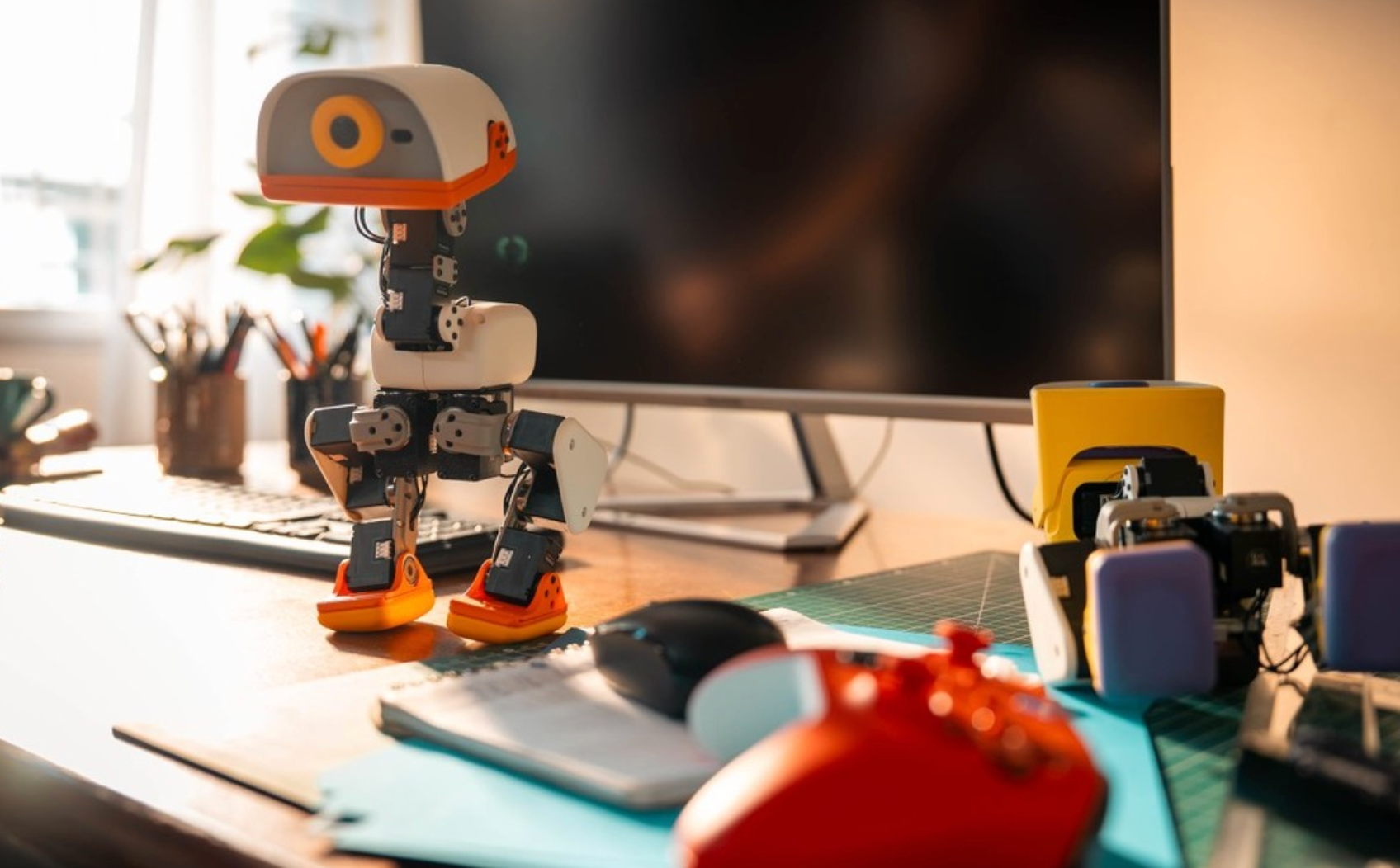
💡Three new AI devices reveal where embodied AI, open hardware, and agent ecosystems may be heading.
⚡ 30-Second TL;DR
What Changed
Microduck is a $399, fully open-source 25-centimeter robot with 15 motors, lidar, cameras, and reinforcement-learning tools in Python and JavaScript.
Why It Matters
For AI builders, the key opportunity is shifting from selling standalone devices to building ecosystems of skills, models, and user modifications. Open hardware and affordable entry points could accelerate embodied-AI experimentation, although privacy concerns around always-on cameras and recording remain significant.
What To Do Next
Clone Microduck’s reinforcement-learning tools from GitHub and prototype one simulation-to-real behavior before evaluating its hardware ecosystem.
Key Points
- •Microduck is a $399, fully open-source 25-centimeter robot with 15 motors, lidar, cameras, and reinforcement-learning tools in Python and JavaScript.
- •Plaud One embeds eSIM, 4G, storage, microphones, and speakers in its charging case, enabling phone-free recording, transcription, and summaries.
- •Autonomous Lamp combines an 8-core ARM64 processor, 6GB memory, camera tracking, and a 70-plus-skill store for posture monitoring and agent tasks.
- •The products favor low-cost hardware and software ecosystems or DIY customization over fully predefined functionality.
🧠 Deep Insight
Background and context from public sources — not the original article. 6 sources cited.
🔑 Enhanced Key Takeaways
- •The industry is pivoting toward 'Physical AI,' prioritizing edge-based intelligence to reduce reliance on cloud-dependent latency for real-time robotic interaction.
- •Nvidia’s August 2026 release of the Jetson Orin Nano 2 provides a standardized, power-efficient compute platform for the small-scale robotics market, directly supporting the hardware requirements of devices like Microduck.
- •The surge in edge AI hardware deployment is currently constrained by a critical minerals crisis, specifically regarding copper availability for power distribution, forcing manufacturers to prioritize energy efficiency.
- •There is a strategic shift toward 'small and medium frontier models' designed for local execution, enabling devices like the Autonomous Lamp to perform agentic tasks without constant internet connectivity.
- •Hardware manufacturers are increasingly adopting full-stack integration, exemplified by OpenAI's Jalapeño chip, which aims to optimize AI work-per-watt ratios beyond general-purpose GPU capabilities.
📊 Competitor Analysis▸ Show
| Product | Category | Key Advantage | Pricing |
|---|---|---|---|
| Microduck | Desktop Robot | Open-source/DIY focus | $399 |
| Plaud One | Wearable AI | 4G/eSIM standalone | N/A |
| Autonomous Lamp | Smart Furniture | ARM64/Agentic OS | N/A |
| Jetson Orin Nano 2 | Edge Compute | High inference/watt | N/A |
🛠️ Technical Deep Dive
- Jetson Orin Nano 2: Features a 40% reduction in power consumption compared to the previous generation, optimized for small-scale autonomous systems.
- Jalapeño Chip: OpenAI's custom inference silicon achieving 1.5x to 1.9x improvement in AI work-per-watt.
- Wildcat Lake SoC: Intel's architecture specifically designed for client-side agentic AI processing.
- M5 Ultra Architecture: Supports up to 512GB of unified memory, enabling local execution of large-scale frontier models on desktop hardware.
🔮 Future ImplicationsAI analysis grounded in cited sources
⏳ Timeline
📎 Sources (6)
Factual claims are grounded in the sources below. Forward-looking analysis is AI-generated interpretation.
Weekly AI Recap
Read this week's curated digest of top AI events →
👉Related Updates

AI-curated news aggregator. All content rights belong to original publishers.
Original source: 极客公园 ↗
This is a summary, not the original. Read the source, or get the weekly briefing.
Weekly AI briefing
One email a week. Unsubscribe anytime.