AI Governance Starts with Developer Experience
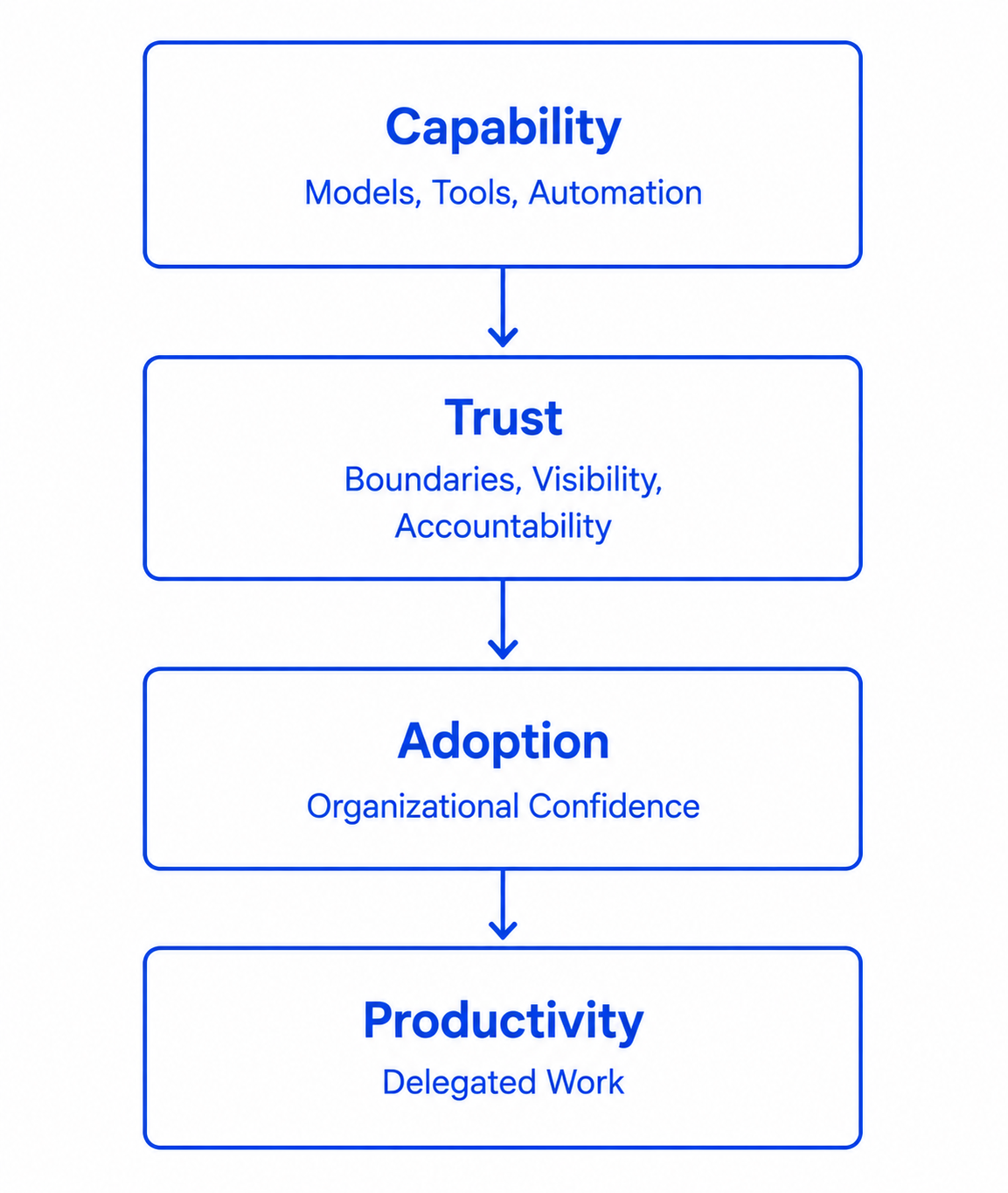
Learn how governance can accelerate AI adoption instead of becoming another developer roadblock.
30-Second TL;DR
What Changed
AI governance should include developer experience, not just security and compliance.
Why It Matters
Organizations that treat governance as part of product and developer experience may achieve broader AI adoption than those relying solely on restrictive controls. The approach also positions governance as an enablement function rather than only a compliance requirement.
What To Do Next
Map one internal AI workflow and document its approved data boundaries, user permissions, and escalation path before deploying it broadly.
Key Points
- •AI governance should include developer experience, not just security and compliance.
- •Trust is essential for developers and organizations adopting AI at scale.
- •Clear boundaries can help teams use AI responsibly while reducing friction.
Deep Insight
AI-generated analysis for this event — not the original article.
Enhanced Key Takeaways
- •Docker has integrated AI-powered features directly into its developer tools, such as Docker Scout, to automate vulnerability scanning and policy enforcement within the CI/CD pipeline.
- •The shift toward 'Shift-Left' AI governance emphasizes embedding compliance checks into the IDE and local development environments rather than relying solely on post-deployment audits.
- •Docker's strategy involves providing 'Golden Images' and curated AI stacks to ensure developers use pre-vetted, secure, and compliant base environments for AI model deployment.
- •Industry trends indicate that developer friction is the primary cause of 'shadow AI' usage, where developers bypass corporate governance to use unauthorized tools for speed.
- •Docker's approach aligns with the broader 'Platform Engineering' movement, which seeks to abstract complex infrastructure and governance requirements into self-service developer portals.
Competitor Analysis
- Docker (AI Governance)
- Developer Experience/Local Dev
- Red Hat (OpenShift AI)
- Enterprise Hybrid Cloud AI
- VMware (Tanzu)
- Multi-cloud Infrastructure
- Docker (AI Governance)
- Shift-Left/Policy-as-Code
- Red Hat (OpenShift AI)
- Centralized/Policy-driven
- VMware (Tanzu)
- Infrastructure-centric
- Docker (AI Governance)
- IDE/CLI/Docker Desktop
- Red Hat (OpenShift AI)
- Kubernetes/OpenShift
- VMware (Tanzu)
- vSphere/Kubernetes
| Feature | Docker (AI Governance) | Red Hat (OpenShift AI) | VMware (Tanzu) |
|---|---|---|---|
| Primary Focus | Developer Experience/Local Dev | Enterprise Hybrid Cloud AI | Multi-cloud Infrastructure |
| Governance Model | Shift-Left/Policy-as-Code | Centralized/Policy-driven | Infrastructure-centric |
| Integration | IDE/CLI/Docker Desktop | Kubernetes/OpenShift | vSphere/Kubernetes |
Technical Deep Dive
- Implementation of Open Policy Agent (OPA) for defining and enforcing governance policies across containerized AI workloads.
- Integration of Software Bill of Materials (SBOM) generation within the Docker build process to track AI model dependencies and supply chain security.
- Utilization of Docker Extensions to allow third-party security and compliance tools to run directly within the Docker Desktop interface.
- Support for multi-architecture builds (ARM64/AMD64) to ensure AI models are portable across diverse edge and cloud environments.
Future ImplicationsAI analysis grounded in cited sources
Timeline
- 2021-05Docker announces a strategic pivot to focus on developer experience and cloud-native application delivery.
- 2022-11Docker introduces Docker Extensions, enabling developers to integrate third-party tools directly into their workflow.
- 2023-05Docker launches Docker Scout to provide real-time software supply chain security and visibility.
- 2024-09Docker expands its platform to include AI/ML workflow support, focusing on containerized model development.
- 2025-06Docker integrates advanced policy enforcement features to support enterprise-grade AI governance.
Weekly AI Recap
Read this week's curated digest of top AI events →
AI-curated news aggregator. All content rights belong to original publishers.
Original source: Docker Blog ↗
This is a summary, not the original. Read the source, or get the weekly briefing.
The weekly digest
One email a week. Unsubscribe anytime.