AI Glasses Face the Impossible Triangle in Chip Design
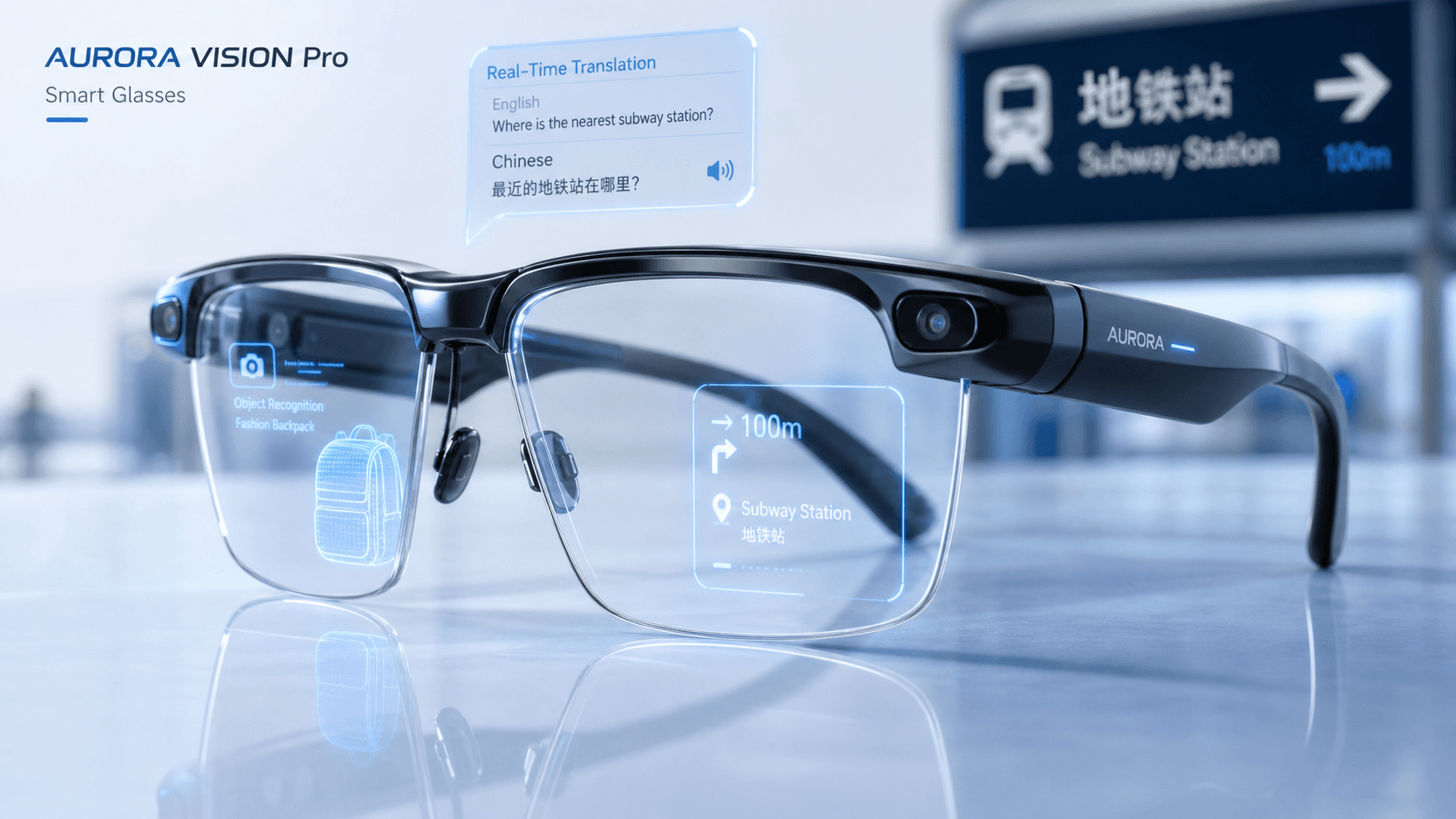
💡Understand the hardware bottlenecks limiting the next generation of AI wearable devices.
⚡ 30-Second TL;DR
What Changed
AI glasses face an 'impossible triangle' of cost, performance, and battery life.
Why It Matters
This highlights the hardware-level constraints for wearable AI, suggesting that future AI applications must be optimized for edge-compute efficiency rather than cloud-heavy processing.
What To Do Next
Evaluate edge-optimized model quantization techniques like INT8 or 4-bit to reduce the compute load for wearable AI deployments.
Key Points
- •AI glasses face an 'impossible triangle' of cost, performance, and battery life.
- •Thermal management and latency are critical bottlenecks for mass production.
- •Dedicated SoC architecture is required to balance power efficiency and AI processing.
🧠 Deep Insight
AI-generated analysis for this event — not the original article.
🔑 Enhanced Key Takeaways
- •The 'impossible triangle' is exacerbated by the shift from cloud-based AI processing to on-device edge computing, which requires specialized NPU (Neural Processing Unit) integration within the SoC.
- •Advanced packaging technologies like FOWLP (Fan-Out Wafer-Level Packaging) are being adopted to reduce the physical footprint of the SoC, addressing the strict weight constraints of wearable glasses.
- •Industry standards are shifting toward heterogeneous computing architectures, where low-power microcontrollers handle 'always-on' sensor data while the primary AI accelerator remains in a deep-sleep state to conserve battery.
- •Thermal throttling in AI glasses is being mitigated by new material science applications, such as graphene-based heat spreaders integrated directly into the frame chassis.
- •Latency requirements for augmented reality (AR) overlays necessitate a motion-to-photon latency of under 20ms, forcing chip designers to prioritize deterministic AI inference over raw throughput.
📊 Competitor Analysis▸ Show
| Feature | Meta Orion (Prototype) | Snap Spectacles (Gen 5) | Ray-Ban Meta (Gen 2) |
|---|---|---|---|
| AI Processing | On-device + Cloud | On-device (Snap OS) | Cloud-heavy |
| Display | MicroLED AR | Waveguide AR | None (Audio/Camera) |
| Battery Life | ~2 Hours | ~45 Minutes | ~4 Hours |
| Primary Focus | AR Research | Developer/Creator | Lifestyle/Audio |
🛠️ Technical Deep Dive
- SoC Architecture: Transitioning to 3nm and 4nm process nodes to maximize performance-per-watt ratios for AI inference.
- Memory Bandwidth: Utilization of LPDDR5X or LPDDR5T memory to handle high-speed data transfer between the NPU and image signal processor (ISP).
- Thermal Design Power (TDP): Target envelopes for AI glasses are typically restricted to under 2-3W to prevent skin-contact discomfort.
- Sensor Fusion: Implementation of dedicated low-latency pipelines for IMU (Inertial Measurement Unit) and camera data to ensure stable AR tracking without overloading the main CPU.
🔮 Future ImplicationsAI analysis grounded in cited sources
⏳ Timeline
Weekly AI Recap
Read this week's curated digest of top AI events →
👉Related Updates
AI-curated news aggregator. All content rights belong to original publishers.
Original source: Pandaily ↗
This is a summary, not the original. Read the source, or get the weekly briefing.
Weekly AI briefing
One email a week. Unsubscribe anytime.