AI Gives Ukrainian Kamikaze Drones Autonomous Target Tracking
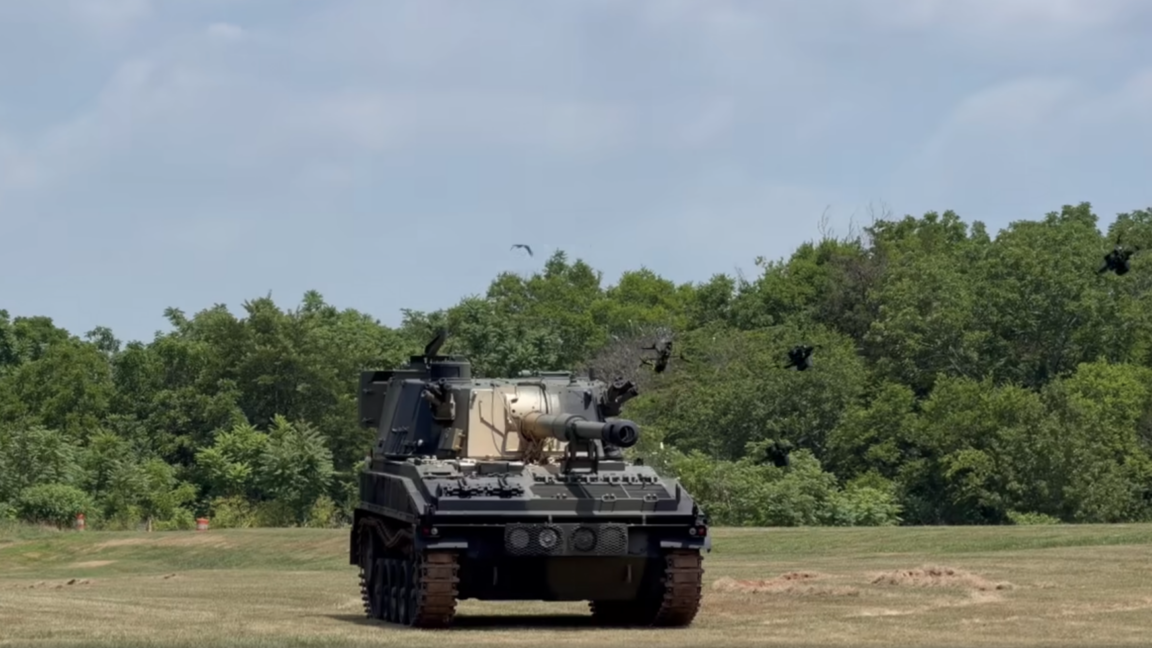
See how edge AI is turning inexpensive drones into autonomous target-tracking systems at scale.
30-Second TL;DR
What Changed
Auterion’s AI enables low-cost kamikaze drones to track targets without continuous human control.
Why It Matters
The deal could accelerate the use of edge AI and computer vision in large-scale drone operations. It also highlights the growing importance of deployable, low-cost autonomy in defense technology.
What To Do Next
Evaluate your edge-computer-vision pipeline against Auterion’s onboard autonomy approach, focusing on latency, intermittent connectivity, and human override controls.
Key Points
- •Auterion’s AI enables low-cost kamikaze drones to track targets without continuous human control.
- •A $100 million agreement covers AI capabilities for 50,000 Ukrainian drones.
- •The deployment demonstrates how onboard AI can increase the effectiveness of inexpensive military drones.
Deep Insight
AI-generated analysis for this event — not the original article.
Enhanced Key Takeaways
- •Auterion's Skynode platform utilizes an open-source architecture based on PX4, allowing for modular integration of AI target-tracking software onto diverse drone airframes.
- •The AI system operates on the edge, processing visual data locally on the drone to maintain target lock even when GPS signals are jammed or denied by electronic warfare (EW) systems.
- •This technology specifically addresses the 'last mile' problem in FPV (First-Person View) drone operations, where human operators often lose control due to signal degradation as the drone approaches the target.
- •The deployment is part of a broader shift toward 'software-defined' warfare, where hardware costs are minimized while lethality is increased through rapid, field-upgradable AI algorithms.
- •Auterion has positioned its solution as a scalable alternative to expensive, proprietary guided munitions, enabling mass-produced commercial drones to achieve precision strike capabilities.
Competitor Analysis
- Auterion (Skynode)
- Open-source/Modular AI
- Shield AI (Hivemind)
- Autonomous flight/Swarm
- Anduril (Lattice)
- Integrated C2/Autonomous systems
- Auterion (Skynode)
- Agnostic (PX4 based)
- Shield AI (Hivemind)
- Proprietary/Integrated
- Anduril (Lattice)
- Proprietary/Integrated
- Auterion (Skynode)
- Low-cost FPV/Tactical
- Shield AI (Hivemind)
- High-end UAS/Swarm
- Anduril (Lattice)
- Enterprise/Defense/C2
- Auterion (Skynode)
- Scalable/Volume-based
- Shield AI (Hivemind)
- High-tier/Contract-based
- Anduril (Lattice)
- High-tier/Contract-based
| Feature | Auterion (Skynode) | Shield AI (Hivemind) | Anduril (Lattice) |
|---|---|---|---|
| Primary Focus | Open-source/Modular AI | Autonomous flight/Swarm | Integrated C2/Autonomous systems |
| Hardware | Agnostic (PX4 based) | Proprietary/Integrated | Proprietary/Integrated |
| Target Market | Low-cost FPV/Tactical | High-end UAS/Swarm | Enterprise/Defense/C2 |
| Pricing | Scalable/Volume-based | High-tier/Contract-based | High-tier/Contract-based |
Technical Deep Dive
- Utilizes the Skynode hardware module which acts as an onboard companion computer for flight controllers.
- Implements computer vision algorithms optimized for low-latency object detection and tracking on embedded processors.
- Leverages the MAVLink protocol for communication between the AI tracking module and the flight control system.
- Designed to function in GPS-denied environments by relying on visual odometry and target-relative navigation.
- Supports rapid model updates, allowing operators to push new target recognition profiles to the drone fleet in the field.
Future ImplicationsAI analysis grounded in cited sources
Timeline
- 2023-05Auterion announces expansion of its Skynode platform to support advanced edge computing for tactical drones.
- 2024-02Auterion begins deeper integration efforts with Ukrainian drone manufacturers to optimize AI for local battlefield conditions.
- 2025-09Auterion secures major funding and partnership agreements to scale AI-enabled drone production for international defense partners.
- 2026-06The $100 million contract for 50,000 AI-equipped drones is finalized and deployment begins.
Weekly AI Recap
Read this week's curated digest of top AI events →
Related Updates



AI-curated news aggregator. All content rights belong to original publishers.
Original source: Ars Technica AI ↗
This is a summary, not the original. Read the source, or get the weekly briefing.
The weekly digest
One email a week. Unsubscribe anytime.