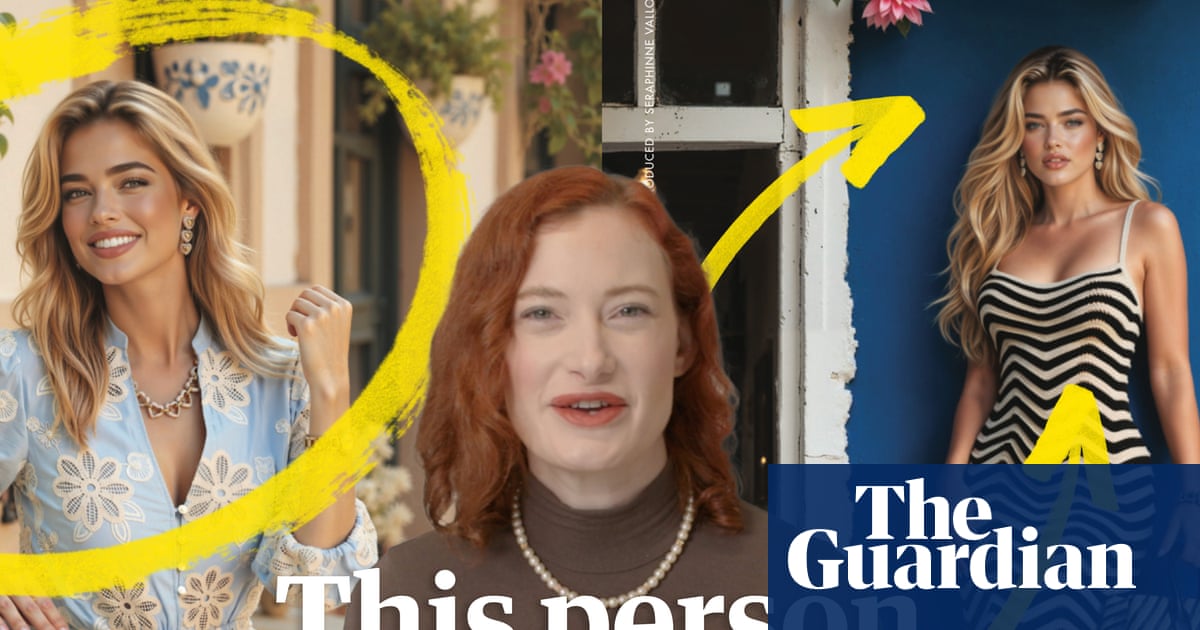
AI-generated models are transforming the fashion retail industry
💡Learn how fashion retailers are balancing AI-driven operational efficiency with the demand for consumer transparency.
⚡ 30-Second TL;DR
What Changed
The Iconic and Atoir are adopting AI-generated models to maintain competitiveness.
Why It Matters
The shift toward AI-generated models reduces the overhead of traditional photoshoots, allowing for faster time-to-market. However, it necessitates new industry standards for transparency to maintain consumer trust.
What To Do Next
If you are building e-commerce tools, implement automated metadata tagging to clearly flag AI-generated imagery for compliance and transparency.
Key Points
- •The Iconic and Atoir are adopting AI-generated models to maintain competitiveness.
- •Retailers emphasize the need for clear labeling when AI imagery is used for product sales.
- •AI tools enable smaller fashion brands to operate with greater agility and lower production costs.
- •Maintaining product integrity and accurate representation remains a primary concern for brands.
🧠 Deep Insight
Background and context from public sources — not the original article. 26 sources cited.
🔑 Enhanced Key Takeaways
- •Global adoption of AI-generated models extends beyond Australian retailers, with major international brands like H&M, Levi's, Guess, Valentino, and Balenciaga integrating them into their campaigns and e-commerce strategies.
- •The technology offers substantial cost reductions, with platforms capable of cutting production expenses by 80-95% compared to traditional photoshoots, and significantly accelerating time-to-market by up to 80%.
- •AI models enhance inclusivity by enabling brands to showcase diverse body types, skin tones, and ethnicities without the logistical challenges of extensive casting, which can lead to increased conversion rates (up to 8%) and reduced returns (up to 30%) due to better fit visualization.
- •Beyond efficiency, AI-generated imagery contributes to sustainability efforts by minimizing the need for physical samples and reducing product returns, thereby decreasing waste and supporting more demand-driven inventory planning.
- •Growing ethical and legal concerns, including job displacement, consent for digital likenesses, and potential biases in AI-generated imagery, are prompting calls for clearer disclosure standards and the development of legal frameworks, such as New York's Fashion Workers Act.
📊 Competitor Analysis▸ Show
| Platform | Key Features | Pricing Model (where available) | Benchmarks/Strengths |
|---|---|---|---|
| Looklet | AI-generated models, videos, movements; photorealistic avatars | Not specified | Reduces time-to-market by up to 80%; high-quality on-model imagery from garment shots. |
| MetaModels.ai | Converts product packshots into on-model imagery; fully synthetic or digital clones | Not specified | 95%+ cost reduction vs. traditional shoots; diverse representation at scale. |
| REWA AI Studio | 150+ pre-built model poses, instant background replacement, e-commerce integration | Not specified | Comprehensive virtual model generation; intuitive drag-and-drop functionality. |
| Nightjar | Catalog-scale consistency, reusable Photography Styles, Compositions, Fashion Models, Recipes | $0.10-1.17 per image; $50/month for 400 generations | Leads for full-workflow consistency across entire catalogs. |
| Fashn | Specialist virtual try-on with garment drape engine | Not specified | Strongest for pure garment drape accuracy on flatlay-to-model conversions. |
| Uwear | High-volume batch AI fashion photography (up to 10,000 items via CSV); specialized drape engines | Not specified | Handles highest batch volumes; accurate garment fit visualization. |
| WearView | Combines AI model generation, virtual try-on, flatlay to model conversion, video generation, pose control | Not specified | Best overall for e-commerce, covers both text-to-model and garment-to-model workflows. |
| Botika | AI-generated models for authentic, on-brand imagery; diverse models | Not specified | Creative freedom, consistency, and full control; reduces production costs. |
| Lalaland.ai | Specializes in diverse, size-inclusive AI models | Not specified | Showcases clothes on models of different ages, sizes, and ethnicities. |
| Claid | AI fashion suite for virtual try-on; 100+ virtual models, post-editing tools, APIs | Not specified | Best for PDP-ready on-model outputs at scale; extensive image editing features. |
| Modelia | Upload flat-lay/mannequin/real model garment; customize size, expression, color; background removers, image enhancers, body shape changer | Not specified | Comprehensive and user-friendly; detailed customization options for diversity. |
🛠️ Technical Deep Dive
- Generative AI and Neural Networks: AI fashion models are fundamentally created using advanced machine learning and generative AI technologies.
- Generative Adversarial Networks (GANs): These algorithms are employed to produce highly realistic synthetic photos by training two neural networks—a generator that creates images and a discriminator that evaluates them—against each other.
- Diffusion Models: Many modern AI human model generators utilize diffusion models, which operate by starting from noise and iteratively refining it towards an image that matches the given prompt and reference inputs.
- Low-Rank Adaptation (LoRA) Models: Virtual human models are often powered by LoRA models, which are relatively small machine learning models designed for efficient adaptation and learning from new data, crucial for achieving photorealistic fashion imagery.
- Image Generation Process: The typical workflow involves uploading flat clothing product images (e.g., flat-lays, ghost mannequin shots, packshots). The AI then renders these garments onto virtual model bodies, accurately simulating draping, lighting, and fabric physics.
- Inputs and Constraints: Inputs can include text prompts to define the model's persona (e.g., age range, body type, hair, expression, styling), reference garment images, and optional pose or scene references for visual consistency. Crucially, the AI treats the garment as a fixed constraint, preserving its original cut, color, print, and logos while generating the surrounding human figure and environment.
- Post-processing and Challenges: Image processing algorithms are used to enhance photo quality by correcting imperfections like glare and color discrepancies. Technical challenges include accurately simulating realistic body postures and movements, natural garment interaction with fabric dynamics, precise skin tone representation across diverse demographics, and realistic rendering of environmental factors such as lighting.
🔮 Future ImplicationsAI analysis grounded in cited sources
⏳ Timeline
📎 Sources (26)
Factual claims are grounded in the sources below. Forward-looking analysis is AI-generated interpretation.
- metamodels.ai
- looklet.com
- rewarx.com
- nightjar.so
- thefashionlaw.com
- style3d.com
- sandrareynoldsjuniors.co.uk
- tfashion.ai
- forbes.com
- silverandriley.com
- hexaware.com
- iksula.com
- wearview.co
- wearview.co
- botika.com
- steezely.com
- claid.ai
- modelia.ai
- proedu.com
- imagga.com
- uwear.ai
- mirrorsize.com
- iksula.com
- marketplace.org
- veicolo-agency.com
- businessmodelcanvastemplate.com
Weekly AI Recap
Read this week's curated digest of top AI events →
👉Related Updates
AI-curated news aggregator. All content rights belong to original publishers.
Original source: The Guardian Technology ↗
This is a summary, not the original. Read the source, or get the weekly briefing.
The weekly digest
One email a week. Unsubscribe anytime.