AI gait recognition identifies individuals by walking patterns
💡Learn how computer vision is moving beyond facial recognition to identify people via movement patterns.
⚡ 30-Second TL;DR
What Changed
Uses unique walking patterns for biometric identification
Why It Matters
This technology significantly enhances surveillance capabilities in challenging environments. It may raise new privacy concerns regarding tracking individuals without consent.
What To Do Next
Explore pose estimation libraries like MediaPipe or OpenPose to prototype your own gait analysis features.
Key Points
- •Uses unique walking patterns for biometric identification
- •Functions effectively when faces are blurry or obscured
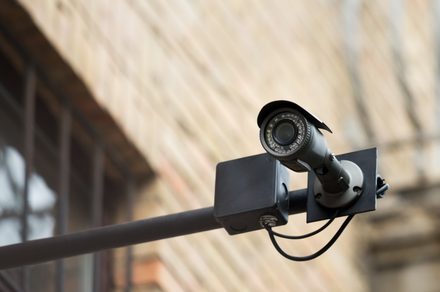
- •Extends the range and utility of existing security camera infrastructure
🧠 Deep Insight
AI-generated analysis for this event — not the original article.
🔑 Enhanced Key Takeaways
- •Gait recognition systems often utilize deep learning architectures like Convolutional Neural Networks (CNNs) and Recurrent Neural Networks (RNNs) to extract spatio-temporal features from video sequences.
- •The technology is increasingly being integrated into 'smart city' surveillance frameworks to track individuals across non-overlapping camera views, a process known as person re-identification (Re-ID).
- •Privacy advocates and regulatory bodies have raised significant concerns regarding the 'passive' nature of gait recognition, as it allows for biometric identification without the subject's explicit consent or awareness.
- •Advanced gait analysis models are now being trained to remain robust against 'covariate factors' such as changes in clothing, carrying bags, or varying walking speeds.
- •Beyond security, gait analysis is being deployed in healthcare settings to detect early-onset neurodegenerative diseases like Parkinson's or Alzheimer's by identifying subtle irregularities in movement.
📊 Competitor Analysis▸ Show
| Feature | Traditional Facial Recognition | Gait Recognition | Behavioral Biometrics (Keystroke/Mouse) |
|---|---|---|---|
| Primary Constraint | Requires clear facial view | Requires high-res video | Requires active user input |
| Environmental Sensitivity | High (Lighting/Masks) | Low (Distance/Obstructions) | None (Digital only) |
| Privacy Perception | High intrusion | High (Passive collection) | Moderate (Contextual) |
🛠️ Technical Deep Dive
- Architecture: Typically employs a two-stream network approach where one stream processes spatial features (body silhouette) and the other processes temporal dynamics (motion flow).
- Data Representation: Uses Silhouettes or Gait Energy Images (GEI) as input, which are temporal templates that compress a walking cycle into a single image representation.
- Feature Extraction: Utilizes 3D-CNNs or Vision Transformers (ViTs) to capture long-range dependencies in walking sequences.
- Implementation: Often requires high frame-rate cameras (minimum 25-30 FPS) to accurately capture the gait cycle and avoid motion blur artifacts.
🔮 Future ImplicationsAI analysis grounded in cited sources
⏳ Timeline
Weekly AI Recap
Read this week's curated digest of top AI events →
👉Related Updates
AI-curated news aggregator. All content rights belong to original publishers.
Original source: Digital Trends ↗
This is a summary, not the original. Read the source, or get the weekly briefing.
The weekly digest
One email a week. Unsubscribe anytime.