來源Digital Trends•較早收集於 31m
AI步態識別系統可透過行走模式辨識個人身份
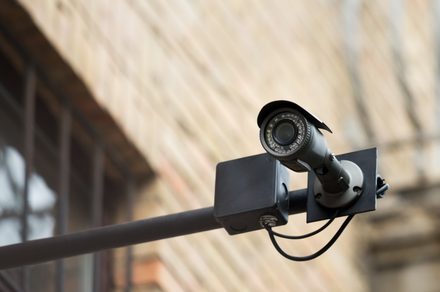
💡了解電腦視覺如何超越臉部辨識,透過移動模式來識別個人身份。
⚡ 30 秒速覽
有什麼變化
利用獨特的行走模式進行生物特徵識別
為什麼重要
此技術顯著增強了在惡劣環境下的監控能力。然而,它也可能引發關於在未經同意下追蹤個人的隱私疑慮。
下一步行動
探索如 MediaPipe 或 OpenPose 等姿勢估計函式庫,以建立您自己的步態分析功能原型。
誰應關注:Developers & AI Engineers
關鍵要點
- •利用獨特的行走模式進行生物特徵識別
- •在臉部模糊或被遮擋時仍能有效運作
- •擴展現有安全攝影機基礎設施的範圍與效用
🧠 深度解析
本篇為 AI 生成分析,非原文內容。
🔑 增強重點摘要
- •Gait recognition systems often utilize deep learning architectures like Convolutional Neural Networks (CNNs) and Recurrent Neural Networks (RNNs) to extract spatio-temporal features from video sequences.
- •The technology is increasingly being integrated into 'smart city' surveillance frameworks to track individuals across non-overlapping camera views, a process known as person re-identification (Re-ID).
- •Privacy advocates and regulatory bodies have raised significant concerns regarding the 'passive' nature of gait recognition, as it allows for biometric identification without the subject's explicit consent or awareness.
- •Advanced gait analysis models are now being trained to remain robust against 'covariate factors' such as changes in clothing, carrying bags, or varying walking speeds.
- •Beyond security, gait analysis is being deployed in healthcare settings to detect early-onset neurodegenerative diseases like Parkinson's or Alzheimer's by identifying subtle irregularities in movement.
📊 競品分析▸ Show
| Feature | Traditional Facial Recognition | Gait Recognition | Behavioral Biometrics (Keystroke/Mouse) |
|---|---|---|---|
| Primary Constraint | Requires clear facial view | Requires high-res video | Requires active user input |
| Environmental Sensitivity | High (Lighting/Masks) | Low (Distance/Obstructions) | None (Digital only) |
| Privacy Perception | High intrusion | High (Passive collection) | Moderate (Contextual) |
🛠️ 技術深入
- Architecture: Typically employs a two-stream network approach where one stream processes spatial features (body silhouette) and the other processes temporal dynamics (motion flow).
- Data Representation: Uses Silhouettes or Gait Energy Images (GEI) as input, which are temporal templates that compress a walking cycle into a single image representation.
- Feature Extraction: Utilizes 3D-CNNs or Vision Transformers (ViTs) to capture long-range dependencies in walking sequences.
- Implementation: Often requires high frame-rate cameras (minimum 25-30 FPS) to accurately capture the gait cycle and avoid motion blur artifacts.
🔮 前景展望基於引用來源的 AI 分析
Gait recognition will become a standard secondary biometric factor in multi-modal authentication systems.
As facial recognition faces increasing regulatory scrutiny and technical limitations, combining it with gait data provides a more resilient identity verification layer.
Legislative frameworks will specifically target 'passive' biometric collection in public spaces.
The ability to identify individuals without their knowledge or cooperation necessitates new legal definitions for biometric privacy and consent.
⏳ 時間線
2018-11
Chinese authorities deploy large-scale gait recognition systems in public surveillance networks in cities like Beijing and Shanghai.
2021-05
Academic research breakthroughs in 'View-Invariant' gait recognition significantly improve identification accuracy across different camera angles.
2024-09
Integration of gait recognition into commercial enterprise security suites begins to gain traction for high-security facility access control.
📰
AI 週報
閱讀本週精選 AI 大事摘要 →
👉相關動態
AI 策展新聞聚合。所有內容版權歸原始發布者所有。
原始來源: Digital Trends ↗
每週電子報
每週一封,可隨時退訂。