AI Fuels Japan’s Revisionist Propaganda
💡AI is making revisionist propaganda cheaper, faster, visual, and harder for ordinary viewers to verify.
⚡ 30-Second TL;DR
What Changed
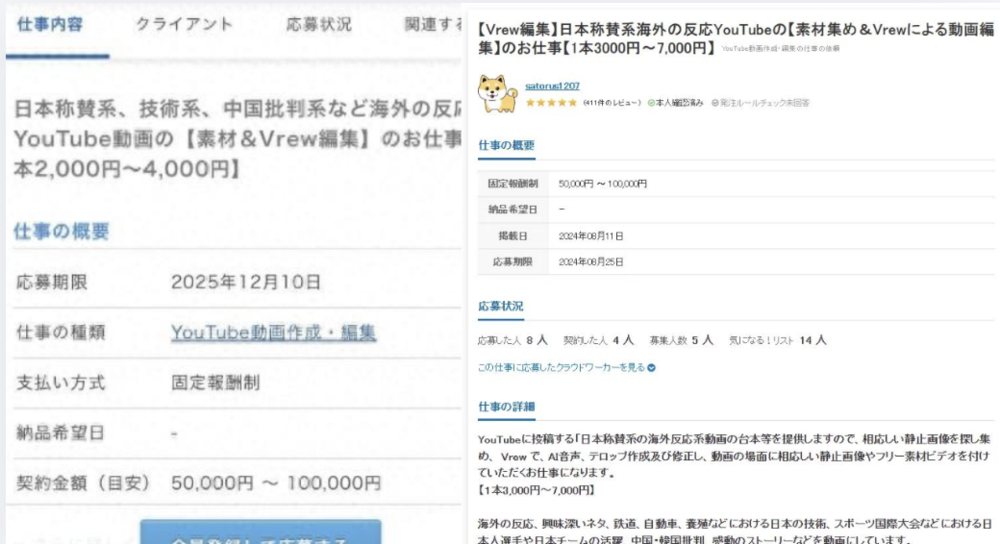
CrowdWorks listings reportedly sought workers to use AI for image generation, scripts, narration, and editing of anti-China YouTube videos.
Why It Matters
For AI practitioners, this is a warning that low-cost generative media can industrialize disinformation and weaponize historical narratives. Platforms, model providers, and policy teams may need stronger provenance, synthetic-media labeling, multilingual monitoring, and safeguards against coordinated political abuse.
What To Do Next
Add provenance checks, synthetic-media labels, and multilingual red-team tests for historical or political prompts in your generative-media pipeline.
Key Points
- •CrowdWorks listings reportedly sought workers to use AI for image generation, scripts, narration, and editing of anti-China YouTube videos.
- •Generative AI lowers production costs and enables ideological content to be produced at industrial scale for YouTube and TikTok.
- •AI-generated historical images, fabricated testimonies, and selective narratives could blur the boundary between evidence and fiction.
- •The article distinguishes current documented grassroots activity from the unproven claim that the Japanese government directly organizes AI-based historical falsification.
- •Japan’s 2026 foreign-policy planning reportedly includes AI-supported information gathering, narrative analysis, and responses to historical-recognition information warfare.
🧠 Deep Insight
Background and context from public sources — not the original article. 7 sources cited.
🔑 Enhanced Key Takeaways
- •The Japanese government has deployed a centralized generative AI system called 'Gennai' for use by 180,000 civil servants, which is powered by Anthropic's Claude models.
- •Gennai's training corpus includes 18 million pages of government data, specifically utilizing the Official Gazette (Kanpō) dating back to 1947 as a primary knowledge base.
- •Japan's June 2026 draft revision of the AI Basic Plan explicitly prioritizes international cooperation to mitigate the risks of AI-generated misinformation and cyber threats.
- •The Japanese government is currently developing voluntary disclosure guidelines for AI developers regarding training data, with a target finalization date of autumn 2026.
- •Strategic communication initiatives in Japan are increasingly integrating AI tools to manage national image and historical perception, raising concerns about potential bias in government-sanctioned AI outputs.
🛠️ Technical Deep Dive
- System Name: Gennai
- Model Architecture: Integration with Anthropic Claude large language models
- Data Ingestion: 18 million pages of government documentation
- Primary Training Corpus: Japan Official Gazette (Kanpō) from May 1947 to present
🔮 Future ImplicationsAI analysis grounded in cited sources
⏳ Timeline
📎 Sources (7)
Factual claims are grounded in the sources below. Forward-looking analysis is AI-generated interpretation.
Weekly AI Recap
Read this week's curated digest of top AI events →
👉Related Updates
AI-curated news aggregator. All content rights belong to original publishers.
Original source: 虎嗅 ↗
This is a summary, not the original. Read the source, or get the weekly briefing.
Weekly AI briefing
One email a week. Unsubscribe anytime.