AI for Science Must Learn to Ask New Questions
💡AI can accelerate answers while shrinking the questions science explores—this article explains how to avoid that trap.
⚡ 30-Second TL;DR
What Changed
A Nature study of 41.3 million papers found that AI users publish more, receive more citations, and become project leaders sooner, while collective topic coverage fell 4.63% and researcher interaction dropped 22%.
Why It Matters
AI for Science systems may optimize researcher productivity while reducing exploration diversity and reinforcing well-established research directions. Practitioners should therefore evaluate models not only on prediction accuracy, but also on transfer, causal intervention, representation changes, and discovery of genuinely new problem formulations.
What To Do Next
Add cross-representation transfer tests, intervention experiments, and a topic-diversity dashboard to your AI for Science pipeline before optimizing for researcher throughput.
Key Points
- •A Nature study of 41.3 million papers found that AI users publish more, receive more citations, and become project leaders sooner, while collective topic coverage fell 4.63% and researcher interaction dropped 22%.
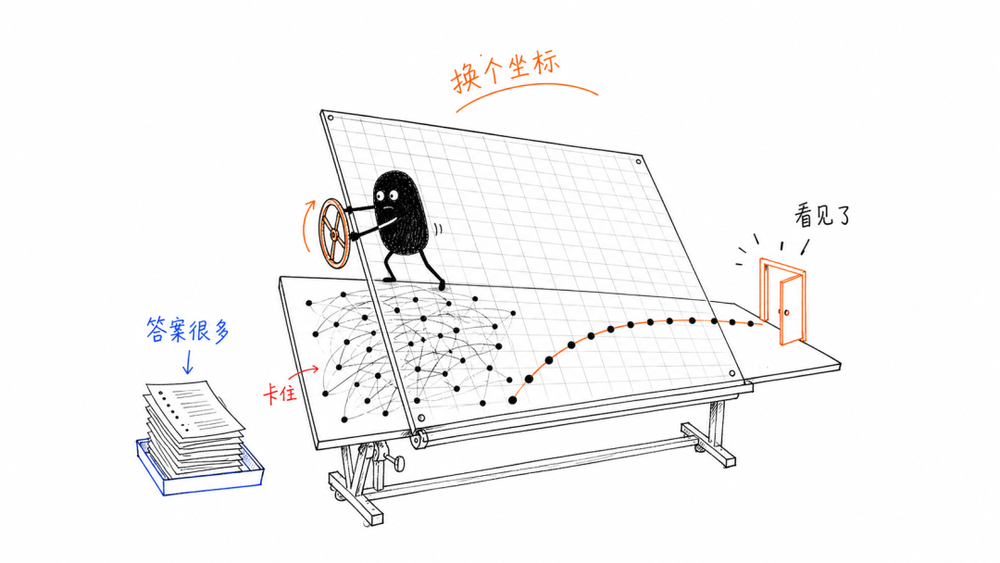
- •Scientific breakthroughs often redefine the variables and columns of a problem rather than simply filling gaps in an existing knowledge matrix.
- •The article frames scientific understanding across four layers: observation, representation, generative structure, and invariance/intervention.
- •Compression alone is not understanding; a concept must transfer across examples and representations and support predictions under deliberate interventions.
- •Cross-disciplinary distance is not inherently valuable; high-impact research typically combines established knowledge with a small number of unusual connections.
🧠 Deep Insight
Background and context from public sources — not the original article. 11 sources cited.
🔑 Enhanced Key Takeaways
- •AI4S research is shifting from pure algorithm development to system engineering, exemplified by DeepMind's 2026 initiative to build automated laboratories that integrate AI directly into experimental workflows.
- •The scarcity of 'negative data' (failed experiments) is a critical bottleneck; companies like QuantumPharm (晶泰科技) have demonstrated that training models on datasets containing 80% negative samples significantly reduces chemical hallucinations.
- •The emergence of 'Universal World Foundation Models' (e.g., Physis) aims to encode fundamental physical laws—such as causality and energy transformation—rather than just pattern matching, to support industrial simulation.
- •The industry is pivoting toward 'Discovery AI,' which prioritizes the model's ability to generate falsifiable hypotheses, a capability increasingly viewed as a benchmark for true AGI.
- •The AI4S sector is experiencing a talent migration, with high-profile departures from major labs (e.g., Jeff Dean, Kevin Weil) to launch specialized startups, signaling a transition from research-lab experimentation to commercial-scale scientific production.
🛠️ Technical Deep Dive
- •
- Integration of negative-sample training protocols to mitigate model hallucinations in molecular discovery.
- •
- Development of Science Tokens (Science Agent frameworks) to standardize data exchange and model interoperability across cross-disciplinary research silos.
- •
- Implementation of automated closed-loop laboratory systems that combine generative AI with physical robotic experimentation to reduce validation cycles.
- •
- Encoding of causal inference and physical invariance into foundation models to ensure scientific results are transferable across different experimental conditions.
🔮 Future ImplicationsAI analysis grounded in cited sources
⏳ Timeline
📎 Sources (11)
Factual claims are grounded in the sources below. Forward-looking analysis is AI-generated interpretation.
Weekly AI Recap
Read this week's curated digest of top AI events →
👉Related Updates
AI-curated news aggregator. All content rights belong to original publishers.
Original source: 虎嗅 ↗
This is a summary, not the original. Read the source, or get the weekly briefing.
Weekly AI briefing
One email a week. Unsubscribe anytime.