AI Endorsers Cannot Fake Product Experience
💡A virtual influencer's contact-lens ad exposes the liability gap between AI-generated persuasion and real product experi
⚡ 30-Second TL;DR
What Changed
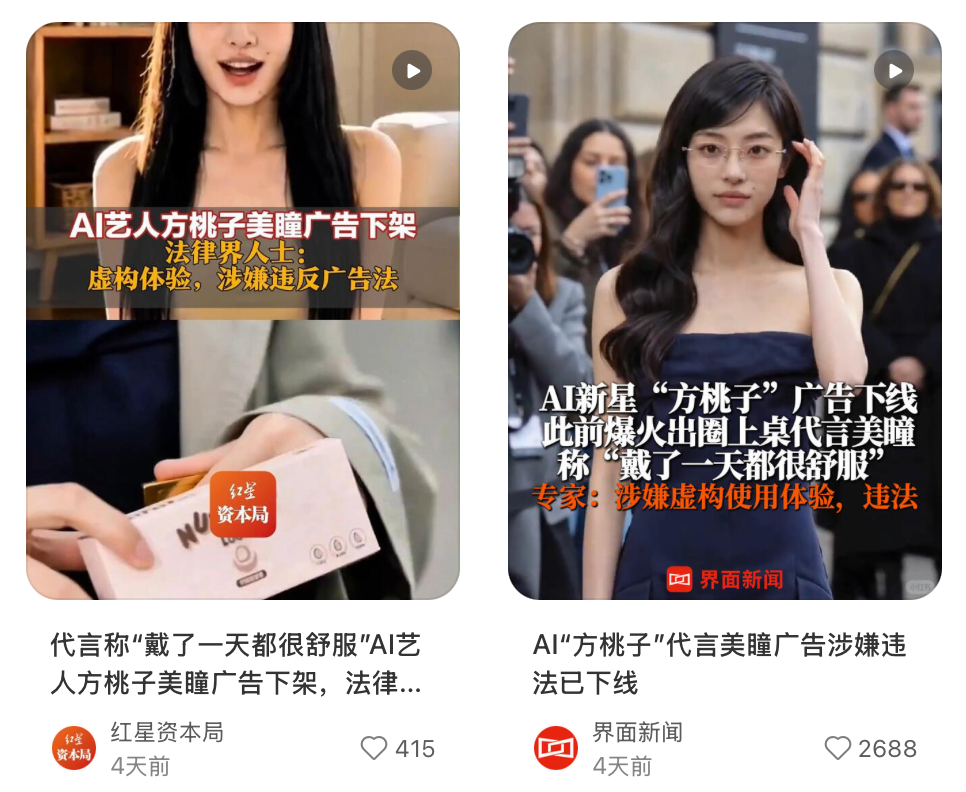
The virtual character made a first-person product-experience claim despite having no physical eyes or ability to wear contact lenses.
Why It Matters
Brands using AI avatars in regulated categories face legal, reputational, and platform-enforcement risks if avatars make unverifiable first-person claims. AI practitioners building marketing agents should treat claim provenance and human accountability as product requirements, not optional compliance features.
What To Do Next
Add a claims gate to your AI marketing workflow that blocks first-person efficacy statements unless they link to verified human-test evidence and an accountable advertiser.
Key Points
- •The virtual character made a first-person product-experience claim despite having no physical eyes or ability to wear contact lenses.
- •China's advertising rules place responsibility for content truthfulness on advertisers, even when the spokesperson is virtual.
- •Cosmetic contact lenses are classified as Class III medical devices, and medical-device advertising cannot use endorsers for recommendations or proof.
- •AI avatars are better suited to factual product information, brand IP, customer service, and standardized guidance than fabricated personal testimonials.
- •AI-generated content labeling and anthropomorphic-interaction rules are emerging, but AI-specific endorsement liability remains incomplete.
🧠 Deep Insight
AI-generated analysis for this event.
🔑 Enhanced Key Takeaways
- •The Chuzhou Market Supervision Administration specifically cited the 'Advertising Law of the People's Republic of China,' noting that medical device advertisements are prohibited from using individuals or organizations as recommenders or witnesses.
- •Fang Taozi is part of a broader trend of 'virtual influencers' in China, which has seen increased scrutiny from the Cyberspace Administration of China (CAC) regarding the 'Deep Synthesis' of AI-generated content.
- •Legal experts in China have clarified that while AI is a tool, the 'advertiser' (the brand) and the 'advertising operator' (the agency) bear joint liability for the AI's output, effectively closing the 'AI loophole' for accountability.
- •The incident has triggered a local regulatory push in Anhui province to require mandatory watermarking and 'AI-generated' disclosures for all virtual influencer marketing campaigns.
- •Industry data indicates that the use of virtual influencers for high-risk product categories (medical, financial, health) is declining in favor of 'brand mascot' roles that avoid anthropomorphic personal testimonials.
🔮 Future ImplicationsAI analysis grounded in cited sources
⏳ Timeline
Weekly AI Recap
Read this week's curated digest of top AI events →
👉Related Updates
AI-curated news aggregator. All content rights belong to original publishers.
Original source: 虎嗅 ↗