AI Artists Hit the Celebrity Identity Barrier
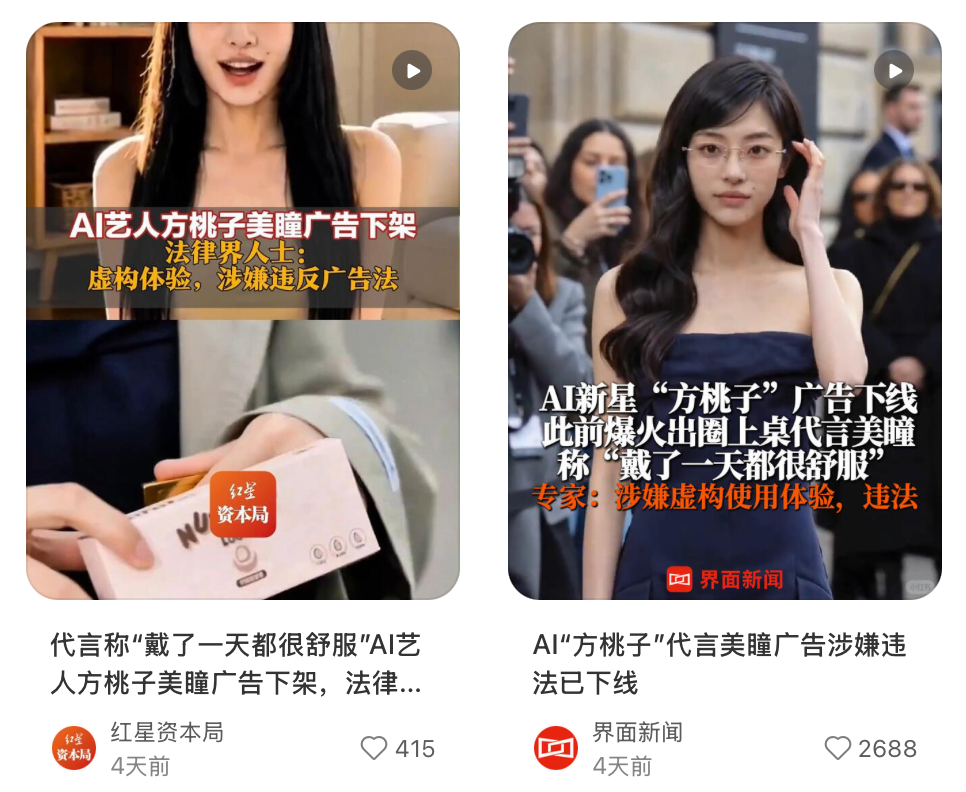
💡AI characters can go viral fast—but one hairstyle change or fake product claim may destroy their identity and credibilit
⚡ 30-Second TL;DR
What Changed
Fang Taozi’s fictional contact-lens advertisement was removed in less than a week, exposing accountability and authenticity risks for AI performers.
Why It Matters
AI character products need more than visual consistency: they need provenance, disclosure, licensing, and a responsible human or company behind the persona. Teams that treat a generated character as a reusable asset should design identity governance before pursuing advertising or cross-media expansion.
What To Do Next
Build an identity specification for each AI character that lists immutable traits, permitted variations, licensing scope, and human escalation contacts before commercial deployment.
Key Points
- •Fang Taozi’s fictional contact-lens advertisement was removed in less than a week, exposing accountability and authenticity risks for AI performers.
- •Qi Wei authorized her name, likeness, voice, body traits, and recognizable performance style while defining Han Qingxia as an independent character.
- •Audiences strongly reject changes to signature features such as Fang Taozi’s bangs or Yan Jiming’s crown because AI characters have limited identity samples.
- •AI artists currently have a narrow set of high-weight recognition features, unlike real celebrities whose identities are built across years of media exposure.
🧠 Deep Insight
AI-generated analysis for this event.
🔑 Enhanced Key Takeaways
- •The legal framework for 'AI celebrity' rights in China is increasingly relying on the Civil Code's personality rights provisions, specifically Article 1018, which protects the right to one's likeness and voice.
- •Platform policies on major Chinese social media apps have begun implementing mandatory 'AI-generated content' (AIGC) watermarking requirements to distinguish between human-operated accounts and autonomous AI agents.
- •The 'Uncanny Valley' effect remains a primary driver for audience rejection of AI characters like Fang Taozi, as minor inconsistencies in micro-expressions during high-definition video playback trigger negative psychological responses.
- •Industry data indicates that AI-generated influencers face a 'retention cliff' after the initial novelty phase, as they lack the parasocial depth and spontaneous real-world interactions that sustain human celebrity fanbases.
- •Recent regulatory discussions by the Cyberspace Administration of China (CAC) are exploring new guidelines that would require AI persona creators to maintain a 'human-in-the-loop' verification system for commercial endorsements.
🛠️ Technical Deep Dive
- AI persona consistency is primarily maintained through LoRA (Low-Rank Adaptation) fine-tuning on stable diffusion models, which locks specific visual features like bangs or accessories.
- Real-time interaction is often powered by LLM-driven agents (such as Qwen or GLM variants) integrated with lip-syncing models like SadTalker or LivePortrait to map text-to-speech output onto static character images.
- Identity verification and anti-spoofing are increasingly utilizing blockchain-based digital watermarking to prove the authenticity of licensed celebrity personas against unauthorized deepfakes.
🔮 Future ImplicationsAI analysis grounded in cited sources
⏳ Timeline
Weekly AI Recap
Read this week's curated digest of top AI events →
👉Related Updates
AI-curated news aggregator. All content rights belong to original publishers.
Original source: 虎嗅 ↗