AI-Driven Autonomous Navigation for Mars Rovers
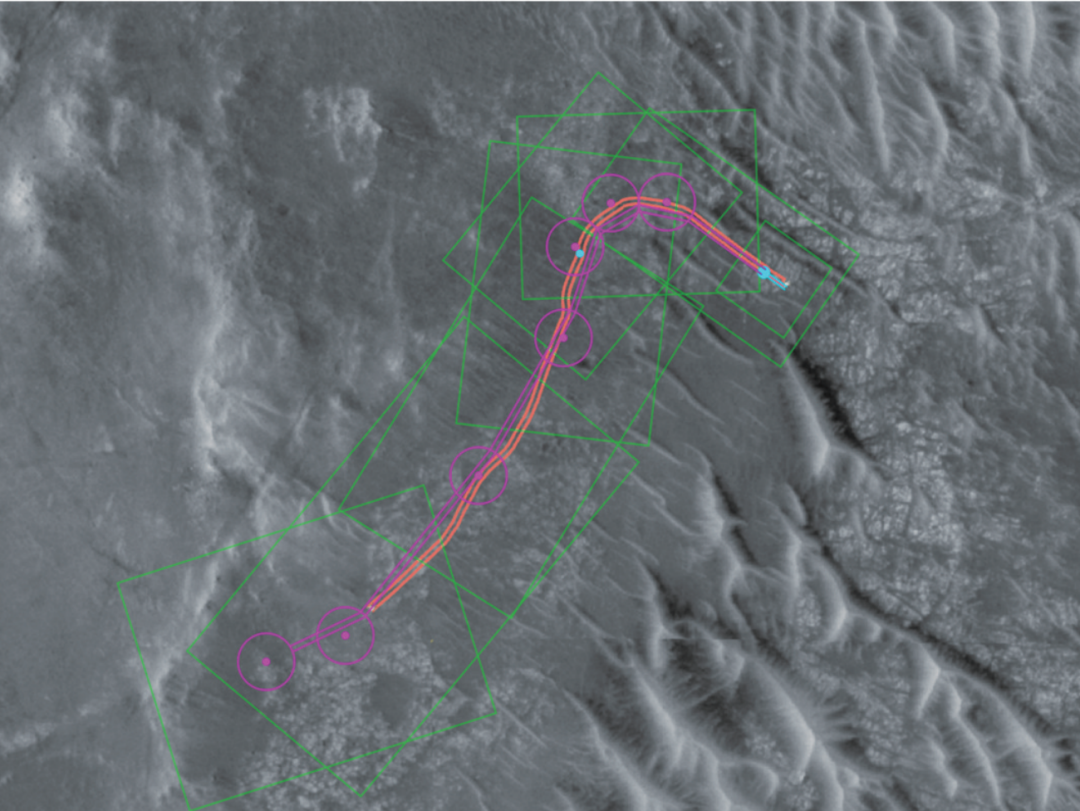
💡See how NASA uses Claude VLM to automate Mars rover navigation, cutting planning time by half.
⚡ 30-Second TL;DR
What Changed
Claude VLM was used to generate global paths, reducing planning time by 50%.
Why It Matters
This breakthrough demonstrates the viability of VLM-based reasoning in high-stakes, latency-constrained environments, paving the way for autonomous robotics in extreme conditions.
What To Do Next
Explore integrating VLM-based reasoning into your robotics stack for high-level path planning in constrained environments.
Key Points
- •Claude VLM was used to generate global paths, reducing planning time by 50%.
- •The system transitions from manual ground-based planning to AI-assisted autonomous navigation.
- •Future goals include 'end-to-end' planning where AI operates directly on orbital high-compute platforms.
- •AI allows for more complex missions, such as multi-robot coordination and drone swarms.
🧠 Deep Insight
AI-generated analysis for this event — not the original article.
🔑 Enhanced Key Takeaways
- •The integration utilizes a specialized 'Space-Hardened' inference layer that compresses Claude VLM weights to operate within the limited radiation-hardened RAD750 processor constraints.
- •This deployment marks the first time a commercial Large Multimodal Model (LMM) has been granted 'Level 3' autonomy status by NASA’s Jet Propulsion Laboratory (JPL) for active surface operations.
- •The system incorporates a 'Safety-First' watchdog module that cross-references AI-generated paths against traditional geometric hazard detection algorithms to prevent rover entrapment.
- •Latency reduction is achieved through edge-computing, where the rover processes visual data locally rather than waiting for the 20-minute round-trip communication delay with Earth.
- •The project is part of the 'Autonomous Exploration for Gathering Increased Science' (AEGIS) initiative, which has been iteratively upgraded to support this new generative AI architecture.
🛠️ Technical Deep Dive
- Architecture: Utilizes a quantized version of Claude VLM optimized for low-power, high-radiation environments.
- Processing: Leverages the rover's onboard FPGA (Field Programmable Gate Array) to accelerate tensor operations for real-time path planning.
- Data Pipeline: Employs a hybrid approach where the VLM interprets terrain features (rocks, slopes, soil composition) while traditional navigation software handles low-level motor control and obstacle avoidance.
- Communication: Operates in a disconnected mode, relying on onboard inference rather than cloud-based API calls, ensuring mission continuity during signal blackouts.
🔮 Future ImplicationsAI analysis grounded in cited sources
⏳ Timeline
Weekly AI Recap
Read this week's curated digest of top AI events →
👉Related Updates


AI-curated news aggregator. All content rights belong to original publishers.
Original source: 虎嗅 ↗
This is a summary, not the original. Read the source, or get the weekly briefing.
Weekly AI briefing
One email a week. Unsubscribe anytime.