China's Robot Exports Hit 20 Billion Yuan in 5 Months

💡Understand the scale of China's embodied AI hardware exports and the core technologies driving global market adoption.
⚡ 30-Second TL;DR
What Changed
Export volume reached 10.37 million units across 150+ countries.
Why It Matters
The rapid global adoption of Chinese robots indicates a maturing supply chain for embodied AI. This scale allows for faster iteration cycles for AI models integrated into hardware.
What To Do Next
If you are building embodied AI, investigate the integration of low-cost, high-performance visual-navigation modules used in Chinese cleaning robots for your own hardware prototypes.
Key Points
- •Export volume reached 10.37 million units across 150+ countries.
- •Cleaning robots dominate the market, accounting for over 70% of total export value (14 billion yuan).
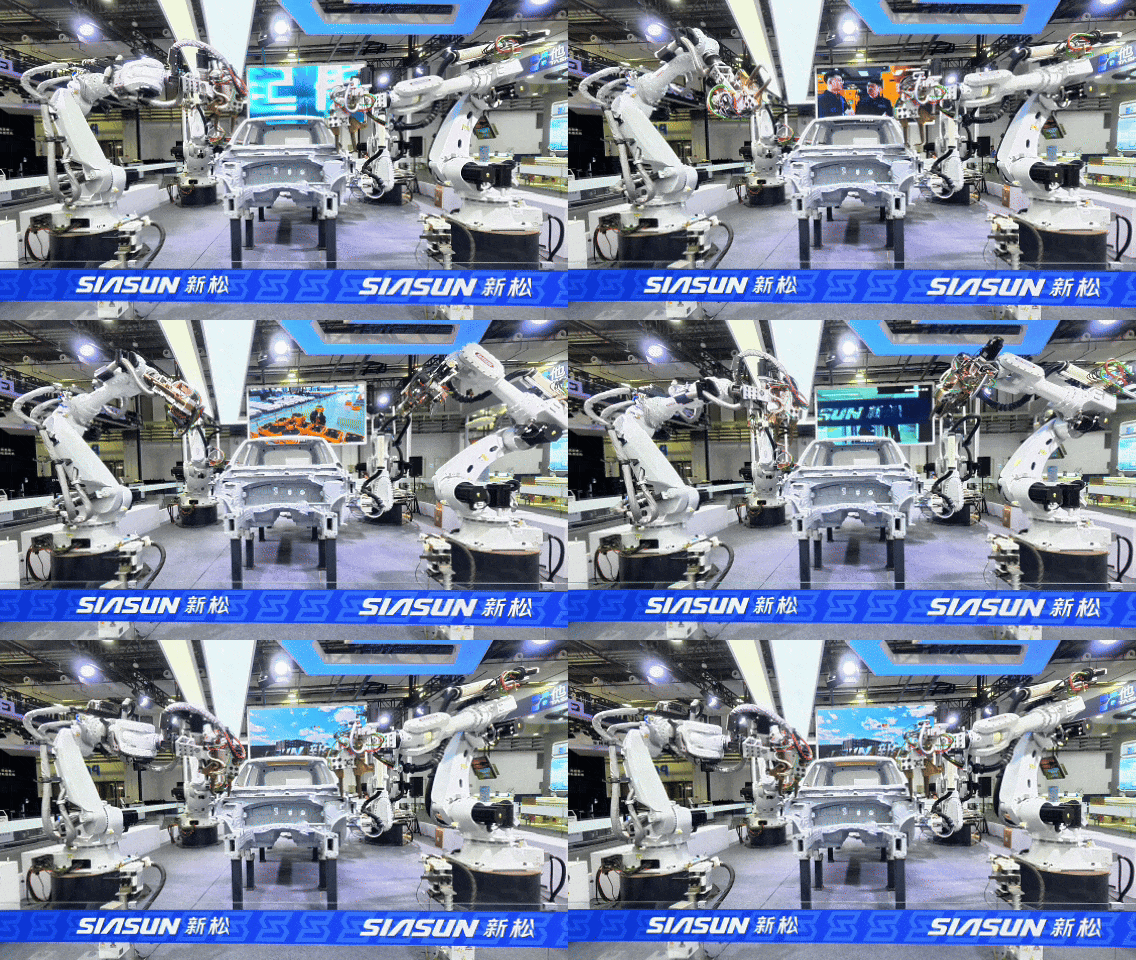
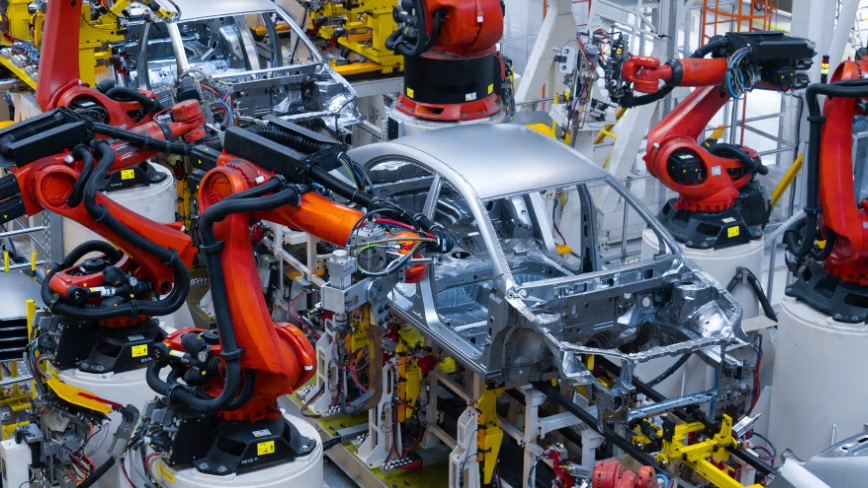
- •Industrial robots are expanding into infrastructure and light manufacturing with AI-driven vision and welding capabilities.
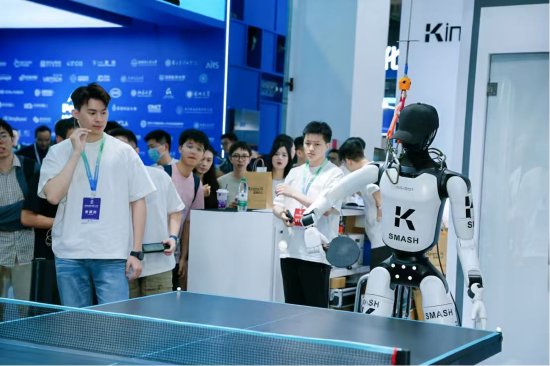
- •Emerging bionic robots for inspection and public service are showing significant growth trends.
🧠 Deep Insight
AI-generated analysis for this event — not the original article.
🔑 Enhanced Key Takeaways
- •The surge in export value is heavily supported by the 'Belt and Road' initiative, which has become a primary logistics corridor for Chinese robotics manufacturers to reach emerging markets in Southeast Asia and Latin America.
- •Chinese manufacturers are increasingly adopting 'Edge AI' integration in cleaning robots, allowing for real-time obstacle avoidance and mapping without relying on cloud-based processing, which addresses data privacy concerns in European markets.
- •The Chinese government recently implemented new export control guidelines for high-precision robotic components, aiming to standardize quality and prevent the dumping of low-grade industrial robotic arms in international markets.
- •Supply chain localization for critical components like harmonic drives and servo motors has reduced production costs by approximately 15% compared to 2024 levels, directly contributing to the competitive pricing of exported units.
- •Major Chinese robotics firms are shifting from pure hardware exports to 'Robotics-as-a-Service' (RaaS) models, particularly in the industrial sector, to generate recurring revenue streams from maintenance and software updates.
📊 Competitor Analysis▸ Show
| Feature | Chinese Robot Exports (General) | Fanuc (Japan) | ABB (Switzerland) |
|---|---|---|---|
| Primary Focus | Consumer/Light Industrial | Heavy Industrial/Automotive | High-End Industrial/Automation |
| Pricing Strategy | Aggressive/Value-Oriented | Premium/Reliability-Focused | Premium/System Integration |
| Key Advantage | Rapid Iteration/AI Integration | Long-term Durability/Support | Global Infrastructure/Legacy |
| Market Position | High Volume/Emerging Markets | Established Industrial Leader | Global Automation Standard |
🛠️ Technical Deep Dive
- Integration of SLAM (Simultaneous Localization and Mapping) algorithms optimized for low-power ARM-based SoCs in consumer cleaning robots.
- Adoption of 5G-enabled remote teleoperation modules in bionic inspection robots to reduce latency in hazardous environment monitoring.
- Implementation of vision-based AI welding systems using deep learning models trained on synthetic datasets to improve weld seam tracking accuracy.
- Transition to modular joint designs in bionic robots, utilizing high-torque density brushless DC motors and integrated absolute encoders.
🔮 Future ImplicationsAI analysis grounded in cited sources
⏳ Timeline
Weekly AI Recap
Read this week's curated digest of top AI events →
👉Related Updates

AI-curated news aggregator. All content rights belong to original publishers.
Original source: 36氪 ↗
This is a summary, not the original. Read the source, or get the weekly briefing.
Weekly AI briefing
One email a week. Unsubscribe anytime.