AI Demand Triggers Semiconductor Shortage and Price Hikes
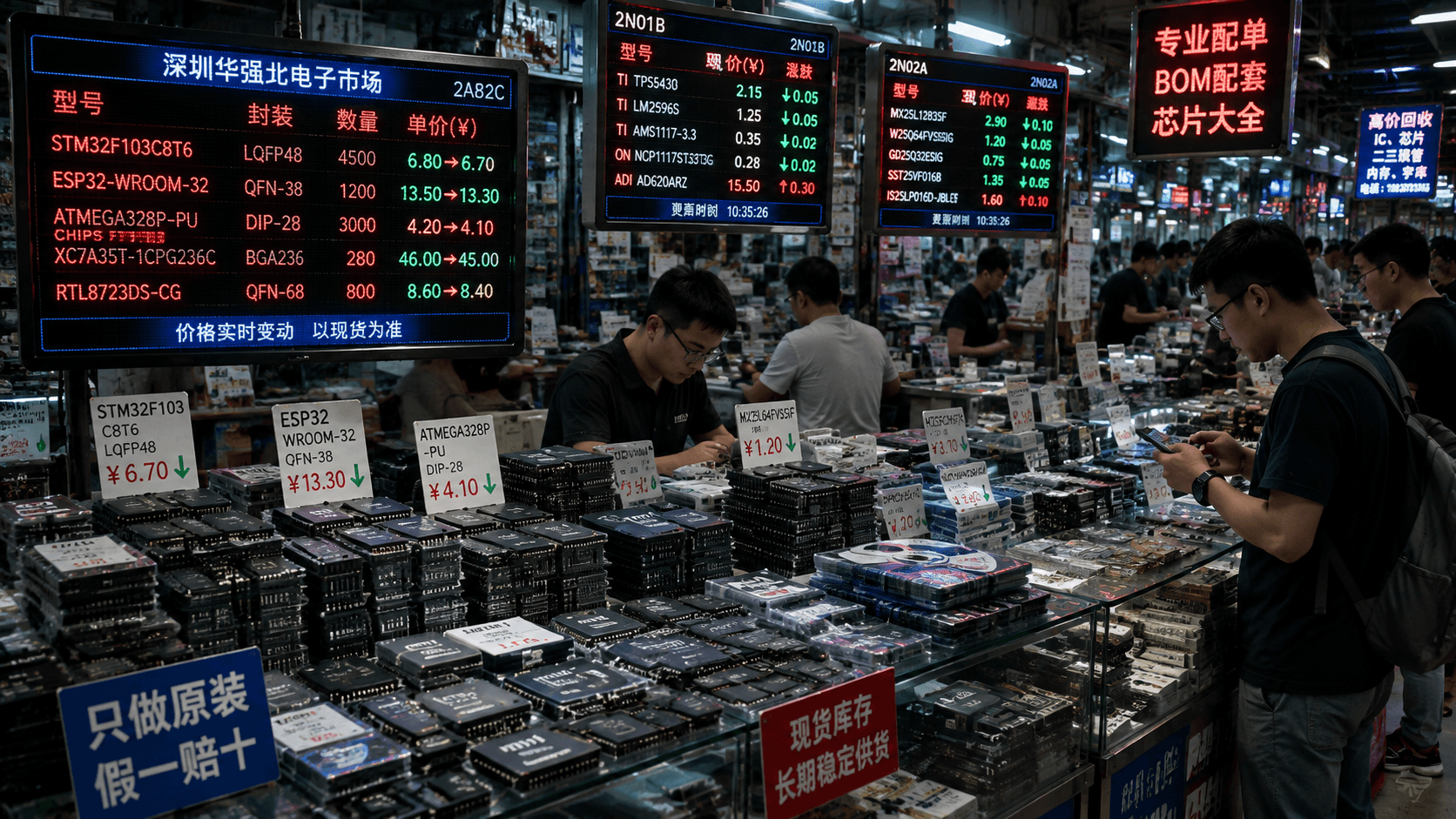
💡Critical supply chain update: AI hardware costs are rising and lead times are extending to 2027.
⚡ 30-Second TL;DR
What Changed
Over 20 chip manufacturers implement second price hike in 2026
Why It Matters
The supply chain crunch for critical AI components will likely increase development costs and delay hardware-dependent AI projects.
What To Do Next
Audit your hardware procurement strategy and secure long-term supply agreements for critical components to avoid 2027 production delays.
Key Points
- •Over 20 chip manufacturers implement second price hike in 2026
- •AI-specific MLCC prices surge by 3-10x
- •Supply chain lead times extended to mid-2027
🧠 Deep Insight
AI-generated analysis for this event — not the original article.
🔑 Enhanced Key Takeaways
- •The surge in MLCC demand is primarily driven by the high-density power delivery requirements of next-generation GPU clusters, which require significantly more passive components per board than standard consumer electronics.
- •Major semiconductor foundries are prioritizing capacity allocation for HBM (High Bandwidth Memory) and AI accelerators, leading to a 'crowding out' effect for legacy nodes used in automotive and industrial chips.
- •The price hikes are disproportionately affecting Tier-2 and Tier-3 electronics manufacturers who lack the long-term supply agreements that hyperscalers like Microsoft, Google, and Meta have secured.
- •Industry analysts note that the shortage is being exacerbated by a shift in manufacturing focus toward 'AI-grade' components, which require more stringent testing and higher reliability standards than standard-grade parts.
- •Logistics and raw material costs for rare earth elements used in high-performance capacitors have risen by approximately 15% in Q2 2026, further compounding the price increases initiated by manufacturers.
🛠️ Technical Deep Dive
- MLCC (Multi-Layer Ceramic Capacitor) architecture for AI hardware requires high-capacitance, low-ESR (Equivalent Series Resistance) designs to manage the rapid current transients of AI processors.
- AI-specific components often utilize advanced dielectric materials like Class II or Class III ceramics to maintain stability under the extreme thermal loads generated by high-TDP (Thermal Design Power) AI chips.
- The shift toward 3D-stacked chiplet architectures increases the physical footprint of power management circuitry, necessitating the use of smaller, higher-density MLCCs that are currently in the shortest supply.
🔮 Future ImplicationsAI analysis grounded in cited sources
⏳ Timeline
Weekly AI Recap
Read this week's curated digest of top AI events →
👉Related Updates

AI-curated news aggregator. All content rights belong to original publishers.
Original source: Pandaily ↗
This is a summary, not the original. Read the source, or get the weekly briefing.
Weekly AI briefing
One email a week. Unsubscribe anytime.