AI Demand Sends Foundry Prices Higher
💡GPU shortages are spreading to power, memory, and interface chips—and foundry premiums may reach 25%.
⚡ 30-Second TL;DR
What Changed
Samsung reportedly raised selected 4nm orders by up to 15%, with increases also affecting 5nm and 8nm processes.
Why It Matters
Higher wafer prices and constrained capacity could raise the cost and extend the lead time of AI accelerators and their supporting components. AI startups and infrastructure teams may need earlier capacity reservations, multi-foundry strategies, and designs that reduce dependence on the most constrained nodes.
What To Do Next
Map every chip in your AI system to its process node and foundry, then secure multi-source capacity and lock in quotes for the most constrained specialty components.
Key Points
- •Samsung reportedly raised selected 4nm orders by up to 15%, with increases also affecting 5nm and 8nm processes.
- •TSMC plans 5%–10% increases for 7nm-and-below processes in 2027, with some additional HPC capacity carrying a 10%–15% premium.
- •Mature-node foundries including UMC, VIS, Hua Hong, and PSM are also raising prices, in some cases by 10%–45% for specific services.
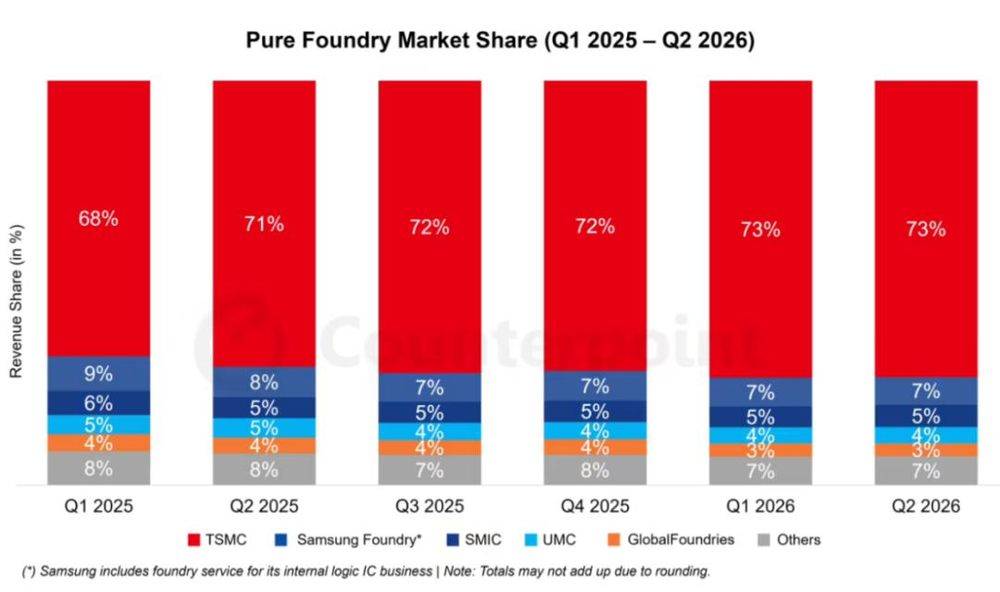
- •TSMC held approximately 73% of the pure-play foundry market in 2026 Q2, versus Samsung’s 7%, according to the cited Counterpoint data.
- •The AI supply chain creates demand for large volumes of supporting chips, making specialty processes such as BCD, high-voltage, RF SOI, and embedded memory strategically scarce.
Weekly AI Recap
Read this week's curated digest of top AI events →
👉Related Updates


AI-curated news aggregator. All content rights belong to original publishers.
Original source: 虎嗅 ↗
This is a summary, not the original. Read the source, or get the weekly briefing.
Weekly AI briefing
One email a week. Unsubscribe anytime.