AI Cures Dog's Cancer Miracle
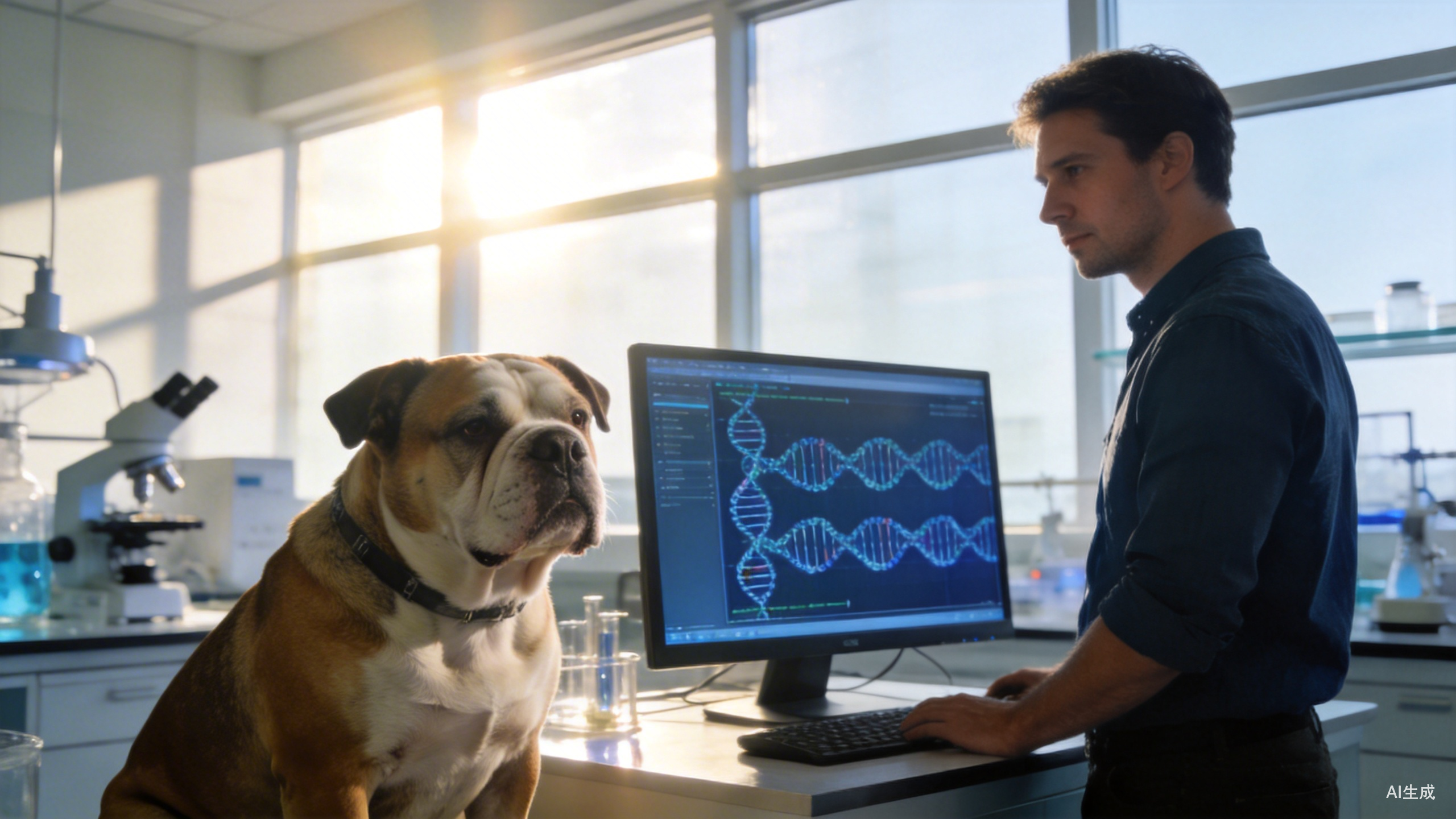
💡Citizen uses ChatGPT+AlphaFold to beat cancer in dog—blueprint for AI medicine
⚡ 30-Second TL;DR
What Changed
ChatGPT guided gene sequencing and identified mutations from 320G data.
Why It Matters
Demonstrates LLMs and protein AI enabling personalized medicine for non-experts, potentially accelerating cancer treatments for pets and humans. Signals rise of citizen science in biotech, drawing Silicon Valley interest.
What To Do Next
Use AlphaFold3 via Colab to simulate custom protein mutations for biotech experiments.
Key Points
- •ChatGPT guided gene sequencing and identified mutations from 320G data.
- •AlphaFold simulated mutant proteins to match compounds for drug design.
- •Custom mRNA vaccine shrank main tumor 75% and secondary ones by 50%.
- •First live-animal success in 3 months via citizen science.
🧠 Deep Insight
Background and context from public sources — not the original article. 7 sources cited.
🔑 Enhanced Key Takeaways
- •Paul Conyngham, a Sydney-based AI consultant, initiated the project in November 2024 after conventional chemotherapy and surgery failed to shrink Rosie's mast cell tumors.[1][3]
- •Grok AI was used for the final mRNA vaccine design, in addition to ChatGPT and AlphaFold, and Conyngham employed his own custom machine learning algorithms for neoantigen selection.[3][7]
- •The treatment cost an estimated $20,000 to $50,000, including $3,000 AUD for DNA sequencing, with human experts like Professor Páll Thordarson building the actual vaccine at UNSW RNA Institute.[3][7]
- •Experts including biotech co-founder Egan Peltan criticize the hype, noting concurrent conventional immunotherapy likely contributed and that AI's role was assistive rather than essential.[3]
- •The story gained prominence after being shared by OpenAI President Greg Brockman and DeepMind CEO Demis Hassabis, fueling viral spread despite clarifications that it is not a cure.[3]
🛠️ Technical Deep Dive
- •DNA sequencing compared healthy cells to tumor cells to identify mutations, costing $3,000 AUD, followed by AlphaFold for 3D protein structure modeling of mutated proteins.[7]
- •Custom machine learning algorithms selected neoantigens—mutated proteins likely to trigger immune response—for targeting.[7]
- •Professor Páll Thordarson at UNSW RNA Institute synthesized the mRNA vaccine from Conyngham's half-page formula, administered with a booster shot.[7]
- •Computational pipelines detected cancer-driving mutations in the 320G gene sequencing data.[4]
🔮 Future ImplicationsAI analysis grounded in cited sources
⏳ Timeline
📎 Sources (7)
Factual claims are grounded in the sources below. Forward-looking analysis is AI-generated interpretation.
- moneycontrol.com — Chatgpt Did Not Create Dog Cancer Cure Experts Clarify Viral Claim Article 13865194
- cybernews.com — Chatgpt Dog Vaccine
- the-decoder.com — AI Consultant Uses Chatgpt Alphafold and Grok to Find a Possible Treatment for His Dogs Cancer
- timesofindia.indiatimes.com — 129591658
- youtube.com — Watch
- storyboard18.com — Chatgpt Dog Cancer Cure Claim Debunked Experts Say AI Assisted Did Not Treat Ws E 92738
- thestreet.com — Tech Boss Uses AI and Chatgpt to Make His Dog a Cancer Vaccine
Weekly AI Recap
Read this week's curated digest of top AI events →
👉Related Updates
AI-curated news aggregator. All content rights belong to original publishers.
Original source: 虎嗅 ↗
This is a summary, not the original. Read the source, or get the weekly briefing.
Weekly AI briefing
One email a week. Unsubscribe anytime.