AI Conquers Chinese County Dinner Tables
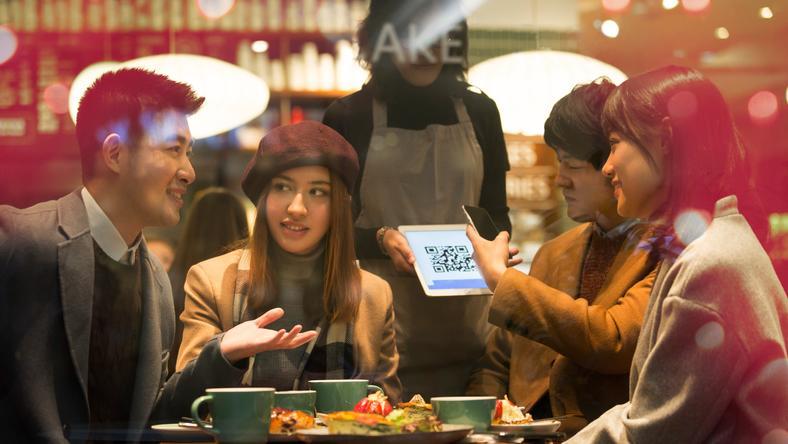
💡China's Gala + LLM red packets hook 1.4B; county AI adoption insights
⚡ 30-Second TL;DR
What Changed
2026 Spring Gala broadcast embodied AI robots to 1.4B viewers.
Why It Matters
Demonstrates viral tactics accelerating AI in China's mass market, but reveals practical hurdles for consumer robotics and trust in LLMs.
What To Do Next
Test Doubao and Qianwen APIs for low-cost viral marketing campaigns.
Key Points
- •2026 Spring Gala broadcast embodied AI robots to 1.4B viewers.
- •Yuanbao's 10B red packets, Qianwen milk tea promos popularized AI in tier-3 cities.
- •Kunshan robot policies create jobs; AI hallucinations mislead school grading.
- •Home robots uneconomical vs cheap local labor.
🧠 Deep Insight
Background and context from public sources — not the original article. 5 sources cited.
🔑 Enhanced Key Takeaways
- •ByteDance's Doubao achieved 100 million daily active users following its prime-time CCTV Spring Festival Gala integration, demonstrating that TV-based AI exposure drives adoption more efficiently than subsidy-alone strategies[5].
- •Alibaba's Qianwen experienced a 635% DAU surge (from under 10 million to 73.52 million) during Spring Festival activities, with over 130 million transactions across milk tea, travel, and e-commerce, proving AI-assisted commerce integration outperforms standalone red packet mechanics[3].
- •System infrastructure strain emerged as a competitive bottleneck: Alibaba Cloud explicitly prepared 'sufficient and elastic AI computing power' to handle traffic spikes, while Qianwen suffered continuous crashes, exposing that backend capacity—not model quality—became the limiting factor for mass adoption[1][3].
- •Ecological integration emerged as the 2026 competitive battleground: Tencent leveraged WeChat/QQ social networks, Alibaba integrated Taobao/Fliggy/Gaode, and ByteDance partnered with CCTV, signaling that AI assistant differentiation shifted from model performance to ecosystem lock-in[1][2][3].
- •Total Spring Festival 2026 AI marketing expenditure exceeded 45 billion yuan across four major players, with Alibaba investing 5 billion yuan total (3 billion customer subsidies + 2 billion rider subsidies), establishing AI user acquisition costs at scale for the first time in China[1][3].
📊 Competitor Analysis▸ Show
| Dimension | Yuanbao (Tencent) | Qianwen (Alibaba) | Doubao (ByteDance) | ERNIE (Baidu) |
|---|---|---|---|---|
| Red Packet Budget | 10 billion yuan | 30 billion yuan | Undisclosed (tech products) | 5 billion yuan |
| Primary Distribution Channel | WeChat/QQ social fission | Taobao/Fliggy/Gaode commerce | CCTV Spring Gala + app lottery | Standalone |
| Peak DAU (Feb 2026) | Top App Store (14h launch) | 73.52 million | 100 million | Not disclosed |
| Differentiation Strategy | Social network integration | Transaction-driven AI (milk tea, hotels, flights) | Media partnership + tech product rewards | Cash red packets |
| Infrastructure Response | Not disclosed | Alibaba Cloud elastic scaling + system crashes | Handled 100M DAU successfully | Not disclosed |
| Additional Subsidies | None disclosed | 2 billion yuan for delivery riders | None disclosed | None disclosed |
🔮 Future ImplicationsAI analysis grounded in cited sources
⏳ Timeline
📎 Sources (5)
Factual claims are grounded in the sources below. Forward-looking analysis is AI-generated interpretation.
Weekly AI Recap
Read this week's curated digest of top AI events →
👉Related Updates

AI-curated news aggregator. All content rights belong to original publishers.
Original source: 虎嗅 ↗
This is a summary, not the original. Read the source, or get the weekly briefing.
Weekly AI briefing
One email a week. Unsubscribe anytime.