Mercedes-Benz China Localization Strategy Evolution
Learn how a legacy automotive giant pivots its strategy to survive in the world's most competitive EV market.
30-Second TL;DR
What Changed
Exploration phase (1986-2004) relied on import-agent models with limited local infrastructure.
Why It Matters
The analysis provides a blueprint for multinational corporations to adapt to the Chinese market, emphasizing the necessity of local R&D and supply chain integration to compete with tech-driven EV manufacturers.
What To Do Next
Study the 'Global Standards, Regional Innovation' framework to understand how to balance centralized core technology with localized product features for specific regional markets.
Key Points
- •Exploration phase (1986-2004) relied on import-agent models with limited local infrastructure.
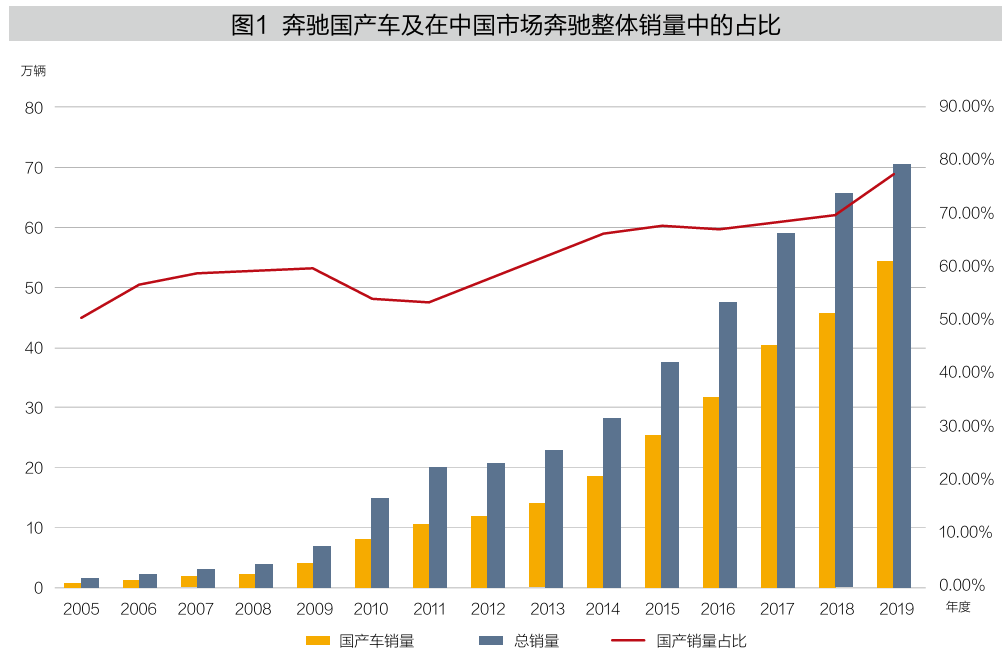
- •Expansion phase (2005-2019) saw the establishment of Beijing Benz and a shift toward localized production and R&D.
- •Strategic response to EV competition from Tesla and Chinese 'new forces' like NIO and XPeng.
- •Implementation of a 'Global Standards, Regional Innovation' dual-track strategy.
Deep Insight
AI-generated analysis for this event — not the original article.
Enhanced Key Takeaways
- •Mercedes-Benz established the 'Mercedes-Benz China R&D Tech Center' in Shanghai in 2021, specifically to accelerate software development and human-machine interaction (HMI) tailored to Chinese consumer preferences.
- •The company shifted its organizational structure in 2023 to grant the China leadership team more autonomy in decision-making, moving away from a top-down German-centric approval process for local market features.
- •Mercedes-Benz has actively integrated local tech giants, such as partnering with Tencent and Alibaba for cloud services and autonomous driving data processing to comply with China's strict data security regulations.
- •The 'MB.OS' operating system, slated for global rollout, includes a dedicated China-specific version that integrates local ecosystem apps like WeChat and high-definition mapping services from AutoNavi.
- •To combat the price war in the EV sector, Mercedes-Benz has transitioned its local manufacturing strategy to utilize the 'MMA' (Mercedes-Benz Modular Architecture) platform, which is designed to support both electric and hybrid powertrains for greater production flexibility.
Competitor Analysis
- Mercedes-Benz (China)
- Luxury/Legacy Tech
- Tesla (China)
- Direct Sales/FSD
- NIO
- Battery Swap/Service
- XPeng
- AI/Autonomous Driving
- Mercedes-Benz (China)
- MB.OS (Local Integration)
- Tesla (China)
- Full Self-Driving (FSD)
- NIO
- NOMI AI/NIO Pilot
- XPeng
- XNGP (Urban ADAS)
- Mercedes-Benz (China)
- Premium/Executive
- Tesla (China)
- Mass-Premium
- NIO
- Premium/Lifestyle
- XPeng
- Tech-Forward/Mid-Range
- Mercedes-Benz (China)
- High (Shanghai/Beijing)
- Tesla (China)
- High (Shanghai)
- NIO
- Very High (Full Stack)
- XPeng
- Very High (Full Stack)
| Feature/Benchmark | Mercedes-Benz (China) | Tesla (China) | NIO | XPeng |
|---|---|---|---|---|
| Primary Strategy | Luxury/Legacy Tech | Direct Sales/FSD | Battery Swap/Service | AI/Autonomous Driving |
| Software Focus | MB.OS (Local Integration) | Full Self-Driving (FSD) | NOMI AI/NIO Pilot | XNGP (Urban ADAS) |
| Market Positioning | Premium/Executive | Mass-Premium | Premium/Lifestyle | Tech-Forward/Mid-Range |
| Local R&D | High (Shanghai/Beijing) | High (Shanghai) | Very High (Full Stack) | Very High (Full Stack) |
Technical Deep Dive
- MB.OS Architecture: A proprietary, chip-to-cloud software stack designed to decouple hardware and software cycles, allowing for over-the-air (OTA) updates that are significantly faster than previous MBUX iterations.
- MMA Platform: A modular platform supporting 800V electrical architecture, enabling ultra-fast charging capabilities (up to 300km of range in 15 minutes) to compete with local 800V-capable EVs.
- Localized HMI: Implementation of the 'Hyper-screen' interface with localized AI voice assistants that support complex Chinese dialects and context-aware intent recognition.
- Data Localization: Utilization of local data centers to ensure all vehicle-generated data complies with the 'Personal Information Protection Law' (PIPL) of China.
Future ImplicationsAI analysis grounded in cited sources
Timeline
- 1986-01First joint venture agreement signed with Beijing Automotive Industry Corporation (BAIC).
- 2005-08Beijing Benz Automotive Co., Ltd. (BBAC) officially established.
- 2014-11Mercedes-Benz R&D Center China opened in Beijing to focus on local market requirements.
- 2021-10Opening of the Mercedes-Benz China R&D Tech Center in Shanghai.
- 2023-02Strategic organizational restructuring to increase autonomy for the China management team.
- 2024-04Announcement of the localized production strategy for the MMA platform in China.
Weekly AI Recap
Read this week's curated digest of top AI events →
AI-curated news aggregator. All content rights belong to original publishers.
Original source: 虎嗅 ↗
This is a summary, not the original. Read the source, or get the weekly briefing.
The weekly digest
One email a week. Unsubscribe anytime.