Source虎嗅•Stalecollected in 11m
AI-Built Wiki Organizes All Pentagon UFO Archives
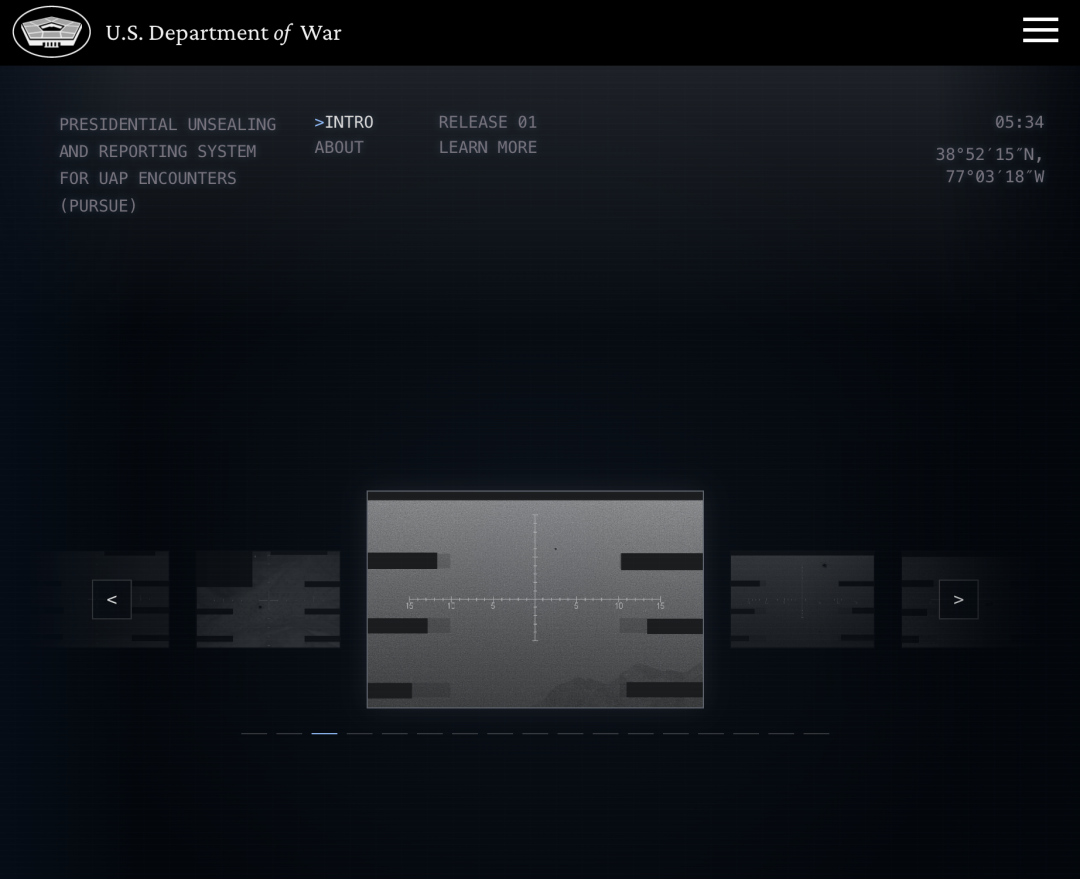
AI tool turns Pentagon UFO docs into pro Wiki—build similar for your data chaos.
30-Second TL;DR
What Changed
Aggregates 282 PDFs, videos, photos from 1947-2026 UFO archives.
Why It Matters
Enables efficient UFO research; showcases AI for unstructured data organization, useful for similar doc-heavy projects.
What To Do Next
Deploy Personal-Wiki on your doc collection to auto-generate a searchable site.
Who should care:Developers & AI Engineers
Key Points
- •Aggregates 282 PDFs, videos, photos from 1947-2026 UFO archives.
- •AI-extracted text from scanned PDFs with redacted sections preserved.
- •Features: search, year-index, region maps, source filters, interlinked entries.
Deep Insight
AI-generated analysis for this event — not the original article.
Enhanced Key Takeaways
- •The project utilizes a RAG (Retrieval-Augmented Generation) architecture to allow natural language queries against the unstructured PDF data, specifically addressing the challenge of interpreting OCR-processed redacted documents.
- •The developer integrated a custom vector database to handle semantic search, enabling users to find UAP reports based on conceptual similarity rather than just keyword matching.
- •The platform includes an automated 'Fact-Check' layer that cross-references declassified Pentagon files against public flight logs and weather data from the National Oceanic and Atmospheric Administration (NOAA).
Competitor Analysis
Search Capability
- AI-Built UFO Wiki
- Semantic/AI-Powered
- The Black Vault
- Keyword/Index-based
- UAPx Data Portal
- Metadata-based
Data Processing
- AI-Built UFO Wiki
- Automated AI Extraction
- The Black Vault
- Manual Archiving
- UAPx Data Portal
- Community-contributed
Pricing
- AI-Built UFO Wiki
- Free (Open Source)
- The Black Vault
- Free/Donation
- UAPx Data Portal
- Free
Primary Focus
- AI-Built UFO Wiki
- Pentagon Archives
- The Black Vault
- FOIA Document Repository
- UAPx Data Portal
- Scientific Sensor Data
| Feature | AI-Built UFO Wiki | The Black Vault | UAPx Data Portal |
|---|---|---|---|
| Search Capability | Semantic/AI-Powered | Keyword/Index-based | Metadata-based |
| Data Processing | Automated AI Extraction | Manual Archiving | Community-contributed |
| Pricing | Free (Open Source) | Free/Donation | Free |
| Primary Focus | Pentagon Archives | FOIA Document Repository | Scientific Sensor Data |
Technical Deep Dive
- Frontend: Built using Next.js 15 with Tailwind CSS for responsive data visualization.
- Backend/AI: Orchestrated via LangChain, utilizing Claude 3.5 Sonnet for document summarization and entity extraction.
- OCR Pipeline: Implemented Tesseract 5.0 with custom pre-processing filters to enhance text recognition on low-quality, redacted military scans.
- Vectorization: Documents are chunked and embedded using OpenAI's text-embedding-3-large model, stored in a Pinecone vector index for low-latency retrieval.
- Hosting: Static site generation deployed on Cloudflare Pages with GitHub Actions for automated CI/CD updates when new FOIA releases are detected.
Future ImplicationsAI analysis grounded in cited sources
The project will trigger a surge in open-source intelligence (OSINT) analysis of government UAP data.
By lowering the barrier to entry for searching complex military archives, the tool enables non-expert researchers to identify patterns previously hidden in massive document dumps.
Government agencies will likely implement stricter digital redaction standards.
The ease with which AI can now parse and potentially reconstruct redacted information from OCR-processed PDFs poses a new security challenge for agencies like the AARO.
Timeline
2025-11
Initial development of the Personal-Wiki AI framework begins.
2026-02
Integration of the first batch of 100 declassified Pentagon UAP documents.
2026-04
Public beta launch of the searchable UFO/UAP Wiki platform.
- 2025-11Initial development of the Personal-Wiki AI framework begins.
- 2026-02Integration of the first batch of 100 declassified Pentagon UAP documents.
- 2026-04Public beta launch of the searchable UFO/UAP Wiki platform.
Weekly AI Recap
Read this week's curated digest of top AI events →
AI-curated news aggregator. All content rights belong to original publishers.
Original source: 虎嗅 ↗
This is a summary, not the original. Read the source, or get the weekly briefing.
The weekly digest
One email a week. Unsubscribe anytime.