🐯虎嗅•Stalecollected in 23m
AI Boosts Scores, Skips Real Learning
#education#genai-risks#teacher-productivityoecd-digital-education-outlook-2026chatgptgpt-4oecd
💡OECD data: AI inflates grades 127% but kills learning—fix your edtech now
⚡ 30-Second TL;DR
What Changed
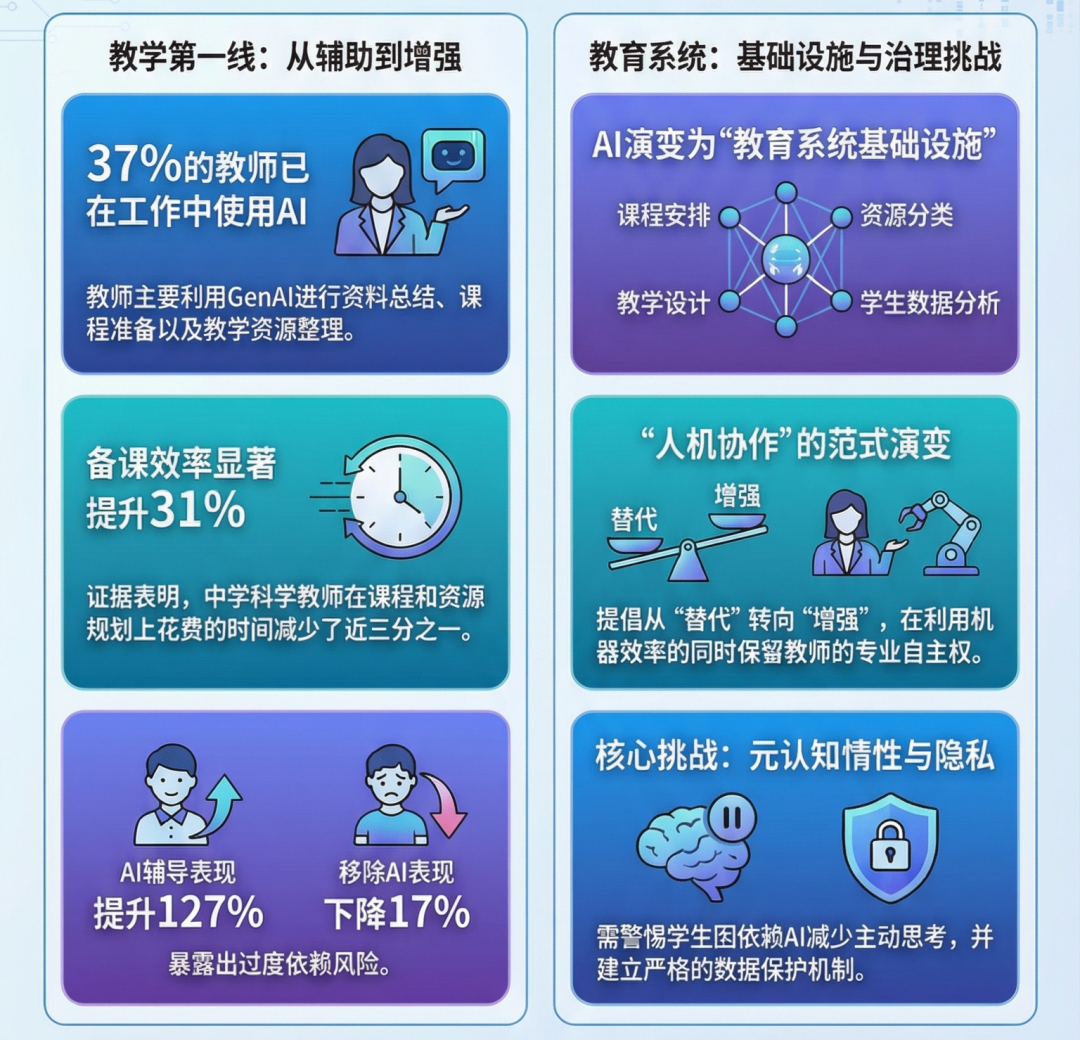
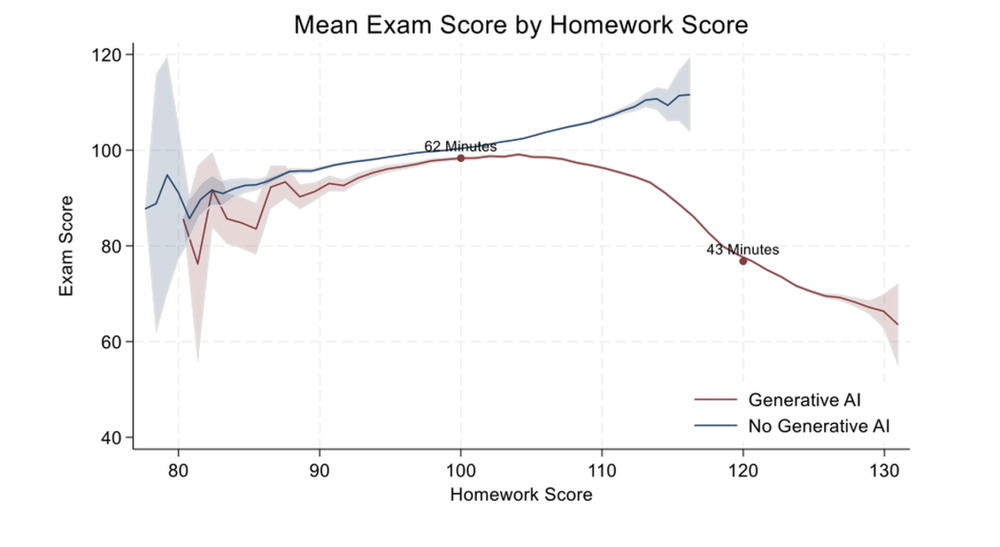
Students using GPT-4 see 48-127% score gains, but 17% drop without AI.
Why It Matters
Urges redesigning ed-AI for deep learning over efficiency; warns of dependency, bias, privacy risks in schools.
What To Do Next
Implement Socratic prompting in your ed-AI tools to boost retention over scores.
Who should care:Developers & AI Engineers
Key Points
- •Students using GPT-4 see 48-127% score gains, but 17% drop without AI.
- •37% teachers use genAI for lesson prep and data summary.
- •AI as learning environment via Socratic dialogues, not just tools.
- •Teacher time saved 31% on prep; boosts novice tutors' student pass rates.
🧠 Deep Insight
AI-generated analysis for this event — not the original article.
🔑 Enhanced Key Takeaways
- •The OECD report highlights a 'cognitive atrophy' risk, where over-reliance on generative AI for synthesis tasks leads to a measurable decline in critical thinking and information retention capabilities among students.
- •Data indicates that the 31% time savings for teachers is primarily concentrated in administrative and routine lesson planning tasks, yet this efficiency gain has not yet translated into increased direct student-teacher interaction time.
- •Educational institutions are shifting focus toward 'AI-resistant' assessment designs, such as oral examinations and in-class, pen-and-paper problem solving, to mitigate the score inflation observed in take-home AI-assisted assignments.
🔮 Future ImplicationsAI analysis grounded in cited sources
Standardized testing will undergo a mandatory transition to proctored, offline environments by 2028.
The observed 17% performance drop without AI tools necessitates a return to verified, non-assisted assessment methods to maintain credential integrity.
Educational software will shift from 'output-generating' to 'process-tracking' architectures.
To combat the 'AI-boosted score' phenomenon, platforms must implement logging of intermediate reasoning steps rather than just final answers.
⏳ Timeline
2023-03
Initial release of GPT-4 triggers widespread academic integrity concerns.
2024-06
OECD launches comprehensive study on the impact of generative AI in global classrooms.
2025-11
OECD releases preliminary findings on AI-driven score inflation and teacher workflow efficiency.
📰
Weekly AI Recap
Read this week's curated digest of top AI events →
👉Related Updates

AI-curated news aggregator. All content rights belong to original publishers.
Original source: 虎嗅 ↗
This is a summary, not the original. Read the source, or get the weekly briefing.
Weekly AI briefing
One email a week. Unsubscribe anytime.