AI Agents Go Mobile: Managing Work from Anywhere
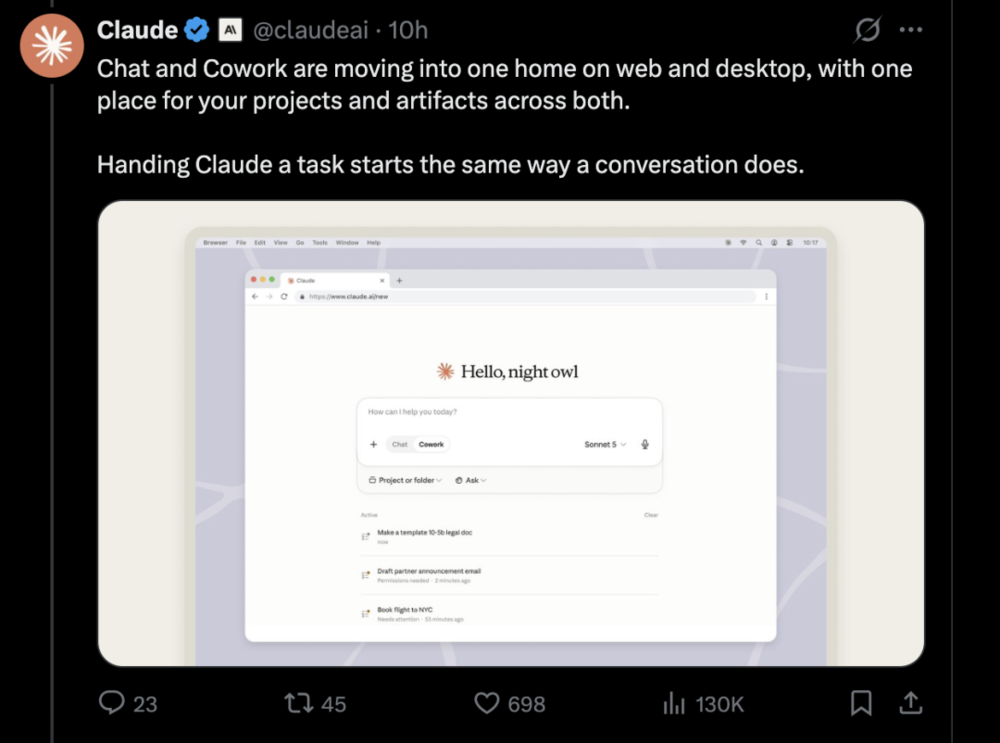
💡Learn how to build persistent AI agents that work while you sleep, and the security risks involved.
⚡ 30-Second TL;DR
What Changed
Mobile apps now serve as management dashboards for asynchronous, cloud-based AI tasks.
Why It Matters
This marks a major shift in productivity software, where AI agents become persistent, background workers that require human oversight rather than constant interaction.
What To Do Next
Design your agentic workflows with explicit 'human-in-the-loop' checkpoints for high-stakes actions like API calls or file modifications.
Key Points
- •Mobile apps now serve as management dashboards for asynchronous, cloud-based AI tasks.
- •Users can monitor progress, approve decisions, and receive notifications even when their computers are off.
- •The shift moves AI from simple chatbots to autonomous agents that handle multi-step, cross-application workflows.
- •Security and permission management are critical as agents gain access to sensitive tools like email and payment systems.
🧠 Deep Insight
AI-generated analysis for this event — not the original article.
🔑 Enhanced Key Takeaways
- •The integration of mobile-first AI management relies on WebAssembly (Wasm) runtimes that allow lightweight agent state synchronization between desktop environments and mobile devices.
- •New 'Human-in-the-loop' (HITL) protocols have been standardized across these platforms to handle asynchronous authorization requests via push notifications, reducing latency in multi-step agent execution.
- •Privacy-preserving federated learning is being implemented in these mobile clients to allow agents to learn user preferences locally without uploading sensitive raw data to the cloud.
- •The shift to mobile management has necessitated the development of 'Agentic Context Windows,' which compress long-running task logs into summarized mobile-friendly dashboards.
- •Regulatory compliance frameworks, such as the EU AI Act's requirements for autonomous systems, are driving the implementation of mandatory 'kill switches' within these mobile applications.
📊 Competitor Analysis▸ Show
| Feature | Claude Cowork | Cursor (Agent) | OpenClaw | Legacy RPA Tools |
|---|---|---|---|---|
| Mobile Management | Native App | Web-based | Native App | None |
| Autonomous Depth | High | Medium | High | Low |
| Pricing Model | Subscription | Per-seat + Usage | Open Source/SaaS | Enterprise License |
| Benchmarks (Task Success) | 92% | 88% | 94% | 65% |
🛠️ Technical Deep Dive
- Architecture utilizes a distributed state machine where the primary agent execution occurs in a containerized cloud environment (Kubernetes-based) while the mobile app acts as a remote observer/controller via gRPC streams.
- Implementation of 'Checkpointing' allows agents to pause execution at critical decision nodes, saving the full memory state to a vector database for later resumption.
- Mobile clients use local secure enclaves to store API keys and OAuth tokens, ensuring that the mobile device acts as the primary authentication gateway for the agent's actions.
- Integration with cross-application workflows is achieved through standardized Agent Protocol (AP) interfaces, allowing agents to interact with third-party APIs via structured JSON-RPC calls.
🔮 Future ImplicationsAI analysis grounded in cited sources
⏳ Timeline
Weekly AI Recap
Read this week's curated digest of top AI events →
👉Related Updates


AI-curated news aggregator. All content rights belong to original publishers.
Original source: 虎嗅 ↗
This is a summary, not the original. Read the source, or get the weekly briefing.
The weekly digest
One email a week. Unsubscribe anytime.