AGIBOT Humanoids Achieve 99.99% Success in Factory Trial
💡See how humanoid robots are achieving near-perfect reliability in real-world industrial assembly lines.
⚡ 30-Second TL;DR
What Changed
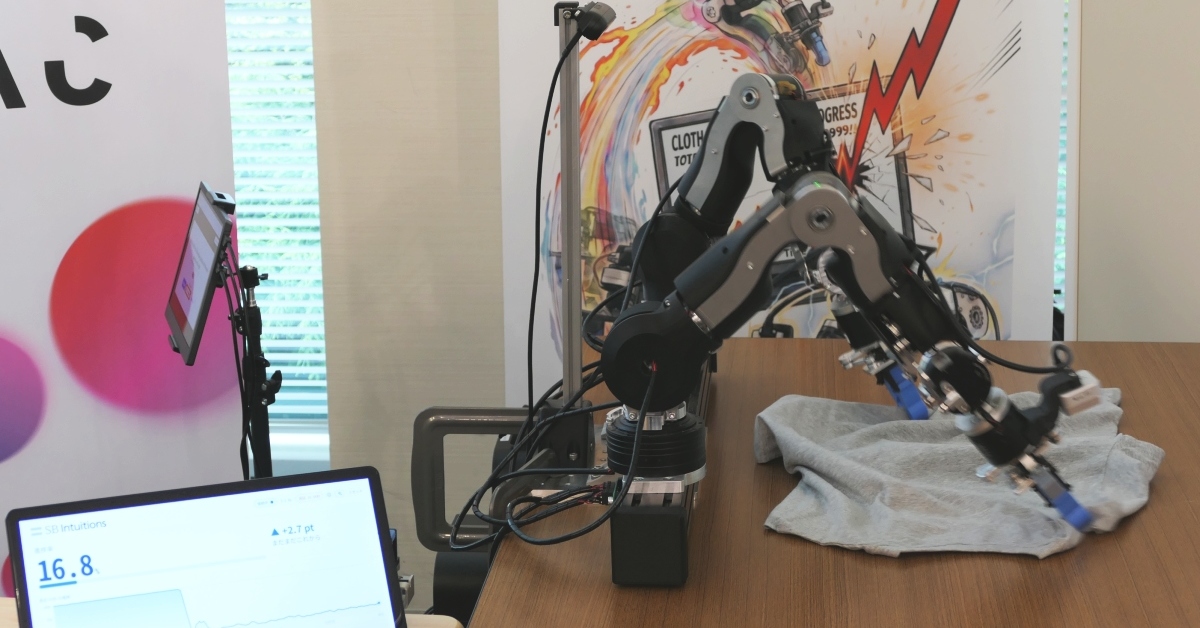
AGIBOT robots operated continuously for 6 days in a real-world tablet assembly environment.
Why It Matters
This demonstrates significant progress in embodied AI reliability for industrial automation. It suggests that humanoid robots are moving from controlled labs to high-precision manufacturing environments.
What To Do Next
Monitor AGIBOT's technical whitepapers to analyze their motion planning algorithms for industrial assembly.
Key Points
- •AGIBOT robots operated continuously for 6 days in a real-world tablet assembly environment.
- •Total output reached 17,625 units over 64 hours of operation.
- •The manufacturer claims a 99.99% operational success rate for the humanoid units.
🧠 Deep Insight
AI-generated analysis for this event — not the original article.
🔑 Enhanced Key Takeaways
- •AGIBOT, also known as Shanghai Agibot Intelligent Technology Co., Ltd., was founded by former Huawei 'Genius Youth' recruit Zhihui Jun.
- •The robots utilized in the trial are part of the 'Expedition' (Yuanzheng) series, specifically designed for industrial manufacturing and hazardous environment tasks.
- •The trial took place at a facility belonging to a major consumer electronics partner, marking a transition from laboratory testing to commercial factory integration.
- •AGIBOT's proprietary 'AgiROS' operating system and large-scale model-based control architecture were critical in achieving the high precision required for tablet assembly.
- •The company recently secured significant Series B funding, valuing the firm at over $1 billion, to accelerate the mass production of these humanoid units.
📊 Competitor Analysis▸ Show
| Feature | AGIBOT (Expedition) | Tesla (Optimus) | Figure AI (Figure 02) |
|---|---|---|---|
| Primary Focus | Industrial/Factory Automation | General Purpose/Household | Industrial/Logistics |
| Control Architecture | AgiROS / Large Model | End-to-End Neural Net | VLM-based Reasoning |
| Market Status | Factory Trial Validated | Pilot Testing | Commercial Deployment |
| Pricing | Competitive (B2B) | Projected Low Cost | Premium (B2B) |
🛠️ Technical Deep Dive
- Architecture: Employs a hierarchical control system combining a Large Vision-Language Model (LVLM) for task planning and a low-latency motion control layer for execution.
- Actuation: Utilizes high-torque density joint actuators with integrated force-torque sensors to achieve sub-millimeter precision in assembly tasks.
- Vision System: Features multi-modal sensor fusion, including depth cameras and tactile feedback sensors in the end-effectors to handle delicate electronic components.
- Software Stack: Built on the AgiROS platform, which supports digital twin simulation for rapid training and reinforcement learning in virtual environments before physical deployment.
🔮 Future ImplicationsAI analysis grounded in cited sources
⏳ Timeline
Weekly AI Recap
Read this week's curated digest of top AI events →
👉Related Updates

AI-curated news aggregator. All content rights belong to original publishers.
Original source: ITmedia AI+ (日本) ↗
This is a summary, not the original. Read the source, or get the weekly briefing.
The weekly digest
One email a week. Unsubscribe anytime.