Agents Drive AI Beyond Data Walls
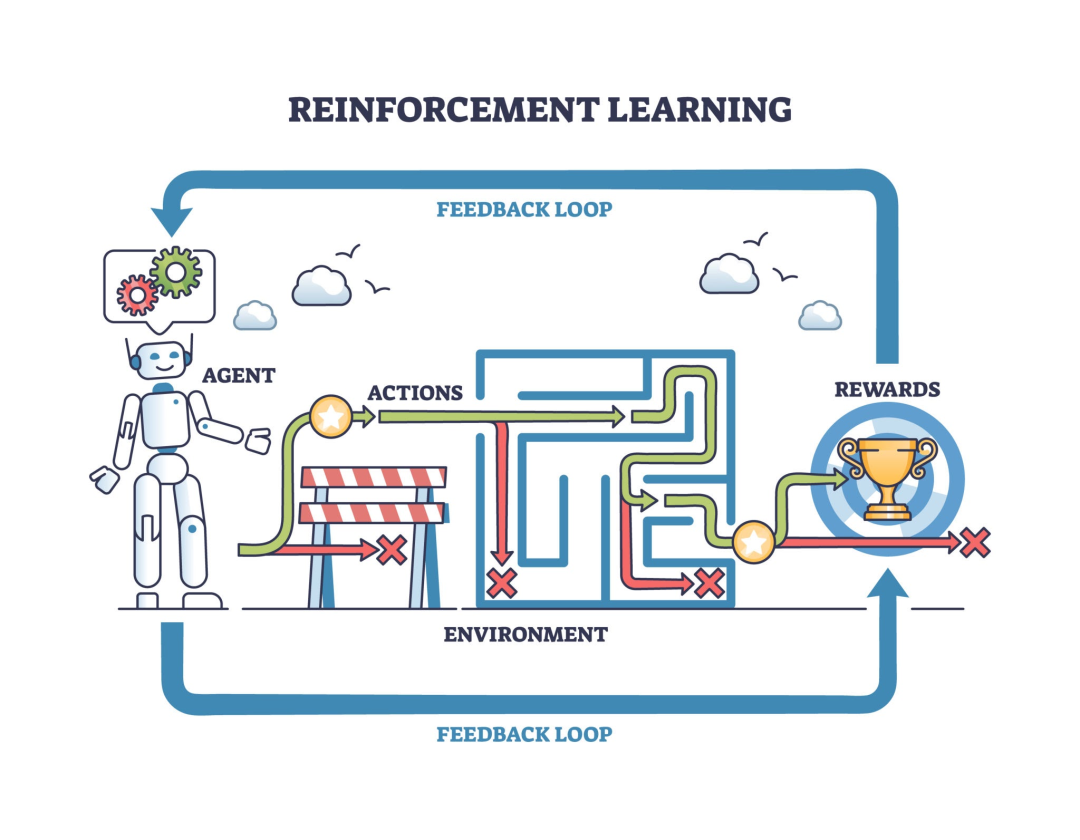
💡Agents generate causal data to break LLM data walls—essential for next-gen model training
⚡ 30-Second TL;DR
What Changed
Chatbots hit limits from isolated Q&A and low-info user dialogues
Why It Matters
Agents as evolution engine could accelerate LLM reasoning, but requires infrastructure for task execution and feedback loops. Shifts focus from scaling data to enabling real-world practice.
What To Do Next
Build an agent prototype with tool integrations to collect decision traces for fine-tuning your LLM.
Key Points
- •Chatbots hit limits from isolated Q&A and low-info user dialogues
- •Agents create annotated trajectories: actions, feedback, corrections
- •Data walls loom; agent interactions yield causal structures for better models
🧠 Deep Insight
Background and context from public sources — not the original article. 5 sources cited.
🔑 Enhanced Key Takeaways
- •AI agents integrate with APIs and business systems like CRMs to execute autonomous actions such as updating records and triggering workflows, unlike chatbots limited to conversational responses[1][2].
- •Frameworks like OpenClaw enable orchestration of multi-agent fleets that operate hierarchically 24/7 to tackle complex tasks, advancing beyond single tool-using agents[5].
- •Gartner predicts many agentic projects will fail without clear value definition, risk controls, and guardrails such as least-privilege access and human approvals[4].
- •OpenAI hired OpenClaw creator Peter Steinberger to develop next-generation personal agents, with CEO Sam Altman stating multi-agent systems will become core to their products[5].
🔮 Future ImplicationsAI analysis grounded in cited sources
⏳ Timeline
📎 Sources (5)
Factual claims are grounded in the sources below. Forward-looking analysis is AI-generated interpretation.
Weekly AI Recap
Read this week's curated digest of top AI events →
👉Related Updates
AI-curated news aggregator. All content rights belong to original publishers.
Original source: 虎嗅 ↗
This is a summary, not the original. Read the source, or get the weekly briefing.
Weekly AI briefing
One email a week. Unsubscribe anytime.