Adversarial clothing: fashion designed to confuse facial recognition
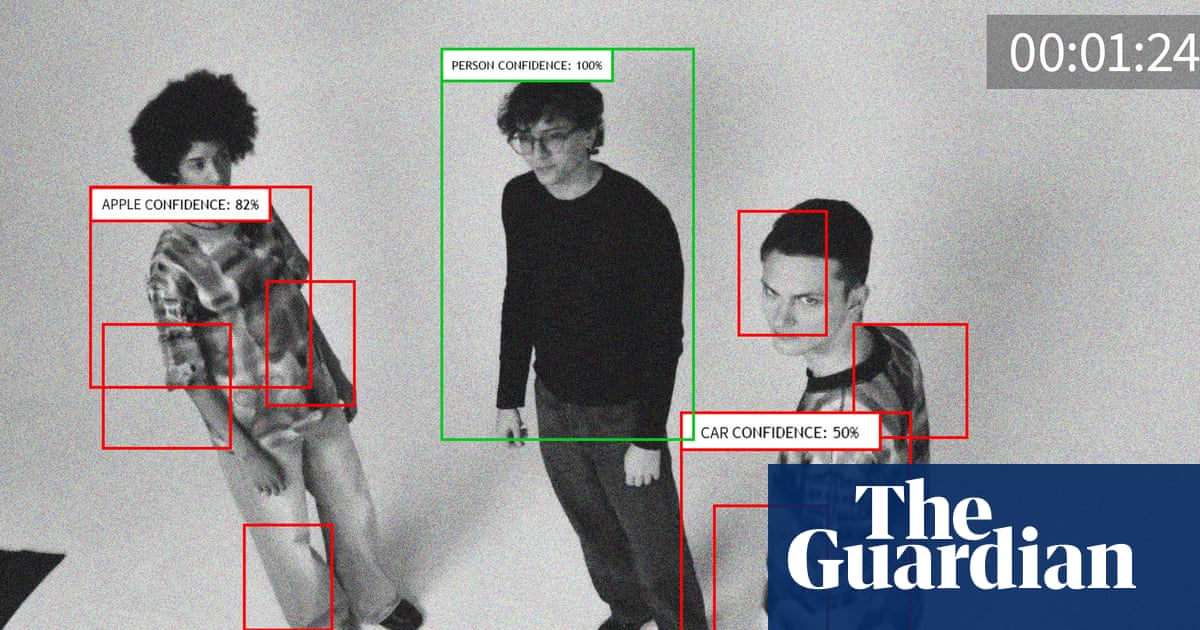
💡Learn how physical-world adversarial patterns can bypass state-of-the-art computer vision and facial recognition systems
⚡ 30-Second TL;DR
What Changed
Garments utilize adversarial patterns to disrupt computer vision algorithms.
Why It Matters
This trend highlights the ongoing arms race between surveillance technology and privacy-preserving countermeasures. It suggests a potential market for 'privacy-first' wearable tech that challenges standard AI perception models.
What To Do Next
Research adversarial machine learning techniques to understand how to make your own computer vision models more robust against physical-world perturbations.
Key Points
- •Garments utilize adversarial patterns to disrupt computer vision algorithms.
- •The trend addresses growing concerns over facial recognition in public spaces.
- •Designers are blending privacy advocacy with mainstream fashion aesthetics.
🧠 Deep Insight
AI-generated analysis for this event.
🔑 Enhanced Key Takeaways
- •Adversarial clothing often utilizes 'adversarial patches'—specifically crafted, high-contrast patterns that trigger false positives or prevent object detection by causing the model to misclassify the wearer as an inanimate object or a different class entirely.
- •Research has demonstrated that these patterns are not limited to clothing; they can be applied to stickers, glasses, or even makeup to disrupt specific neural network architectures like YOLO (You Only Look Once) or Faster R-CNN.
- •The effectiveness of these designs is often model-specific, meaning a pattern optimized to fool one facial recognition algorithm may be completely ineffective against another, leading to a 'cat-and-mouse' game between privacy advocates and AI developers.
- •Legal and ethical debates are intensifying regarding the regulation of 'anti-surveillance' fashion, with some jurisdictions exploring bans on items that intentionally obstruct or deceive law enforcement identification technologies.
- •Beyond static patterns, recent advancements include 'adversarial infrared' accessories, such as LED-embedded hats or glasses, which are invisible to the human eye but create blinding glare or false facial features for infrared-based surveillance cameras.
🛠️ Technical Deep Dive
- Adversarial attacks typically employ Gradient-based optimization (e.g., Projected Gradient Descent) to calculate the minimal pixel-level perturbations required to maximize the loss function of a target model.
- The patterns are often generated using 'Expectation Over Transformation' (EOT) techniques, which ensure the adversarial effect persists even when the clothing is viewed from different angles, distances, or lighting conditions.
- These designs target the feature extraction layers of Convolutional Neural Networks (CNNs) by injecting noise that disrupts the spatial hierarchies the model uses to identify facial landmarks.
- Physical-world implementation requires printing these digital patterns onto textiles, which introduces 'fabrication noise' that researchers must account for during the training phase to ensure the attack remains effective in real-world environments.
🔮 Future ImplicationsAI analysis grounded in cited sources
⏳ Timeline
Weekly AI Recap
Read this week's curated digest of top AI events →
👉Related Updates
AI-curated news aggregator. All content rights belong to original publishers.
Original source: The Guardian Technology ↗