Adobe's vision for human-AI creative collaboration
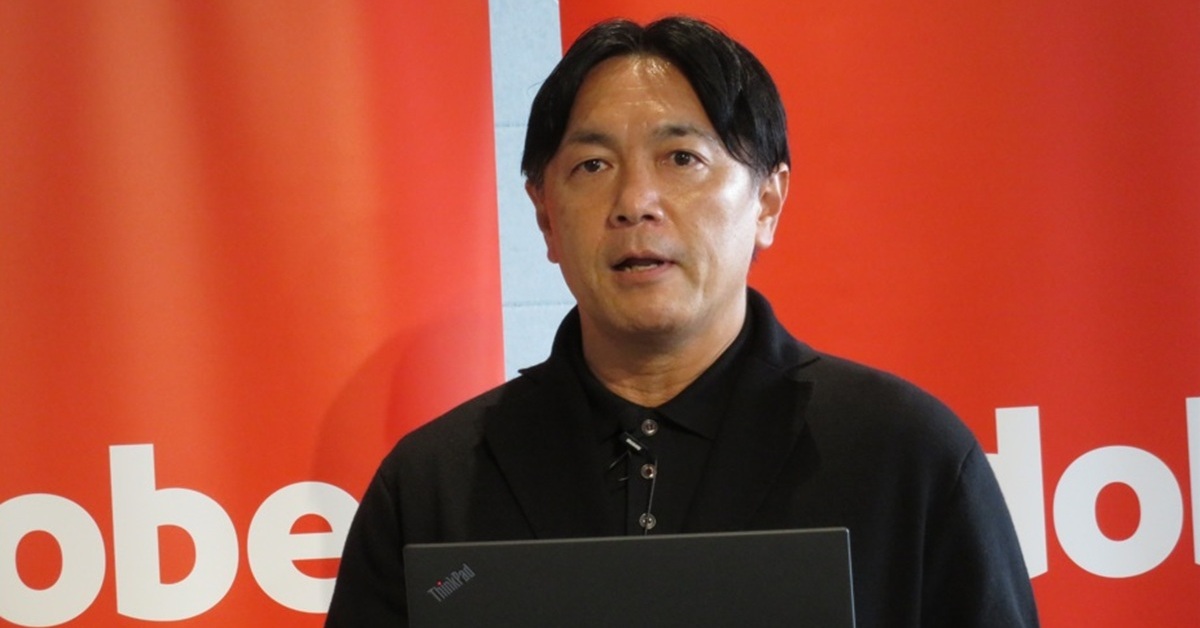
💡Understand how industry leaders are balancing AI automation with human creative expertise.
⚡ 30-Second TL;DR
What Changed
Adobe is shifting focus toward human-AI collaborative workflows
Why It Matters
This strategy signals a shift in how creative software will be designed, prioritizing 'co-pilot' features over full automation. It provides a roadmap for designers to integrate AI without losing their unique creative voice.
What To Do Next
Review Adobe's latest 'Firefly' integration documentation to understand how to maintain control over AI-generated outputs in your pipeline.
Key Points
- •Adobe is shifting focus toward human-AI collaborative workflows
- •Generative AI is increasingly integrated into professional creative tools
- •The goal is to maintain human agency in the creative process
🧠 Deep Insight
AI-generated analysis for this event — not the original article.
🔑 Enhanced Key Takeaways
- •Adobe has implemented 'Content Credentials' based on C2PA standards to provide provenance and transparency for AI-generated assets, addressing copyright and deepfake concerns.
- •The company's 'Firefly' model family is trained on Adobe Stock images, openly licensed content, and public domain material to mitigate legal risks for enterprise customers.
- •Adobe is actively developing 'Structure Reference' and 'Style Reference' features that allow users to exert granular control over AI output by using existing images as compositional or aesthetic guides.
- •The integration of AI into Adobe's ecosystem includes 'Generative Fill' and 'Generative Expand' in Photoshop, which utilize a proprietary diffusion model architecture optimized for high-resolution professional workflows.
- •Adobe has introduced an 'AI Assistant' for Acrobat and Reader, expanding their human-AI collaboration vision beyond creative design into document intelligence and data synthesis.
📊 Competitor Analysis▸ Show
| Feature | Adobe Firefly / Creative Cloud | Midjourney | Canva (Magic Studio) |
|---|---|---|---|
| Primary Target | Professional Designers/Enterprise | Digital Artists/Hobbyists | Non-designers/Marketers |
| Legal/Safety | Commercial-safe (Stock-trained) | Community-trained (Copyright risks) | Mixed (Third-party integrations) |
| Workflow Integration | Deep (Photoshop, Premiere, Illustrator) | Standalone (Discord/Web) | Moderate (Web-based platform) |
| Pricing Model | Subscription (Creative Cloud) | Subscription (Tiered) | Subscription (Freemium) |
🛠️ Technical Deep Dive
- Firefly Image Model: Utilizes a latent diffusion model architecture specifically fine-tuned for high-fidelity image generation and text-to-image synthesis.
- Training Data: Curated dataset consisting of Adobe Stock, openly licensed, and public domain content to ensure commercial safety.
- C2PA Integration: Embeds cryptographically signed metadata into files to track the history of edits and the use of generative AI.
- API/SDK: Offers Firefly Services APIs allowing enterprise customers to integrate generative capabilities directly into their own proprietary workflows and applications.
- Model Optimization: Focuses on maintaining high-resolution output (up to 4K and beyond) while minimizing artifacts common in consumer-grade generative models.
🔮 Future ImplicationsAI analysis grounded in cited sources
⏳ Timeline
Weekly AI Recap
Read this week's curated digest of top AI events →
👉Related Updates
AI-curated news aggregator. All content rights belong to original publishers.
Original source: ITmedia AI+ (日本) ↗
This is a summary, not the original. Read the source, or get the weekly briefing.
The weekly digest
One email a week. Unsubscribe anytime.