Academicians Pioneer China's Quantum Industry Battlefield
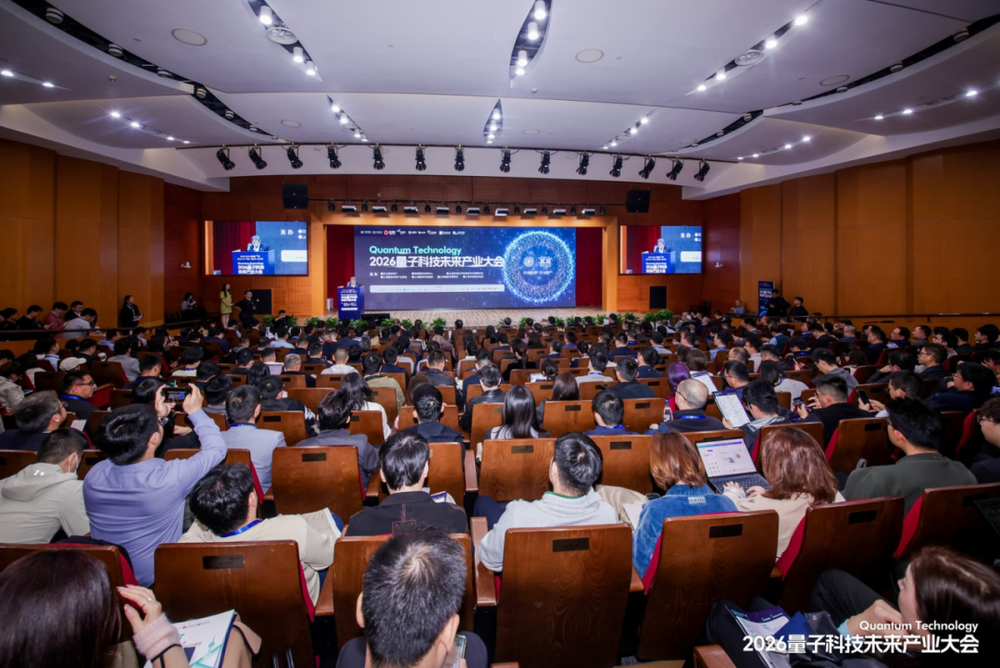
💡China's quantum funding & semi push signal AI chip supply shifts
⚡ 30-Second TL;DR
What Changed
First battlefield: mature mechanical manufacturing with export focus, gaps in high-end sensors
Why It Matters
Accelerates China's tech self-reliance in chips and quantum, vital for AI infrastructure amid global tensions. Boosts investment and talent in future computing paradigms.
What To Do Next
Track Bose Quantum's photonic API releases for hybrid quantum-AI experiments.
Key Points
- •First battlefield: mature mechanical manufacturing with export focus, gaps in high-end sensors
- •Second: semiconductors, push for EUV lithography amid US-China rivalry
- •Third: quantum tech conference packed with investors, Bose Quantum raises 1B RMB
- •China tops natural index, leads in battery electrochemistry papers (73% high-cited)
🧠 Deep Insight
AI-generated analysis for this event — not the original article.
🔑 Enhanced Key Takeaways
- •Bose Quantum (Bose Quantum Computing) is leveraging a photonic quantum computing architecture, which differentiates it from the superconducting qubit approaches favored by major international players like IBM and Google.
- •The 1 billion RMB B-round funding for Bose Quantum is part of a broader trend of Chinese state-backed and private venture capital shifting focus toward 'hard tech' and 'deep tech' to mitigate the impact of US-led export controls on advanced computing hardware.
- •China's dominance in electrochemistry research, as noted in the Nature Index, is being strategically leveraged to develop quantum-compatible materials and cryogenic cooling solutions necessary for scaling quantum processors.
🛠️ Technical Deep Dive
- •Photonic Quantum Computing: Utilizes photons as qubits, allowing for room-temperature operation in certain components, though typically requiring cryogenic cooling for single-photon detectors.
- •Scalability: Photonic systems are theoretically easier to integrate with existing fiber-optic telecommunications infrastructure compared to superconducting circuits.
- •Interconnects: Bose Quantum's architecture focuses on high-fidelity optical interconnects to link modular quantum processing units (QPUs), aiming to overcome the 'wiring bottleneck' inherent in monolithic chip designs.
🔮 Future ImplicationsAI analysis grounded in cited sources
⏳ Timeline
Weekly AI Recap
Read this week's curated digest of top AI events →
👉Related Updates

AI-curated news aggregator. All content rights belong to original publishers.
Original source: 虎嗅 ↗
This is a summary, not the original. Read the source, or get the weekly briefing.
Weekly AI briefing
One email a week. Unsubscribe anytime.