Academicians Map Quantum-AI Computing’s Future
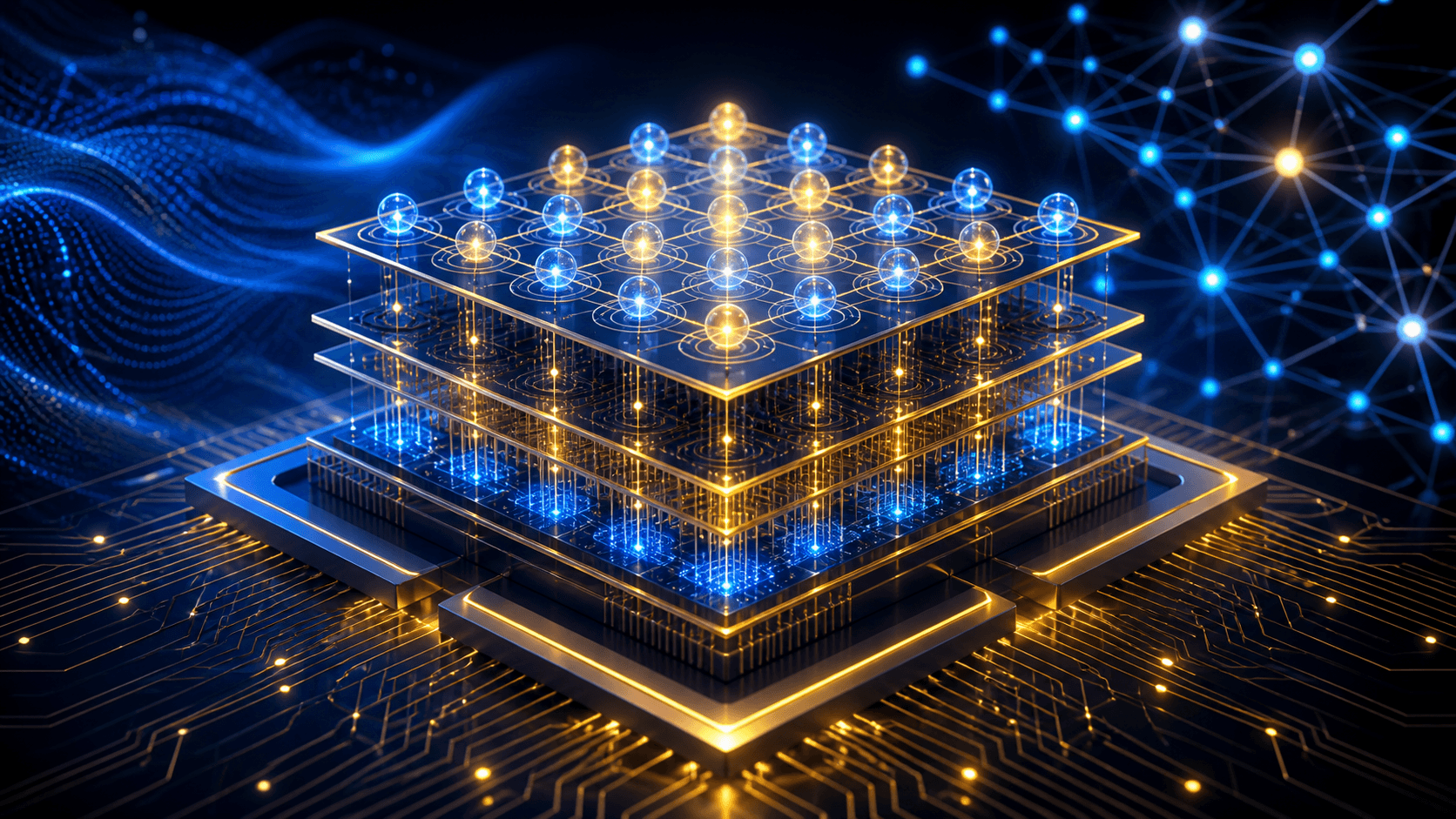
See how China’s research leaders envision AI, quantum computing, and supercomputing working as one stack.
30-Second TL;DR
What Changed
Six CAS and CAE academicians outlined a national quantum-AI roadmap.
Why It Matters
The roadmap signals that quantum computing development is increasingly being planned alongside AI and conventional high-performance computing. If implemented, the unified infrastructure could influence research priorities, systems architecture, and national investment decisions.
What To Do Next
Review your quantum-computing research roadmap and identify one experiment where AI-assisted error-correction methods could be benchmarked against your current workflow.
Key Points
- •Six CAS and CAE academicians outlined a national quantum-AI roadmap.
- •AI-enabled quantum error correction was identified as a strategic direction.
- •The proposal calls for unified quantum-computing, supercomputing, and AI infrastructure.
Deep Insight
AI-generated analysis for this event — not the original article.
Enhanced Key Takeaways
- •The 5th CCF Quantum Computing Conference emphasized the 'Quantum-AI Fusion' paradigm, aiming to overcome the decoherence limits of current Noisy Intermediate-Scale Quantum (NISQ) devices.
- •The proposed infrastructure seeks to establish a 'Quantum-Supercomputing-AI' (QSA) grid, which would allow quantum processors to offload classical pre-processing and error-correction tasks to dedicated supercomputing clusters.
- •Academicians highlighted that AI-driven error correction specifically targets the reduction of physical qubit overhead, which is currently the primary bottleneck for fault-tolerant quantum computing.
- •The roadmap includes a phased transition strategy, moving from current hybrid quantum-classical algorithms to fully integrated, AI-orchestrated quantum workflows by 2030.
- •The initiative is backed by the China Computer Federation (CCF), signaling a shift toward industry-standardized quantum software stacks to ensure interoperability across different quantum hardware modalities.
Technical Deep Dive
- AI-Enabled Error Correction: Utilizes deep reinforcement learning (DRL) models to predict and mitigate qubit noise in real-time, significantly reducing the latency associated with traditional syndrome measurement.
- QSA Grid Architecture: Implements a high-speed interconnect layer between quantum processing units (QPUs) and classical supercomputers, utilizing low-latency optical links to synchronize state updates.
- Hybrid Workflow Orchestration: Employs a unified software middleware layer that dynamically allocates computational tasks between quantum and classical resources based on problem complexity and coherence time constraints.
Future ImplicationsAI analysis grounded in cited sources
Timeline
- 2022-08CCF Quantum Computing Professional Committee established to standardize research efforts.
- 2023-09Inaugural CCF Quantum Computing Conference held, focusing on hardware-software co-design.
- 2025-05Initial pilot projects for hybrid quantum-classical cloud platforms launched in Shenzhen.
- 2026-085th CCF Quantum Computing Conference unveils the national roadmap for AI-enabled quantum error correction.
Weekly AI Recap
Read this week's curated digest of top AI events →
Related Updates


AI-curated news aggregator. All content rights belong to original publishers.
Original source: Pandaily ↗
This is a summary, not the original. Read the source, or get the weekly briefing.
The weekly digest
One email a week. Unsubscribe anytime.