A Two-Minute Song Fits on Eight QR Codes
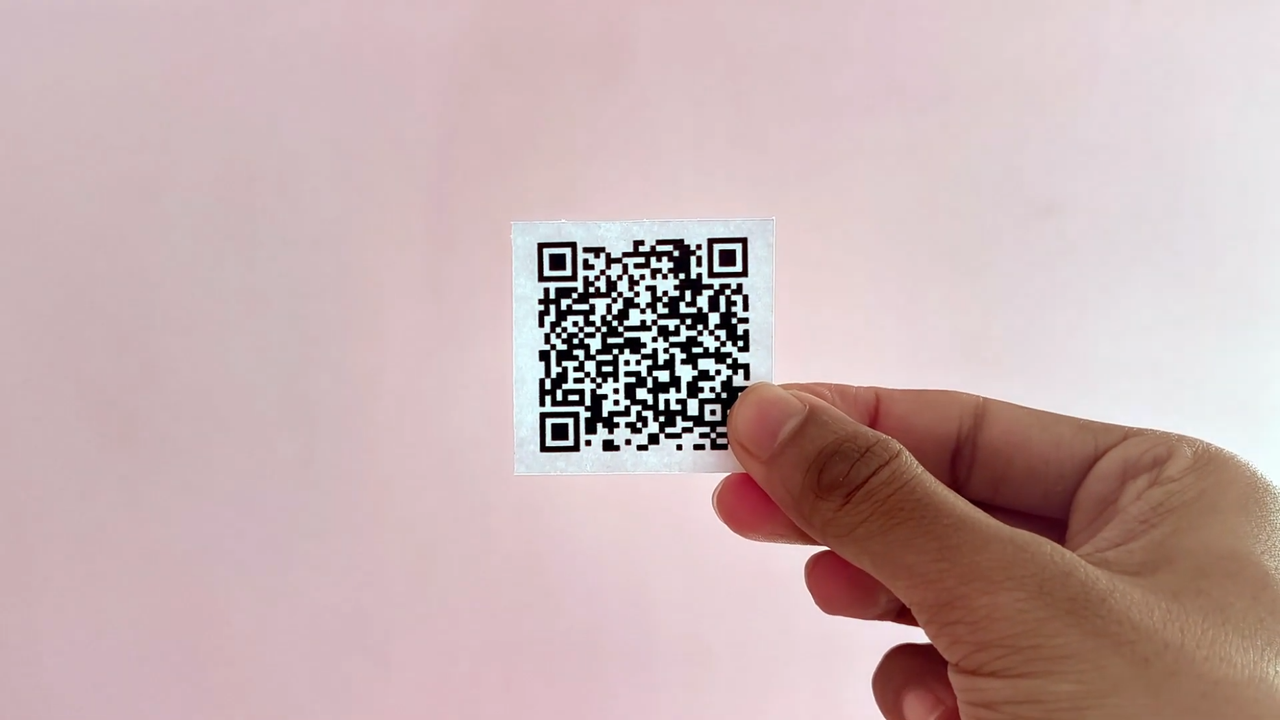
💡See how neural audio tokens shrink a two-minute song to 21KB—and make paper-based playback possible.
⚡ 30-Second TL;DR
What Changed
The 2.9MB song was reduced to approximately 21KB, a roughly 1,000-fold compression.
Why It Matters
This experiment demonstrates how neural audio codecs can trade conventional fidelity and storage requirements for extremely compact representations. It could inspire experiments in archival storage, low-bandwidth media transfer, and machine-readable physical media.
What To Do Next
Install Meta’s EnCodec repository and benchmark its reconstructed audio quality, bitrate, and decoding latency on a sample dataset.
Key Points
- •The 2.9MB song was reduced to approximately 21KB, a roughly 1,000-fold compression.
- •The compressed data was printed on paper as eight QR codes.
- •Meta’s 2022 open-source codec converts waveforms into discrete tokens for neural decoding.
- •The reconstructed track is about two minutes long.
🧠 Deep Insight
AI-generated analysis for this event.
🔑 Enhanced Key Takeaways
- •The project utilizes EnCodec's ability to compress audio into a latent space representation, which is then quantized into discrete codebook indices.
- •The 21KB data size is achieved by storing the raw codebook indices rather than the audio waveform, relying on the decoder's pre-trained neural network to synthesize the audio.
- •This method of 'analog' storage via QR codes acts as a physical backup for neural-compressed data, effectively bridging the gap between digital neural models and physical media.
- •The maker utilized a custom script to convert the binary EnCodec tokens into Base64 or similar formats to ensure they could be reliably encoded within the character limits of standard QR codes.
- •The reconstruction quality is highly dependent on the specific EnCodec model version used, as the decoder must be perfectly aligned with the codebook indices generated during the encoding process.
🛠️ Technical Deep Dive
- EnCodec Architecture: Uses a residual vector quantization (RVQ) mechanism to compress audio into a series of discrete tokens.
- Data Density: Standard QR codes (Version 40, Error Correction Level L) can hold up to 2,953 bytes of binary data, explaining why 8 codes are required for ~21KB.
- Decoding Process: The decoder takes the discrete tokens as input, maps them back to the learned latent space, and uses a convolutional neural network with transposed convolutions to reconstruct the waveform.
- Error Correction: The project relies on the QR code's built-in Reed-Solomon error correction to handle potential scanning artifacts or paper degradation.
🔮 Future ImplicationsAI analysis grounded in cited sources
⏳ Timeline
Weekly AI Recap
Read this week's curated digest of top AI events →
👉Related Updates


AI-curated news aggregator. All content rights belong to original publishers.
Original source: Tom's Hardware ↗