72% Enterprises Lack AI Control Mirage
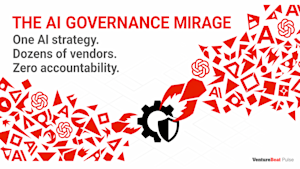
💡72% enterprises overestimate AI security—learn sprawl risks & fixes
⚡ 30-Second TL;DR
What Changed
72% enterprises use 2+ primary AI platforms, creating security risks
Why It Matters
Enterprises face heightened AI-driven attack risks from platform sprawl, forcing custom builds despite vendor reliance. This highlights need for unified governance to avoid contradictions.
What To Do Next
Audit your AI platforms and prototype a secure wrapper for Copilot to protect sensitive data.
Key Points
- •72% enterprises use 2+ primary AI platforms, creating security risks
- •Mass General Brigham shut down internal AI PoCs to leverage vendor tools
- •Custom 'skin' on Copilot supports 30K users without PHI leakage to OpenAI
- •Vendors like Epic, Workday, ServiceNow build differing AI agents
🧠 Deep Insight
AI-generated analysis for this event — not the original article.
🔑 Enhanced Key Takeaways
- •The 'AI sprawl' phenomenon is increasingly driven by shadow AI adoption, where departmental leaders bypass central IT to procure specialized SaaS-integrated agents, complicating enterprise-wide governance frameworks.
- •Mass General Brigham's custom wrapper architecture utilizes a 'human-in-the-loop' data sanitization layer that intercepts API calls to Microsoft Copilot, stripping PII/PHI before the data reaches the underlying LLM infrastructure.
- •Industry analysts note that the proliferation of vendor-specific AI agents is forcing enterprises to adopt 'AI Orchestration' layers—middleware designed to act as a unified policy enforcement point across disparate platforms like Epic, Workday, and Microsoft.
🛠️ Technical Deep Dive
- •Mass General Brigham's implementation involves a proxy-based architecture that sits between the internal user interface and the Microsoft Copilot API.
- •The system employs a regex-based and NLP-based PII/PHI detection engine that runs synchronously before the prompt is forwarded to the LLM.
- •The wrapper maintains a stateless session management policy to ensure that no user-specific context or sensitive data is persisted in the vendor's training logs or cache.
- •Integration with existing Identity and Access Management (IAM) systems ensures that only authorized personnel can trigger the wrapper-enabled AI workflows.
🔮 Future ImplicationsAI analysis grounded in cited sources
⏳ Timeline
Weekly AI Recap
Read this week's curated digest of top AI events →
👉Related Updates
AI-curated news aggregator. All content rights belong to original publishers.
Original source: VentureBeat ↗
This is a summary, not the original. Read the source, or get the weekly briefing.
The weekly digest
One email a week. Unsubscribe anytime.