3Srobotics secures funding for embodied AI welding robots
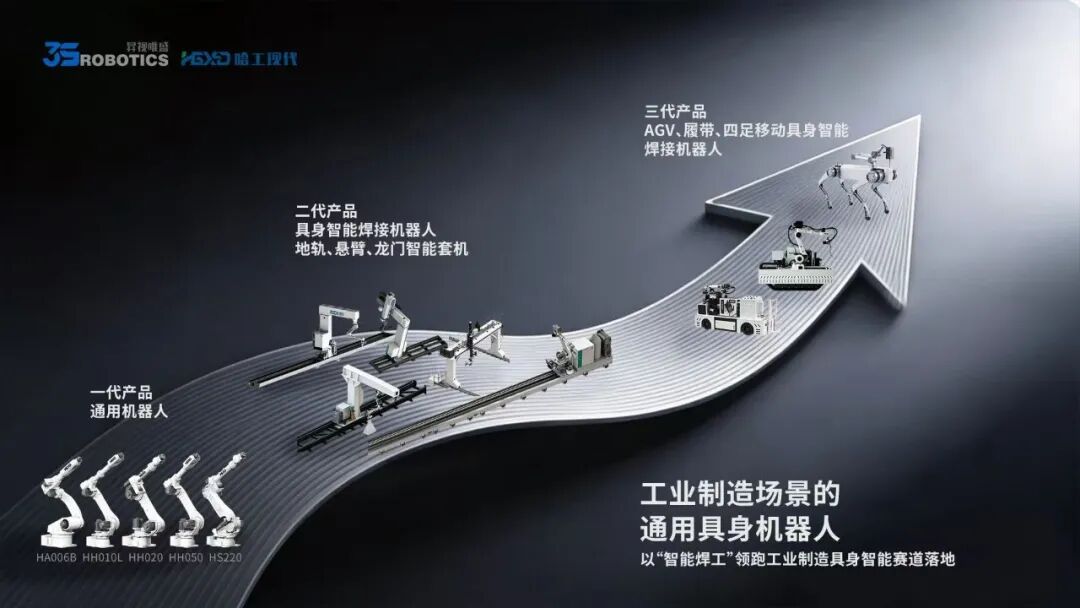
💡A prime example of embodied AI successfully solving high-value, non-standard industrial manufacturing problems.
⚡ 30-Second TL;DR
What Changed
Secured Series B funding to scale production and expand R&D teams.
Why It Matters
This highlights the shift from general-purpose robotics to specialized embodied AI in heavy industry. It demonstrates how vertical-specific foundation models can solve high-barrier labor shortages in manufacturing.
What To Do Next
Analyze how your domain-specific data can be used to fine-tune multi-modal models for physical task automation.
Key Points
- •Secured Series B funding to scale production and expand R&D teams.
- •Developed a proprietary multi-modal 'brain' model trained on industrial welding data.
- •Implemented a 'brain + cerebellum' architecture for real-time trajectory correction and process decision-making.
- •Achieved 1.5-2x labor replacement efficiency with a 1-1.5 year ROI for clients.
🧠 Deep Insight
AI-generated analysis for this event — not the original article.
🔑 Enhanced Key Takeaways
- •3Srobotics (SanSheng Robotics) focuses specifically on high-mix, low-volume (HMLV) manufacturing environments where traditional robotic automation typically fails due to programming complexity.
- •The company's funding round was led by prominent venture capital firms with a focus on deep tech and industrial automation, signaling strong institutional confidence in embodied AI for heavy industry.
- •Beyond welding, the company is positioning its 'brain + cerebellum' architecture as a platform technology capable of being adapted for other complex industrial manipulation tasks like grinding and assembly.
- •The proprietary multi-modal model integrates visual perception with force-torque feedback, allowing the robots to handle workpiece deformation and assembly gaps in real-time without manual teaching.
- •3Srobotics has established strategic partnerships with major domestic automotive and heavy machinery manufacturers in China to pilot its systems in production-line environments.
📊 Competitor Analysis▸ Show
| Feature | 3Srobotics | Traditional Industrial Robots (e.g., Fanuc/ABB) | Emerging Embodied AI Startups |
|---|---|---|---|
| Programming | AI-driven (No-code) | Manual/Offline Programming | AI-driven (Foundation Models) |
| Adaptability | High (Dynamic sensing) | Low (Fixed paths) | High (General purpose) |
| Deployment Speed | Days | Weeks/Months | Weeks |
| Target Market | HMLV / SMEs | Mass Production | R&D / General Purpose |
🛠️ Technical Deep Dive
- Brain Architecture: Utilizes a Large Vision-Language Model (LVLM) fine-tuned on industrial welding datasets to interpret CAD drawings and real-time sensor data.
- Cerebellum Architecture: A high-frequency (kHz level) control loop that processes force-torque and visual feedback to adjust the welding torch trajectory in milliseconds.
- Multi-modal Integration: Fuses 3D point cloud data with arc voltage/current feedback to maintain weld pool stability during non-standard joint variations.
- Edge Computing: Employs localized inference hardware to ensure low-latency decision-making, reducing reliance on cloud connectivity for safety-critical welding operations.
🔮 Future ImplicationsAI analysis grounded in cited sources
⏳ Timeline
Weekly AI Recap
Read this week's curated digest of top AI events →
👉Related Updates

AI-curated news aggregator. All content rights belong to original publishers.
Original source: 36氪 ↗
This is a summary, not the original. Read the source, or get the weekly briefing.
The weekly digest
One email a week. Unsubscribe anytime.