30-year longitudinal study on autism outcomes
Essential reading for researchers and builders focusing on AI for accessibility and neurodiversity.
30-Second TL;DR
What Changed
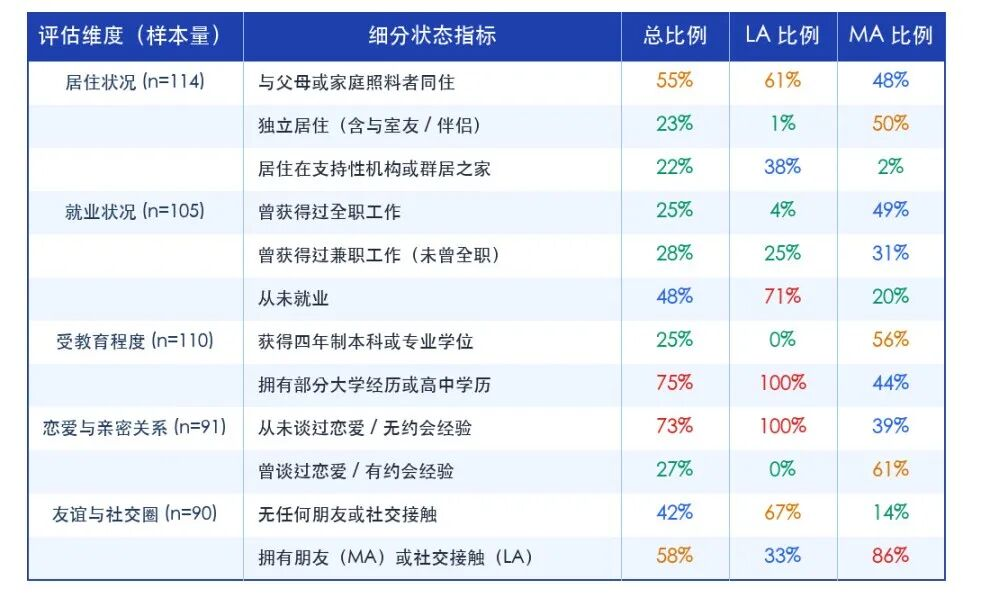
Employment rates vary drastically between high-cognitive and high-support groups.
Why It Matters
This research underscores the necessity for AI-driven assistive technologies to be designed with high-support, non-verbal, or cognitively impaired users in mind, rather than just high-functioning individuals.
What To Do Next
When developing accessibility AI, prioritize features for non-verbal communication and daily living management to serve the high-support demographic.
Key Points
- •Employment rates vary drastically between high-cognitive and high-support groups.
- •Social skills and workplace accommodations are more critical for job retention than academic qualifications.
- •A significant portion of adults with autism remain dependent on family care, highlighting a gap in adult support systems.
- •Research often overlooks high-support individuals, leading to a bias in current adult autism literature.
Deep Insight
AI-generated analysis for this event — not the original article.
Enhanced Key Takeaways
- •Longitudinal studies of this duration often utilize the Vineland Adaptive Behavior Scales (VABS) to track developmental trajectories, revealing that adaptive functioning scores frequently plateau in early adulthood without targeted intervention.
- •Research indicates that 'aging out' of school-based services at age 21 creates a 'services cliff,' where access to state-funded support drops precipitously, exacerbating the dependency on family care noted in the study.
- •The 'double empathy problem' theory is increasingly cited in modern longitudinal research to explain why social integration fails, suggesting that communication breakdowns are bidirectional rather than solely a deficit in autistic individuals.
- •Economic modeling associated with these studies suggests that the lifetime cost of supporting an individual with autism is significantly reduced when early vocational training is paired with long-term job coaching.
- •Recent meta-analyses of 30-year cohorts highlight a 'diagnostic overshadowing' effect, where co-occurring mental health conditions in autistic adults are frequently misattributed to autism itself, leading to inadequate medical treatment.
Future ImplicationsAI analysis grounded in cited sources
Timeline
- 1994-01Initial cohort recruitment for long-term autism outcome tracking begins.
- 2004-0610-year follow-up data published, highlighting early transition challenges.
- 2014-0620-year follow-up analysis identifies the critical impact of post-secondary support.
- 2024-0630-year longitudinal data collection concludes, focusing on aging and independence.
Weekly AI Recap
Read this week's curated digest of top AI events →
AI-curated news aggregator. All content rights belong to original publishers.
Original source: 虎嗅 ↗
This is a summary, not the original. Read the source, or get the weekly briefing.
The weekly digest
One email a week. Unsubscribe anytime.