
Embodied AI Data Foundation Launches
A new embodied AI data foundation is now available for an introductory price of 5,100 yuan. The product aims to provide full-stack physical AI infrastructure for robot training.
10 results on this page
A new embodied AI data foundation is now available for an introductory price of 5,100 yuan. The product aims to provide full-stack physical AI infrastructure for robot training.

The article proposes treating Kubernetes Pods as workers rather than complete AI agents. It examines how this shift could provide a more flexible deployment unit for AI agent systems.
Oxford researcher Carl Benedikt Frey argues that China’s biggest obstacle to large-scale AI deployment may be inadequate social protection for workers displaced by automation, not computing power or algorithms. The analysis compares China with historical British welfare systems and Denmark’s flexicurity model, while noting that the cited Chinese incidents do not prove a broad AI crackdown.

This position paper argues that many multi-agent system failures are concurrency control problems rather than simple coordination or communication issues. Concurrent access to shared state can cause stale reads, lost updates, and inconsistent outcomes, especially during long LLM inference windows.
This position paper argues that AI agents should be evaluated as behavioral systems, not only by their final performance outcomes. It proposes systematic observation, environmental perturbation, and action-sequence analysis to understand how agents make decisions and adapt.

Coverage from WRC2026 argues that embodied intelligence has not yet reached a breakthrough comparable to the iPhone moment. The field needs more than an impressive standalone product; it requires a complete ecosystem to support continued development and adoption.
Interviews with three doctors reveal that medical AI annotation and evaluation work is demanding, increasingly commoditized, and vulnerable to cost-cutting. While models show measurable improvements, practitioners remain concerned that increasingly capable systems could eventually replace parts of their own work.

AI crawlers are increasingly entering e-commerce environments, challenging traditional bot-blocking defenses. The security approach is shifting from simply intercepting automated traffic to evaluating its intent and risk.

GAC Trumpchi has begun rolling out OTA 3.0 for the Eon S9, upgrading its Huawei ADS V4.1 driving system and HarmonySpace 5 cockpit. The update adds automated cruise parking, side-impact defense, AI-powered in-car assistance, and dual-control parked ventilation.
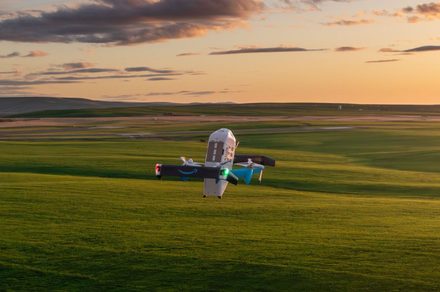
Amazon plans to expand Prime Air drone delivery to nearly 500 cities by 2026, representing a sixfold increase. The ambitious rollout comes amid safety incidents and continued federal scrutiny of autonomous delivery operations.