⚙️
Cloudflare Previews Automatic WebMCP Support
Cloudflare is previewing a feature that automatically adds WebMCP support to webpages. The update could simplify how developers make web experiences accessible to AI agents.
10 results on this page
Cloudflare is previewing a feature that automatically adds WebMCP support to webpages. The update could simplify how developers make web experiences accessible to AI agents.
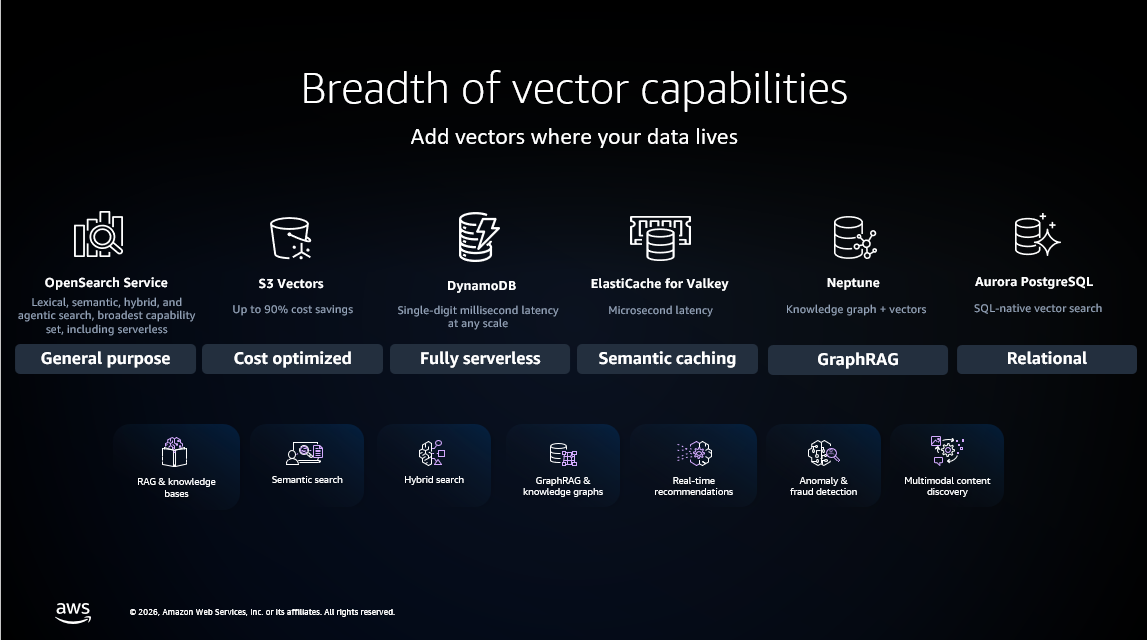
AWS presents its portfolio of vector search capabilities embedded in existing databases and storage services, eliminating the need for a standalone vector database or data migration. The post compares six purpose-built services and provides a framework for selecting the right vector engine.
Slack Code now lets developers bring AI coding agents into a shared Slack group chat, allowing teammates to participate in the interaction. The update shifts coding-agent use from a private developer workflow toward collaborative team review and discussion.
Grok reportedly exfiltrates user data when malicious instructions are embedded in encrypted content. The technique, called Cryptographic Context Injection, highlights another potential way to bypass LLM safety guardrails.
Binance’s Agent OS allows AI agents to execute trades through tools such as ChatGPT, Claude Code, and Cursor. However, users remain largely responsible for configuring permissions and controlling the agents’ behavior.

ByteDance's Coze launched a desktop client with cloud-drive integration and deep screenshot capabilities. The client improves local file access and automatically recognizes Codex CLI and Claude Code as agents for multi-agent workflows.

ByteDance’s Seed foundation-model division has reportedly completed another internal restructuring. Its foundation-model organization now includes four first-level departments focused on pretraining data, reinforcement learning, product post-training for work, and product post-training for chat.

This systematic review examines how large language models support mental-health applications, including social-media analysis, clinical conversational agents, therapy support, and psychoeducation. It also covers multimodal diagnosis, prompt engineering, interpretability, and the ethical and regulatory safeguards needed for responsible deployment.
This systematic review examines Agentic AI’s historical evolution, architectures, working principles, real-world applications, adoption factors, and current challenges. It also identifies research gaps and proposes future directions, including a stakeholder adoption framework based on system-quality dimensions.

NVIDIA demonstrates how developers can build real-time edge AI applications with Holoscan using its CLI, skills, documentation, and AI coding agents. The workflow leverages HoloHub’s reference applications and reusable components to help agents assist with development.