來源Pandaily•較早收集於 54m
圖靈獎得主探討 AGI 發展面臨的理論挑戰
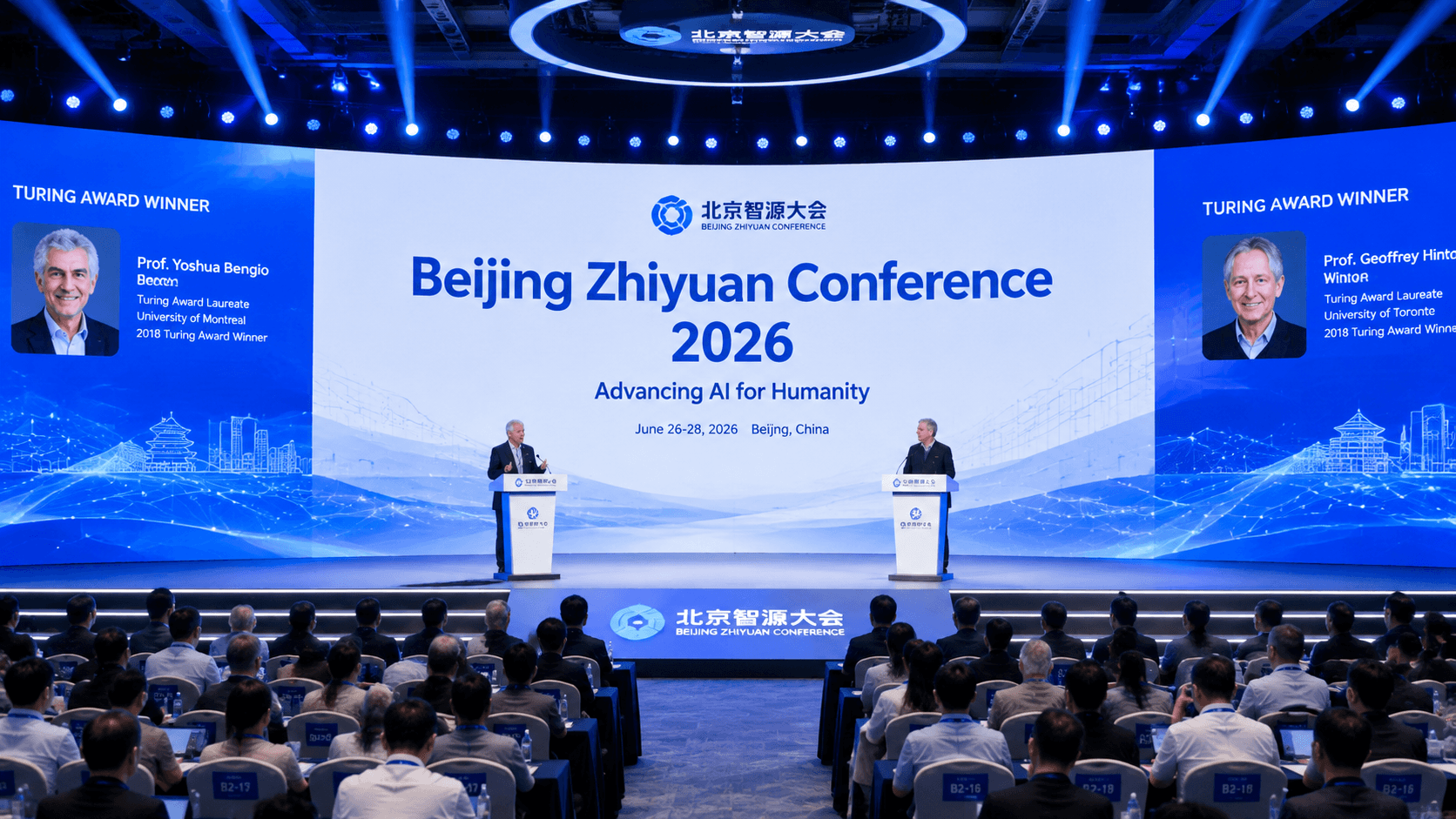
💡了解圖靈獎得主認為阻礙 AGI 進展的關鍵理論瓶頸。
⚡ 30 秒速覽
有什麼變化
Whitfield Diffie 與 Andrew Barto 指出了 AGI 在基礎理論上的缺口。
為什麼重要
此對話顯示研究重心正從擴展定律(Scaling Laws)轉向基礎架構與理論研究,這可能影響未來 AI 實驗室的研發方向。
下一步行動
查閱北京智源大會的最新論文,以了解目前 AGI 架構所面臨的理論限制。
誰應關注:Researchers & Academics
關鍵要點
- •Whitfield Diffie 與 Andrew Barto 指出了 AGI 在基礎理論上的缺口。
- •北京智源大會為探討 AI 局限性提供了高層次對話平台。
- •專家正聚焦於阻礙現有模型達到真正 AGI 的「理論黑洞」。
🧠 深度解析
背景與延伸:來自公開資料,非原文內容。引用 12 個來源。
🔑 增強重點摘要
- •Whitfield Diffie, a pioneer in public-key cryptography, argued that the general nature of AGI makes it impossible to write formal specifications for safety, such as defining what 'not hallucinating' means, contrasting this with the success of cryptography which relies on clearly defined specifications.
- •Andrew Barto, a pioneer of reinforcement learning, identified the reward function as a fundamental bottleneck in AGI development, explaining that while simple environments allow for definable reward functions, complex real-world scenarios do not, leading to potential unintended consequences (the 'Midas Touch' problem).
- •Both Turing laureates concluded that the theoretical foundations necessary for AGI safety and control are currently missing and will require a multi-decade process to develop, drawing parallels to the half-century it took for cryptography to mature from theory to standardized protocols.
- •The 8th Beijing Zhiyuan Conference, where these discussions took place, is characterized as an 'academically hardcore' event focused on brain-inspired intelligence and next-generation AI paths, aiming to foster foundational ideas rather than industry hype.
🛠️ 技術深入
- Whitfield Diffie highlighted the challenge of formally specifying AGI behavior, particularly for safety aspects like preventing 'hallucinations' or 'loss of control,' due to the broad and undefined nature of general intelligence, unlike the narrow-domain success of cryptography.
- Andrew Barto pinpointed the reward function design as a core bottleneck in reinforcement learning for AGI, especially in complex, real-world environments where creating a perfect reward function is fundamentally impossible.
- Barto invoked Norbert Wiener's 'Midas Touch' problem, warning that literal optimization based on poorly formulated objective functions can lead to catastrophic, unintended consequences, emphasizing the need for robust, dynamic guardrails instead of single reward functions.
- The discussions implicitly underscore the limitations of current AI models, such as large language models (LLMs), in achieving true AGI due to these theoretical gaps in formal specification and reward design, suggesting that current LLM security is in an 'early, disorderly phase.'
🔮 前景展望基於引用來源的 AI 分析
The development of AGI will necessitate a significant shift in research focus from scaling current models to establishing new theoretical frameworks for safety and control.
Turing laureates have identified fundamental theoretical gaps in defining safety specifications and reward functions, indicating that current scaling approaches alone are insufficient for achieving true AGI.
Regulatory bodies will face increasing challenges in enforcing AI safety and ethical guidelines for AGI without established theoretical foundations for its control.
Existing regulations, like the EU AI Act, require transparency and reliability, which are difficult to guarantee when specifying AGI's internal behavior and objective functions remains an unsolved theoretical problem.
The timeline for achieving safe and controllable AGI is likely much longer than current industry predictions suggest, requiring multi-decade efforts in foundational research.
Both Diffie and Barto drew parallels to the decades-long development of cryptography and reinforcement learning, cautioning against the rapid pace suggested by the current industry frenzy.
⏳ 時間線
1956
John McCarthy coined the term 'artificial intelligence' at the Dartmouth Conference.
1970s
Richard Sutton and Andrew Barto laid the foundations of modern reinforcement learning.
1975
Whitfield Diffie, along with Martin Hellman, conceptualized and explained public-key cryptography.
2015
Whitfield Diffie received the ACM A.M. Turing Award.
2024
Andrew Barto (and Richard Sutton) received the ACM A.M. Turing Award for their contributions to reinforcement learning.
2026-06-12
The 8th Beijing Zhiyuan Conference commenced, featuring keynote speeches by Whitfield Diffie and Andrew Barto on AGI theoretical challenges.
📎 來源 (12)
Factual claims are grounded in the sources below. Forward-looking analysis is AI-generated interpretation.
📰
AI 週報
閱讀本週精選 AI 大事摘要 →
👉相關動態



AI 策展新聞聚合。所有內容版權歸原始發布者所有。
原始來源: Pandaily ↗
每週電子報
每週一封,可隨時退訂。