📲Digital Trends•較早收集於 42m
Metalenz 螢幕下臉部掃描技術無需切口
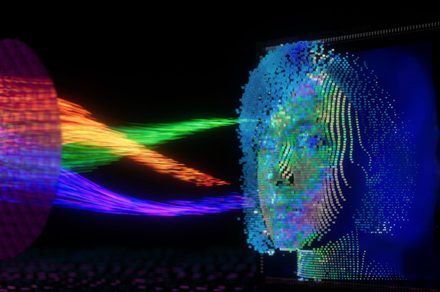
💡螢幕下臉部認證突破,為 AI 應用帶來緊湊行動 CV 感測器(28字元)
⚡ 30-Second TL;DR
有什麼變化
可在完全開啟顯示幕下運作
為什麼重要
此突破實現無邊框智慧手機設計搭配安全生物辨識,可能迫使 Apple 採用類似技術。有助加速行動裝置進階臉部辨識整合。
下一步行動
評估 Metalenz 感測器,用於邊緣 AI 視覺原型中的螢幕下生物辨識。
誰應關注:Developers & AI Engineers
關鍵要點
- •可在完全開啟顯示幕下運作
- •實現支付級認證安全
- •無需醜陋螢幕切口
- •超越 Apple Face ID 多年努力
🧠 深度解析
AI-generated analysis for this event.
🔑 增強重點摘要
- •Metalenz utilizes metasurface-based optics, which replace traditional refractive glass lenses with a single, flat nanostructured layer to manipulate light at the sub-wavelength scale.
- •The technology addresses the 'display interference' problem by leveraging the specific spectral characteristics of the metasurface to distinguish between the display's light emission and the infrared signals required for authentication.
- •Metalenz's solution is designed to be compatible with existing CMOS image sensor manufacturing processes, potentially lowering the barrier for mass-market adoption compared to custom-built hardware modules.
📊 競品分析▸ Show
| Feature | Metalenz (Under-Display) | Apple Face ID (Notched/Dynamic Island) | Traditional Under-Display Camera (UDC) |
|---|---|---|---|
| Authentication Grade | Payment-Grade (Secure) | Payment-Grade (Secure) | Generally Consumer/Non-Secure |
| Physical Cutout | None | Yes (Notch/Dynamic Island) | None |
| Optical Method | Metasurface Optics | Refractive Glass Lenses | Refractive Glass Lenses |
| Display Impact | Minimal (Optimized for IR) | None | High (Diffraction/Haze) |
🛠️ 技術深入
- •Metasurface architecture: Employs millions of sub-wavelength nanopillars on a flat substrate to perform wavefront shaping, replacing bulky multi-element lens stacks.
- •Spectral Filtering: The metasurface is engineered to be highly transparent to specific infrared wavelengths (typically 940nm) while effectively managing the visible light spectrum from the OLED display.
- •Integration: The system is designed to work with standard NIR (Near-Infrared) sensors, utilizing the metasurface to focus light directly onto the sensor array without the need for traditional lens housing.
- •Signal Processing: Employs proprietary algorithms to compensate for the light attenuation caused by the OLED display stack, ensuring sufficient signal-to-noise ratio for secure depth mapping.
🔮 前景展望AI analysis grounded in cited sources
Smartphone manufacturers will shift away from Dynamic Island designs by 2027.
The ability to achieve secure authentication without cutouts removes the primary functional justification for maintaining visible display obstructions.
Metasurface optics will become the standard for mobile biometric sensors.
The reduction in module height and component count provides a significant cost and space advantage over traditional refractive lens systems.
⏳ 時間線
2021-06
Metalenz emerges from stealth with $10 million in Series A funding to commercialize metasurface technology.
2022-02
Metalenz announces partnership with STMicroelectronics to mass-produce metasurface-based optical components.
2023-05
Metalenz debuts 'PolarEyes' technology, integrating polarization sensing into a single metasurface lens.
2025-01
Metalenz demonstrates high-resolution depth sensing capabilities suitable for mobile authentication.
📰
AI 週報
閱讀本週精選 AI 大事摘要 →
👉相關動態




AI 策展新聞聚合。所有內容版權歸原始發布者所有。
原始來源: Digital Trends ↗