來源Pandaily•較早收集於 2h
中國可回收火箭的網捕回收路徑
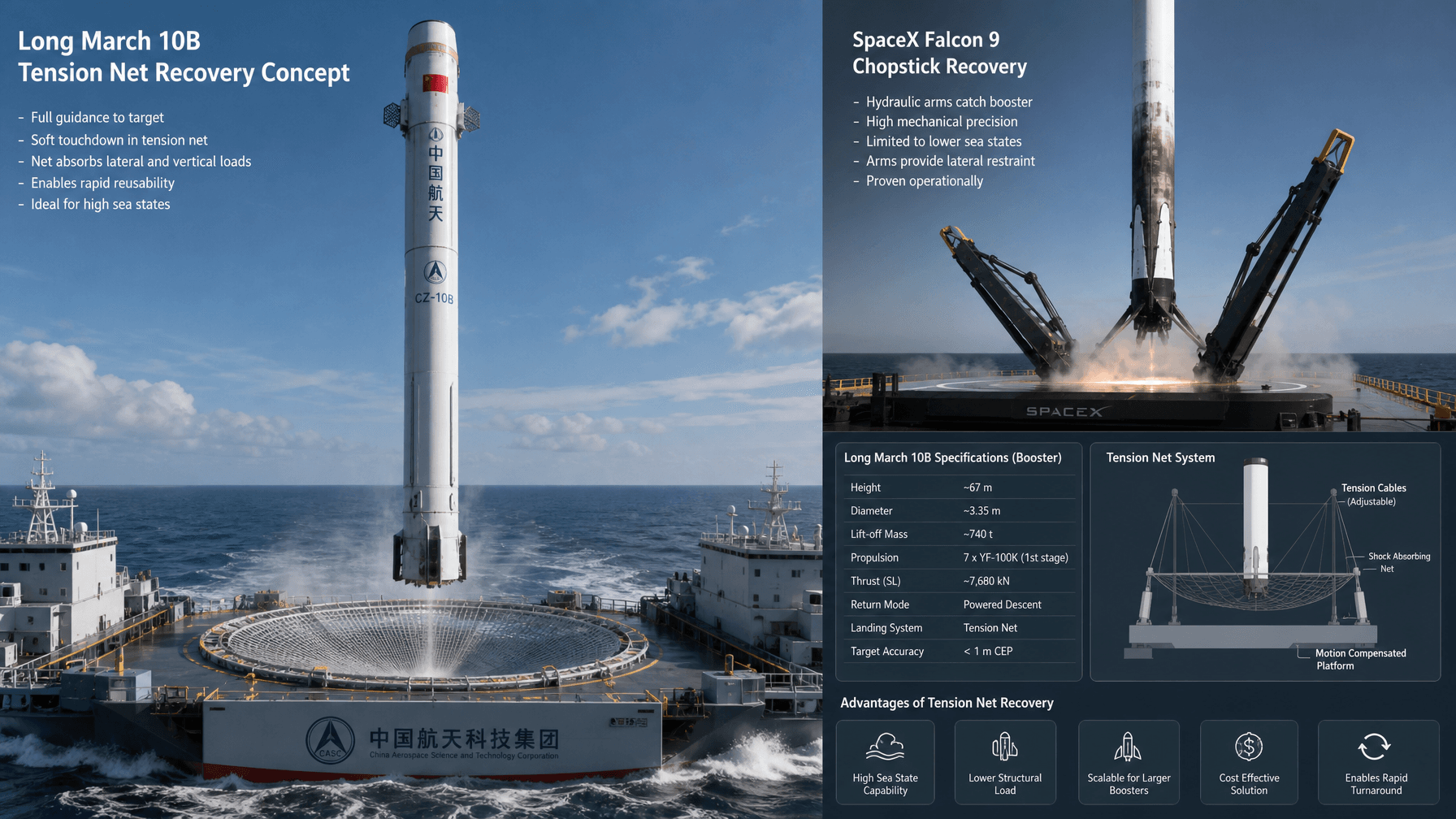
💡一種創新的火箭回收方法,優先考慮柔性、軟體驅動的捕獲,而非剛性機械硬體。
⚡ 30 秒速覽
有什麼變化
採用柔性網捕系統而非剛性機械臂
為什麼重要
此發展標誌著航太工程策略的多樣化,透過將軟體定義的捕獲精度置於大型機械基礎設施之上,可能降低可回收火箭技術的門檻。
下一步行動
研究柔性捕獲系統背後的控制演算法,了解感測器融合與即時軌跡調整如何應用於高風險機器人技術中。
誰應關注:Developers & AI Engineers
關鍵要點
- •採用柔性網捕系統而非剛性機械臂
- •專為提升助推器高速下降過程中的誤差容忍度而設計
- •強調更溫和的處理方式以延長可回收火箭組件的使用壽命
🧠 深度解析
本篇為 AI 生成分析,非原文內容。
🔑 增強重點摘要
- •The net-based recovery concept is being explored by Chinese aerospace entities as a potential solution for mid-air retrieval of smaller rocket stages or fairings, distinct from the heavy-lift booster recovery methods used by SpaceX.
- •Research into flexible capture systems in China often involves high-strength synthetic fibers and dynamic tension-control mechanisms designed to absorb kinetic energy upon impact.
- •This recovery method is being evaluated as a cost-effective alternative to propulsive landing, which requires significant fuel reserves that reduce payload capacity.
- •Chinese aerospace engineers are investigating the use of autonomous drone-ship or barge-based net systems that utilize real-time trajectory correction to align with the descending booster.
- •The development of net-based recovery is part of a broader Chinese strategy to diversify reusable launch vehicle technologies, including grid-fin control and retro-propulsion landing tests.
📊 競品分析▸ Show
| Feature | SpaceX (Mechazilla) | China Net Recovery (Proposed) | Rocket Lab (Mid-Air) |
|---|---|---|---|
| Capture Method | Mechanical 'Chopstick' Arms | Flexible Net/Tension System | Helicopter/Parachute Hook |
| Primary Target | Super Heavy Booster | Small/Medium Launchers | Electron Booster |
| Mechanical Stress | High (Rigid Contact) | Low (Energy Absorption) | Moderate (Tension Loads) |
| Operational Status | Active/Proven | Conceptual/Experimental | Retired (Shifted to Splashdown) |
🛠️ 技術深入
- System utilizes high-tensile, heat-resistant polymer netting designed to distribute impact loads across a wide surface area.
- Employs active tensioning winches that adjust net geometry in milliseconds based on booster descent velocity and wind shear data.
- Integration of computer vision systems on the recovery platform to track the booster's center of gravity during the final seconds of descent.
- Focuses on minimizing the 'hard-dock' shock that typically causes structural fatigue in reusable airframes.
🔮 前景展望基於引用來源的 AI 分析
Net-based recovery will enable higher payload-to-orbit ratios for small-lift launch vehicles.
By eliminating the need for heavy landing legs and excess fuel for landing burns, the vehicle can dedicate more mass to the primary payload.
China will achieve a successful mid-air capture of a sub-orbital test vehicle by 2028.
Current development trajectories and government funding for reusable launch infrastructure suggest a move toward full-scale testing within the next two years.
⏳ 時間線
2023-04
Deep Blue Aerospace conducts successful vertical takeoff and landing (VTVL) test.
2024-06
CAS Space completes a 1,000-meter altitude VTVL flight test for reusable rocket technology.
2025-01
Long March 10B design specifications are finalized, highlighting modular reusability.
2026-03
Initial ground-based simulation tests for net-capture dynamics are reported by Chinese research institutes.
📰
AI 週報
閱讀本週精選 AI 大事摘要 →
👉相關動態


AI 策展新聞聚合。所有內容版權歸原始發布者所有。
原始來源: Pandaily ↗
每週電子報
每週一封,可隨時退訂。