🐯虎嗅•較早收集於 10m
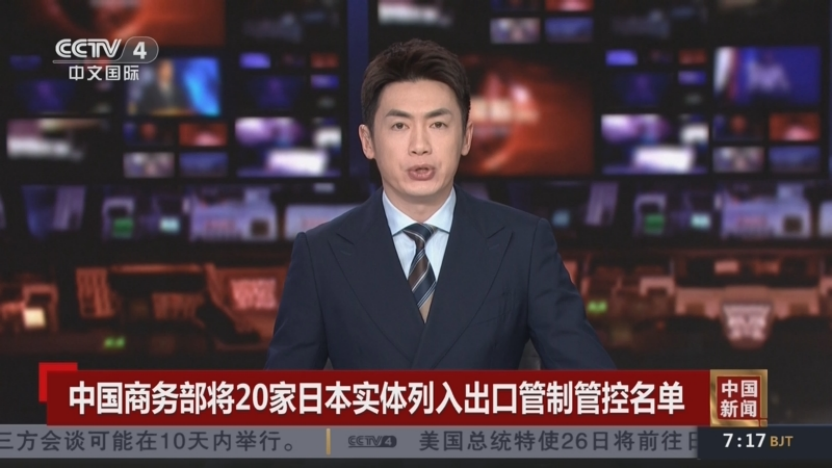
讀懂中國對日管控名單的底氣
#export-controls#semiconductor-supply#dual-use-techchina-dual-use-export-controlsmitsubishi-heavy-industrieskawasaki-heavy-industriesihinitto-denkonjaxa
💡China curbs exports to Japan semi giants—check AI chip material risks now
⚡ 30-Second TL;DR
有什麼變化
管控名單20家(如三菱重工子公司、川崎重工、IHI軍工)。
為什麼重要
加劇中日科技脫鉤,提升AI硬體關鍵半導體/顯示供應鏈成本風險。標誌管制反制螺旋時代。
下一步行動
Audit supply chain exposure to Nitto Denko films for your chip fab or display prototypes.
誰應關注:Enterprise & Security Teams
關鍵要點
- •管控名單20家(如三菱重工子公司、川崎重工、IHI軍工)。
- •關注名單20家(如日東電工、TDK半導體材料、光學、燃料)。
- •管控名單禁兩用物項出口;關注名單需風險評估及延長審查。
- •選日本財年末發布;管制產品、人及知識流動。
🧠 深度解析
背景與延伸:來自公開資料,非原文內容。引用 5 個來源。
🔑 增強重點摘要
- •China's export control announcement on February 24, 2026, specifically targets dual-use items—goods with both civilian and military applications—rather than outright bans on all trade, allowing for case-by-case approval under 'special circumstances' with Ministry of Commerce permission[1][3].
- •The 20 entities on the strict control list include major defense contractors like Mitsubishi Heavy Industries' multiple subsidiaries (Shipbuilding, Aero Engines, Marine Machinery), Kawasaki Heavy Industries Aerospace Systems, IHI Corporation divisions, Japan's National Defense Academy, and JAXA (Japan's space agency), reflecting China's focus on aerospace, maritime, and space capabilities[2][3].
- •The second list of 20 entities placed under heightened scrutiny includes civilian-facing companies such as Subaru (whose aerospace division performs defense work), Sumitomo Heavy Industries, Nitto Denko, TDK, and the Institute of Science Tokyo, indicating China's strategy to monitor technology and materials flows across both defense and commercial sectors[1].
- •China's Ministry of Commerce framed the controls as measures to 'safeguard national security and interests and fulfill international obligations such as non-proliferation,' positioning the action within a legal framework similar to Western export control regimes[3].
- •The announcement took effect immediately on February 24, 2026, requiring all ongoing export activities to cease immediately and mandating that any future exports undergo government review, creating immediate operational disruption for affected Japanese exporters[3].
🔮 前景展望AI analysis grounded in cited sources
Japanese defense and aerospace supply chains will face significant delays and cost increases due to restricted access to Chinese dual-use materials and components.
Chinese export control enforcement will likely expand beyond the initial 40 entities to include additional Japanese firms involved in military-adjacent sectors.
The announcement explicitly states that entities 'not listed' but involved in Japanese military users or end-uses 'could contribute to enhancing Japan's military capabilities' remain subject to export prohibitions under broader provisions[3].
Japan's semiconductor and advanced materials industries will face supply chain fragmentation as companies like Nitto Denko and TDK navigate heightened scrutiny on dual-use exports to China.
Placement on the attention list subjects these firms to risk reviews and potential delays, disrupting the flow of specialized materials (chip films, optical displays) that support both civilian and defense applications[1].
⏳ 時間線
2026-02-24
China's Ministry of Commerce issues Announcement No. 11 of 2026, adding 20 Japanese entities to export control list and 20 to attention list, effective immediately
📎 來源 (5)
Factual claims are grounded in the sources below. Forward-looking analysis is AI-generated interpretation.
- scmp.com — China Adds 20 Japanese Firms Export Control List
- japantimes.co.jp — China Japan Companies Watch List
- chemradar.com — Fea80hatk5xc
- globalsanctions.com — China Adds 20 Japanese Companies Including Mitsubishi to Export Control List
- icis.com — China Tightens Export Controls on Eneos Other Japanese Entities Over Remilitarization
📰
AI 週報
閱讀本週精選 AI 大事摘要 →
👉相關動態
AI 策展新聞聚合。所有內容版權歸原始發布者所有。
原始來源: 虎嗅 ↗
每週 AI 簡報
每週一封,可隨時退訂。