China Blacklists 40 Japanese Tech Firms
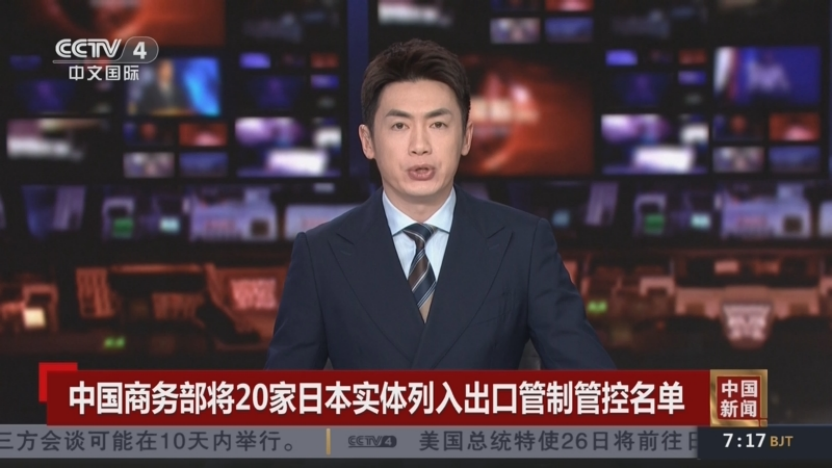
💡China curbs exports to Japan semi giants—check AI chip material risks now
⚡ 30-Second TL;DR
What Changed
20 on strict control list (e.g., Mitsubishi Heavy subs, Kawasaki, IHI for defense).
Why It Matters
Escalates China-Japan tech decoupling, raising costs/risks for global semi/display supply chains critical to AI hardware. Signals era of reciprocal controls amid US-China-Japan rivalry.
What To Do Next
Audit supply chain exposure to Nitto Denko films for your chip fab or display prototypes.
Key Points
- •20 on strict control list (e.g., Mitsubishi Heavy subs, Kawasaki, IHI for defense).
- •20 on attention list (e.g., Nitto Denko, TDK for semi materials, optics, fuels).
- •Bans dual-use exports to control list; risk reviews and delays for attention list.
- •Timed for Japan FY-end impact; focuses on tech/people/knowledge flows.
🧠 Deep Insight
Background and context from public sources — not the original article. 5 sources cited.
🔑 Enhanced Key Takeaways
- •China's export control announcement on February 24, 2026, specifically targets dual-use items—goods with both civilian and military applications—rather than outright bans on all trade, allowing for case-by-case approval under 'special circumstances' with Ministry of Commerce permission[1][3].
- •The 20 entities on the strict control list include major defense contractors like Mitsubishi Heavy Industries' multiple subsidiaries (Shipbuilding, Aero Engines, Marine Machinery), Kawasaki Heavy Industries Aerospace Systems, IHI Corporation divisions, Japan's National Defense Academy, and JAXA (Japan's space agency), reflecting China's focus on aerospace, maritime, and space capabilities[2][3].
- •The second list of 20 entities placed under heightened scrutiny includes civilian-facing companies such as Subaru (whose aerospace division performs defense work), Sumitomo Heavy Industries, Nitto Denko, TDK, and the Institute of Science Tokyo, indicating China's strategy to monitor technology and materials flows across both defense and commercial sectors[1].
- •China's Ministry of Commerce framed the controls as measures to 'safeguard national security and interests and fulfill international obligations such as non-proliferation,' positioning the action within a legal framework similar to Western export control regimes[3].
- •The announcement took effect immediately on February 24, 2026, requiring all ongoing export activities to cease immediately and mandating that any future exports undergo government review, creating immediate operational disruption for affected Japanese exporters[3].
🔮 Future ImplicationsAI analysis grounded in cited sources
⏳ Timeline
📎 Sources (5)
Factual claims are grounded in the sources below. Forward-looking analysis is AI-generated interpretation.
- scmp.com — China Adds 20 Japanese Firms Export Control List
- japantimes.co.jp — China Japan Companies Watch List
- chemradar.com — Fea80hatk5xc
- globalsanctions.com — China Adds 20 Japanese Companies Including Mitsubishi to Export Control List
- icis.com — China Tightens Export Controls on Eneos Other Japanese Entities Over Remilitarization
Weekly AI Recap
Read this week's curated digest of top AI events →
👉Related Updates
AI-curated news aggregator. All content rights belong to original publishers.
Original source: 虎嗅 ↗
This is a summary, not the original. Read the source, or get the weekly briefing.
Weekly AI briefing
One email a week. Unsubscribe anytime.