All Updates
Page 995 of 1622
April 7, 2026
Firmus Raises $505M for $2B AI IPO Push
Nvidia-backed Australian Firmus raised $505M equity at $5.5B valuation in final pre-IPO round. It secured $10B Blackstone-led debt and targets $2B ASX listing in June or July. The firm plans to deploy 1.6 gigawatts of AI factory network capacity.
ASML Shares Fall on US China Export Curbs
ASML stock dropped 4.7% after US lawmakers proposed a bill further restricting exports to China. The measure targets sales and maintenance of deep ultraviolet (DUV) immersion lithography machines. It could impose first new limits since September 2024 if passed and enforced by Dutch authorities.
Hikvision Denies 300 Staff Probe Rumor
Hikvision refutes online rumors claiming over 300 headquarters staff, including executives and engineers, were detained over a monitoring system vulnerability. The company labels it fake news with no such events occurring. Screenshots of the allegation circulated widely.
EVE Energy Plans 110B Yuan Battery Bases
EVE Energy to build 50GWh storage/power battery base in Qidong (50B yuan) and 60GWh storage base in Shanghang (60B yuan). Also providing guarantee for Hungary subsidiary and JV with Longjing Environmental. All subject to shareholder approval.
Xiaomi YU7 OTA Enables Voice Park-Out
Xiaomi confirms all YU7 models will receive OTA update for exterior voice park-out feature via Xiao Ai. Users command hands-free parking in forward, left, or right directions in tight spots. Setup requires phone key, parking assist, voice wake-up, and voiceprint.
MemPalace Benchmarks Inflated, Docs Admit
New open-source memory tool MemPalace went viral claiming 100% on LoCoMo and perfect LongMemEval, gaining 7k GitHub stars. Its BENCHMARKS.md reveals LoCoMo score bypasses retrieval via top_k=50; LongMemEval is retrieval-only recall@5, not full QA. Honest scores: 60-89%.
neuroClues Raises €10M for Eye-Tracking Diagnostics
French-Belgian medtech neuroClues closed €10M Series A to deliver its eye-tracking Parkinson's diagnostic to EU/US neurologists. The headset captures 800 IR images per eye per second for early biomarkers of Parkinson’s, Alzheimer’s, and MS. CE certified in Jan 2025, targeting FDA in 2026.
Nvidia Buys SchedMD, Slurm Faces Bias Fears
Nvidia's acquisition of SchedMD, developer of open-source Slurm workload manager, sparks concerns over potential favoritism toward Nvidia hardware in AI scheduling. Slurm powers 60% of supercomputers used by AI firms like Meta, Mistral, and Anthropic. Experts note Nvidia's roadmap control could prioritize CUDA over AMD ROCm or Intel oneAPI.
Macs Claim 11% US Enterprise Share
Apple's Macs reached 11% US enterprise market share in 2025, up 2.4 points, driven by MacBook Air popularity and price cuts. MacBook Neo at $599 targets entry-level disruption amid rising component costs. Analysts predict PC price hikes in 2026 due to memory/storage shortages and geopolitics.
Scale AI Scrapes Web for Meta AI Training
Scale AI, 49% owned by Meta, employs tens of thousands of gig workers via Outlier to label data from Instagram profiles, copyrighted works, and pornographic content for AI training. Workers, including experts in medicine, physics, and economics, describe the desperate nature of the tasks. This reveals controversial data sourcing practices in AI development.
Older Workers Turn to AI Training in Desperation
Skilled older US workers with degrees and experience struggle to find jobs in a brutal market, turning to AI training as a last refuge. Patrick Ciriello lost his job, endured nearly a year unemployed, and hit rock bottom as his family's foundation crumbled.
UALink 2.0 Specs Out Before v1 Silicon
The UALink Consortium released 2.0 specs for GPU interconnects as a Nvidia NVLink alternative. They split physical layer and protocol work to accelerate progress. v1.0 silicon remains months away.
Spotify AI Playlists Now for Podcasts
Spotify's AI Prompted Playlist feature expands to podcasts, allowing natural language prompts to generate personalized lists based on user history and current events. It helps discover new shows or dive into topics. Beta rollout to Premium users in select countries.
OpenAI Pushes 4-Day Weeks for AI Era
OpenAI is urging companies to trial four-day work weeks to adapt to advancing AI capabilities. The ChatGPT-maker's early policy ideas aim to spark discussions on necessary actions as AI systems become more powerful.
Keler to Acquire 51% Optics Stake
Keler Shares signed an acquisition intent agreement with Fujian Weitaishi Optoelectronics and its controlling shareholder Chen Huamin. It plans to gain at least 51% equity via capital injection and cash purchase, making it a controlled subsidiary. The target focuses on precision optical components for optical communications to aid manufacturing upgrade.
TOPPAN's AI-OCR Masters Medieval Greek
TOPPAN Group announced an AI-OCR engine on April 7 for deciphering hard-to-read medieval Greek manuscripts. It repurposes AI image recognition from Japanese kuzushiji decoding, trained on 50 Vatican Apostolic Library manuscripts and transcriptions. The system targets over 95% accuracy, with a demo starting April 25 at the Printing Museum.
DeepSeek V4 Limited Gray Release Begins
DeepSeek is rolling out a limited gray release of its V4 model, shared via Twitter/X. The announcement links to a specific post for details. This beta-like rollout targets early testers.
Rokid Plans HK IPO Amid AI Glasses Boom
Hangzhou-based Rokid is preparing to file for a Hong Kong IPO as early as late April, fueled by growing mainstream adoption of AI-powered eyewear. The move coincides with major players like Meta, Apple, Alibaba's Quark, Baidu, Xiaomi, and Huawei entering the smart glasses market.
Intel-Nvidia Serpent Lake SoC Leaked
A leak reveals Intel's Serpent Lake as a joint Intel-Nvidia system-on-chip. It features RTX Rubin graphics and Copper Shark P-cores. The chip targets a 2028–2029 launch to redefine laptop high-performance computing.
M5 Max 128GB Local LLM Owner Feedback
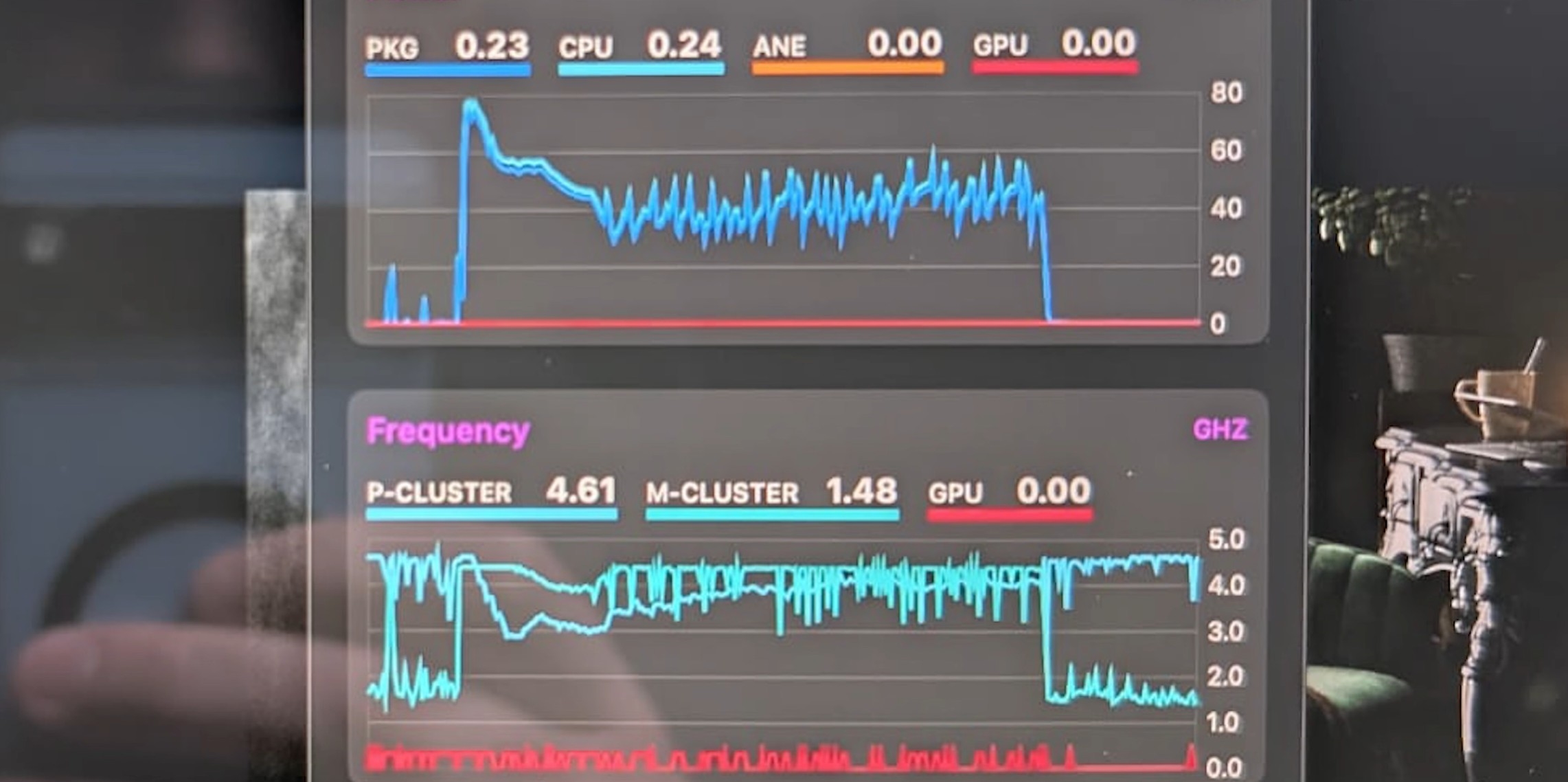
Reddit thread seeks honest takes from M5 Max 128GB owners on running local models. Users discuss favored models, disappointments, surprises, and ideal use cases. Acknowledges limits vs. trillion-parameter frontier models.