Zoox's Sensor-First Robotaxi Design
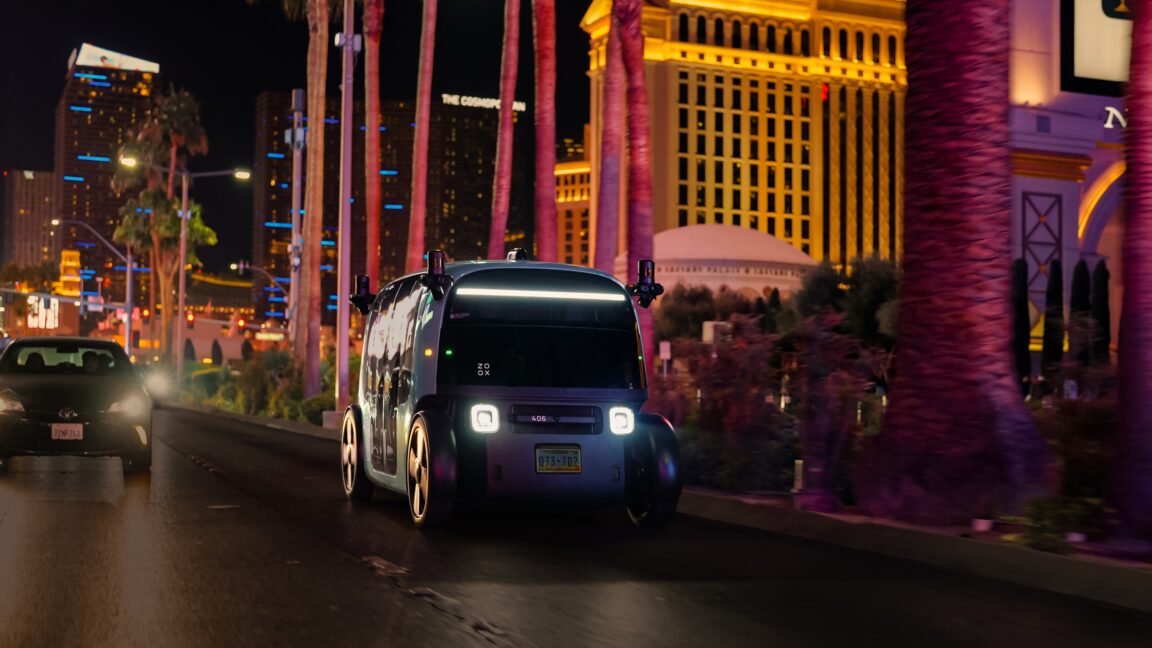
💡Sensor-first tactics from Zoox boost AV perception for robotics builders
⚡ 30-Second TL;DR
What Changed
Sensor-first philosophy drives Zoox robotaxi development
Why It Matters
Highlights hardware-software co-design in AV, inspiring AI robotics projects. Could shift focus to perception-led architectures in embodied AI.
What To Do Next
Prototype sensor fusion in Gazebo sim using Zoox-inspired bidirectional layouts.
Key Points
- •Sensor-first philosophy drives Zoox robotaxi development
- •Vehicle form follows sensor suite placement
- •Bidirectional design optimizes taxi functionality
🧠 Deep Insight
AI-generated analysis for this event — not the original article.
🔑 Enhanced Key Takeaways
- •Zoox utilizes a proprietary 'sensor architecture' that integrates LiDAR, radar, and cameras into the four corners of the vehicle, providing a 270-degree field of view per corner to eliminate blind spots.
- •The vehicle is built on a custom-built skateboard platform that houses a 133 kWh battery, enabling up to 16 hours of continuous operation on a single charge.
- •Zoox operates under a unique regulatory framework, having received approval from the California DMV to test its purpose-built robotaxi on public roads without a steering wheel or pedals.
📊 Competitor Analysis▸ Show
| Feature | Zoox Robotaxi | Waymo (Zeekr) | Cruise (Origin) |
|---|---|---|---|
| Design | Purpose-built, bidirectional | Retrofitted/Purpose-built | Purpose-built |
| Steering Wheel | None | Present (in some models) | None |
| Seating | Face-to-face | Forward-facing | Face-to-face |
| Operational Status | Public road testing | Commercial service | Paused/Testing |
🛠️ Technical Deep Dive
- Sensor Suite: Employs a combination of LiDAR, radar, and cameras at each of the four corners, providing a 270-degree field of view per corner, resulting in a 360-degree overlap.
- Bidirectional Steering: Features four-wheel steering, allowing the vehicle to maneuver in tight urban environments by moving sideways or turning in place.
- Safety Architecture: Includes over 100 safety innovations, such as redundant braking and steering systems, and a unique airbag system designed for face-to-face seating configurations.
- Compute: Utilizes a high-performance computing stack capable of processing sensor data in real-time to make split-second driving decisions.
🔮 Future ImplicationsAI analysis grounded in cited sources
⏳ Timeline
Weekly AI Recap
Read this week's curated digest of top AI events →
👉Related Updates
AI-curated news aggregator. All content rights belong to original publishers.
Original source: Ars Technica ↗
This is a summary, not the original. Read the source, or get the weekly briefing.
The weekly digest
One email a week. Unsubscribe anytime.