Zhuoyu Launches Physical AI Multimodal Model
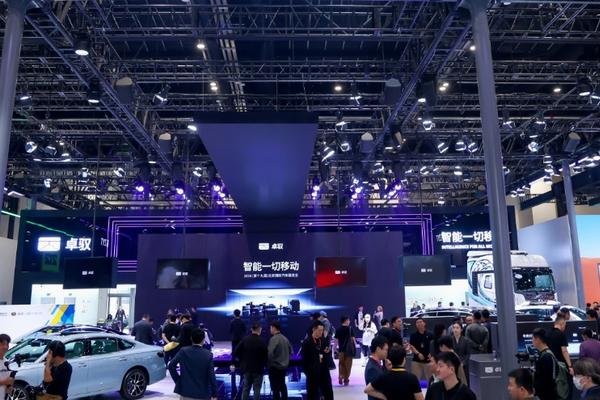
💡Physical AI survival shift: Zhuoyu's multimodal model + new biz models for AV/robotics scale.
⚡ 30-Second TL;DR
What Changed
Native multimodal model pre-trains vision, audio, actions together without language translation.
Why It Matters
This signals a paradigm shift in autonomous driving from expert models to scalable foundation models, potentially standardizing physical AI across mobility platforms. Zhuoyu's distribution strategies could accelerate adoption in L4 robotics, challenging incumbents.
What To Do Next
Integrate Zhuoyu's mobile AI SDK into your robotics prototype for quick physical AI testing.
🧠 Deep Insight
AI-generated analysis for this event.
🔑 Enhanced Key Takeaways
- •Zhuoyu's VLA 2.0 architecture utilizes a proprietary 'Action-Tokenization' layer that maps continuous motor control signals directly into the latent space of the multimodal transformer, bypassing traditional intermediate symbolic logic.
- •The company has secured strategic partnerships with three Tier-1 automotive suppliers to integrate the VLA 2.0 SDK directly into vehicle Electronic Control Units (ECUs) by Q3 2026.
- •Zhuoyu is positioning its 'action token' pricing model as a direct challenge to traditional per-mile licensing, aiming to capture revenue from edge-case interventions in autonomous driving scenarios.
📊 Competitor Analysis▸ Show
| Feature | Zhuoyu VLA 2.0 | Tesla FSD v13 | Waymo Driver |
|---|---|---|---|
| Architecture | Native Multimodal VLA | End-to-End Neural Net | Hybrid Modular/Neural |
| Primary Input | Vision/Audio/Action Fusion | Vision-Centric | Multi-Sensor Fusion |
| Business Model | Action Tokens/SDK | Hardware-Bundled | Fleet-as-a-Service |
| Zero-Shot Capability | ~70% | Proprietary | Proprietary |
🛠️ Technical Deep Dive
- Model Architecture: Employs a transformer-based backbone with cross-attention mechanisms specifically tuned for temporal alignment between high-frequency sensor data and low-frequency action commands.
- Action Tokenization: Converts continuous control inputs (steering angle, throttle, brake) into discrete tokens, allowing the model to treat physical movement as a sequence generation task similar to language modeling.
- Training Paradigm: Utilizes a curriculum learning approach where the model is first trained on internet-scale first-person video to learn spatial reasoning, followed by fine-tuning on high-fidelity vehicle/robot telemetry data.
- Inference Optimization: The SDK includes a custom quantization engine designed to run on NPU-accelerated automotive SoCs, reducing latency for real-time physical feedback loops.
🔮 Future ImplicationsAI analysis grounded in cited sources
⏳ Timeline
Weekly AI Recap
Read this week's curated digest of top AI events →
👉Related Updates
AI-curated news aggregator. All content rights belong to original publishers.
Original source: 36氪 ↗

